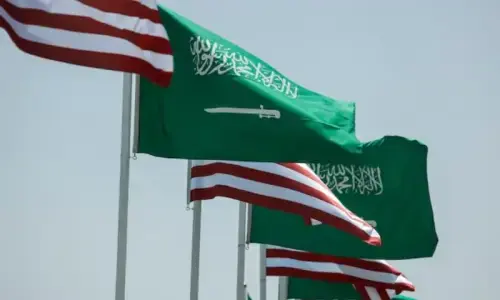
THE signing of the Strategic Mutual Defence Agreement between Pakistan and Saudi Arabia in Riyadh on Wednesday is indeed a significant development for both states.
Though defence ties between Islamabad and Riyadh go back to at least the 1960s, and Pakistani troops have been stationed in the kingdom during various periods, the fresh pact strengthens earlier agreements, and most importantly, reiterates the principle that “aggression against either country shall be considered aggression against both”.
While the defence deal was reportedly being discussed over the past few years, timing is everything, and the fact that it was inked mere days after the Israeli attack on Qatar has not gone unnoticed globally. The Gulf Arabs, including Saudi Arabia, have seemingly come to the realisation that despite their deep ties with the US, America is unlikely to come to their defence. Hence they are now exploring other options. Pakistan, which maintains excellent ties with the Gulf monarchies, and which has a battle-tested military, appears to be a natural partner.
However, some questions remain. For one, the situation in the subcontinent remains volatile. While the Saudis may have friendly ties with New Delhi, will Riyadh help defend Pakistan if India attacks this country again? These queries need clear answers, especially when India has refused to rule out further aggression against Pakistan. Reacting to the development, the Indian external affairs ministry has said it is “[studying] the implications” of the deal.
Yet the importance of the Pak-Saudi defence pact cannot be overstated, and it is without doubt a diplomatic and geopolitical victory for Pakistan. Hopefully, the pact will deepen the already cordial ties between both states.
It is also possible that other Gulf states may sign similar pacts with Pakistan in future. While bilateral defence ties should be pursued by Pakistan, looking at the bigger picture, especially where the collective security of the wider Middle East is concerned, there is still a void.
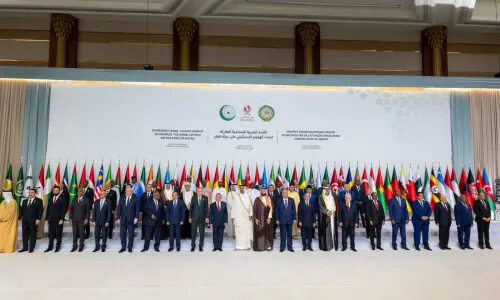
Here, the Islamic Military Counter Terrorism Coalition, founded in 2015 and headed by former army chief Raheel Sharif, can be repurposed for collective defence of the Muslim world. Currently, the 43-member body is underutilised. If it were expanded to include Iran and other Muslim states not currently members, it could send a strong message to Israel, which is arguably the biggest current security threat to the Palestinians as well as the larger Muslim and Arab world. Redefining the coalition’s aims could help end the genocide in Gaza, and prevent further attacks by the Zionist state on regional countries.
The infrastructure of a ‘Muslim Nato’ already exists; all that remains is opening its doors to all Muslim states, and strengthening mutual defence capabilities. Such a coalition could also serve as a warning to states hostile to Pakistan to think twice before launching further attacks.
Published in Dawn, September 19th, 2025