AS Pakistan races to meet the International Monetary Fund’s (IMF) conditions, two iconic state institutions — the Utility Stores Corporation (USC) and Pakistan Railways — have emerged as mascots of an aggressive effort to halt the financial haemorrhaging caused by state-owned enterprises.
Once a cornerstone of low-income support, the USC has all but collapsed. From nearly 6,000 outlets, the chain is down to just 1,500, with over 1,700 stores shut and 11,000 employees sacked between March and April 2025. Thousands more are being offered voluntary separation as the finance ministry targets a complete closure by July 31. With losses crossing Rs15.5 billion in just six months and IMF directives demanding 1,000 closures, the USC’s end looks irreversible.
But the collapse isn’t just economic; it’s human. Local media reported mass protests as daily wagers and contract workers were let go without severance. For many communities, these stores were the last line of affordable access to essentials. Now, that safety net is gone.
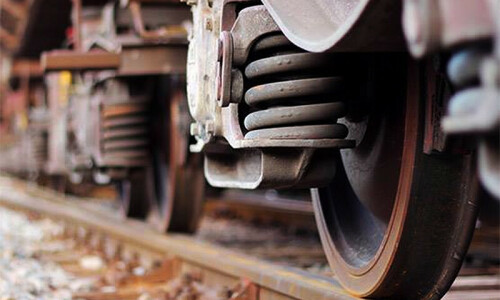
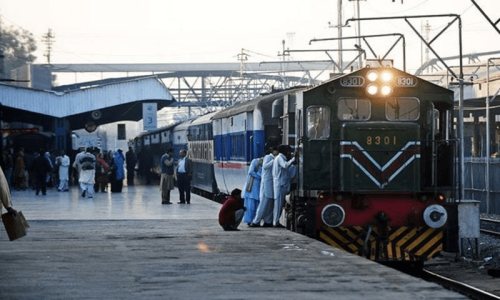
Pakistan Railways, too, is quietly inching toward privatisation. After initial bidding rounds failed to attract viable interest in mid-2024, the government revised terms and successfully handed over four trains — including the Chenab and Mehran Express — to private operators.
Now, eleven more routes, including the Rawal and Millat Express, are being readied for handover.
While the aim is better service delivery, critics warn that without transparency and oversight, rapid privatisation may simply replace public inefficiency with private monopoly
While the aim is better service delivery, critics warn that without transparency and oversight, such moves may simply replace public inefficiency with private monopoly.
Beyond these, three larger state-owned giants highlight the broader stakes: power distribution companies (Discos), Pakistan Steel Mills (PSM), and Pakistan International Airlines (PIA).
The power sector has consumed Rs250 million in consultant fees and feasibility studies, yet by July 2025, not a single Disco has been privatised. The broader plan to divest or partner all 10 power distribution companies has stalled amid political pushback, unresolved technical and regulatory barriers, and the public memory of KElectric’s fraught handover. Instead of outright sales, the government now leans toward operational reforms and public-private management models, Dawn reported recently.
But the question remains: how do you fix something that’s broken not just in structure, but in spirit?
The power sector has consumed Rs250m in consultant fees and feasibility studies, yet not a single Disco has been privatised by 2025
Privatising Discos may seem like a logical step, but the real challenge lies in dismantling the massive corruption and financial irregularities that have hollowed them out. In a staggering revelation, eight of Pakistan’s power distribution companies have been caught overbilling consumers by Rs244bn — with Rs47.81bn extracted from just 278,649 users in a single month, as exposed by the Auditor General’s latest audit.
At PSM, Russia’s return has introduced some unexpected hope. Since its shutdown in 2015, Pakistan Steel Mills (PSM) has become a symbol of prolonged industrial decay accumulating over Rs600bn in combined losses and liabilities.
Despite reporting a technical net profit of Rs7.45bn in FY22 — mainly due to asset revaluation rather than actual production — the mill remains burdened by Rs206bn in outstanding liabilities.
Pakistan has also incurred nearly $18bn in foreign exchange losses over the years due to steel imports that PSM once supplied domestically, industry sources estimate. Now, under a new industrial cooperation agreement with Russia’s Industry Engineering LLC, a technical delegation visited Karachi in June 2025 to assess the site. While not a conventional privatisation, the potential revival could turn PSM into a symbol of renewed industrial collaboration between Pakistan and Russia.
And then there’s PIA.
A major milestone arrived as four investor groups — including industrial heavyweights Lucky Cement, Arif Habib Corp’s consortium, the military-backed Fauji group, and Airblue — were prequalified to bid for stakes in the airline. The government is offering full divestment, generous tax incentives, and will assume approximately 80 per cent of PIA’s debt to make the deal viable.
Over the past two decades, Pakistan’s national exchequer has poured hundreds of billions of rupees into keeping PIA afloat, with little to show for it — until now.
In a rare turn, the airline posted an operating profit of Rs9.3bn in 2024, though largely overshadowed by deeper structural losses. Moreover, with the European Union lifting its flight ban in late 2024, followed by the UK in mid2025, Europe is once again within reach. Final negotiations and due diligence are ongoing, and the deal is expected to conclude before the end of this year, marking what could be the most high-profile privatisation in the country’s recent history.
What ties these threads together is a fundamental question: Can Pakistan reform without deepening inequality? The case of USC shows the cost of subsidy withdrawal without transition support. Pakistan Railways demonstrates the danger of outsourcing without reform. The Discos reflect how technocratic fixes fail without political will. PSM highlights the strategic value of international partnerships. And PIA shows that turnaround is possible that demands time, not just pressure.
Published in Dawn, The Business and Finance Weekly, July 28th, 2025