0
0
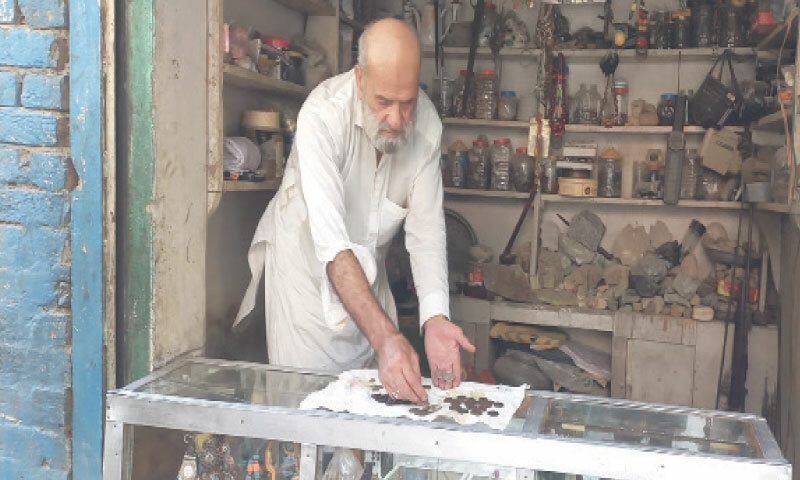

KHYBER: Haji Lal Rahim, an antiquarian, is known for his love for old objects, including coins, currency notes, cameras, watches, old weapons and a few other items dating back to early 18th century and before.
Speaking to Dawn, Mr Rahim, a resident of Landi Kotal tehsil and also a former president of local traders’ union, dwelt upon his strong love for old objects and their significance.
He said he used to deal in arms and ammunition for over a decade, but later switched to collecting antiquities and it made him fall in love with collection of antique objects, including coins. About the history of Landi Kotal Bazaar, he said its history dated back to the first and second century of Kushan’s period, coming down to Mughal era.
“I ask relevant authorities to take steps for protection and preservation of old heritage sites and antique items for future generations as it will serve as stark reminder of our past,” he said.
“Coins with human images in the possession of Mr Rahim are reflective of 2,000 years old early Kushan’s period in the region. Landi Kotal Sarai (inn) and Landi Kotal Bazaar existed even before that. The walled city had a Qafila Bazaar for local residents and even throughout British Raj there used to be makeshift kiosks,” Haleem Gul, 79, told Dawn.
Landi Kotal, Lawarrgai in local dialect, used to be the first entry point for central Asian caravans, where the traders would unload the trade goods from their animals, including mules, camels and horses in the Sarai (inn). After a brief sojourn, the caravans would head towards Indian markets passing through the Peshawar city.
Ali Marjan, 78, a local elder, said that during the Mughal-era walls were built around the small city to protect the trading goods from highwaymen and vagabonds. “Entry and exit gates would regularly open at dawn and close at dusk.”
Marjan said the remains of the western gate still exist.
Published in Dawn, July 20th, 2025