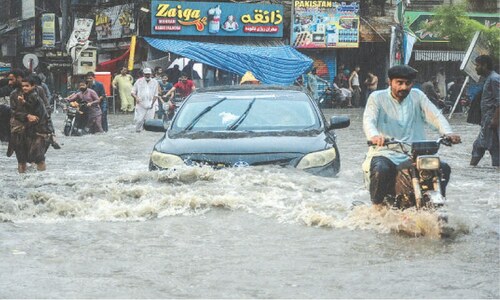
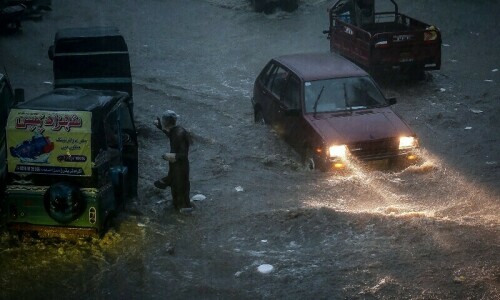
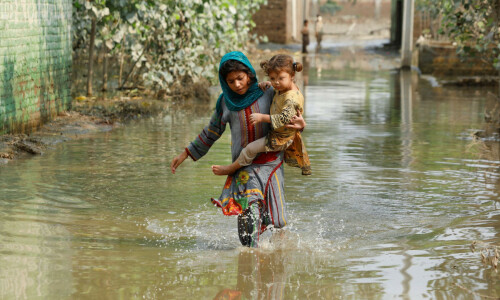
A THIRD of our people were directly impacted by the 2022 floods. Nearly 1,500 lives were lost, over $30bn just evaporated from the economy and agricultural lands turned into stagnant ponds. The world took notice, albeit briefly.
The deluge was not just an act of God. A study in Natural Hazards finds that it was the perfect storm of both climate change and human failings. Southern Pakistan was emerging from a multi-year drought when it was struck by punishing pre-monsoon rainfall, double the historical average. Soils were already sodden when the monsoon itself arrived, with rainfall more than five times the norm. To make matters worse, the region was warming rapidly. Higher temperatures accelerated snowmelt in the high Himalayas, compounded by rain-on-snow events that unleashed torrents into the Indus and its tributaries. Streamflows at Sukkur Barrage surged to 170pc above average.
Our own actions — or inaction — made things worse. Cropland expansion and population growth along riverbanks have erased natural buffers that once absorbed excess water. Urban sprawl, especially in Sindh, has further buried the land beneath concrete, making drainage all but impossible. Reservoirs upstream, such as Tarbela and Mangla, were not drained pre-emptively, missing a critical opportunity to mitigate downstream flooding risks. What happened happened, but unfortunately it was a taste of things to come.
The study warns that if global emissions keep rising unchecked, Pakistan will face far more frequent multi-day extreme rainfall by 2100. Temperatures are forecast to climb by 7°C in the upstream basins by the end of the century. Combined, these trends point to more intense floods, driven by heavier rain and faster glacier melt. With our weak economy and poor public services, we run the risk of each flood not just washing away our homes, but our very futures.
What then is to be done? Pakistan must get serious about managing rivers and the land surrounding them. Reservoirs must be managed with real-time data on snowmelt and rainfall to prevent flooding. Urban planning, too, is in need of a radical rethink. For one, building further into floodplains must be banned. Green belts along rivers need restoration, not destruction.
Moreover, investment in climate-resilient infrastructure — flood defences, drainage systems, early-warning networks — is of critical importance. Pakistan will need international support, not least because it is a negligible contributor to the carbon emissions warming the planet. However, the primary responsibility lies with the state itself, to prepare for a future where extreme floods are not just possible, but probable.
The 2022 floods were not a freak event. They were a preview. Pakistan, and others vulnerable to climatic extremes, must heed the warning before the next deluge arrives — because it surely will.
Published in Dawn, July 16th, 2025