‘Iran won’t back down, but looking to avoid war’
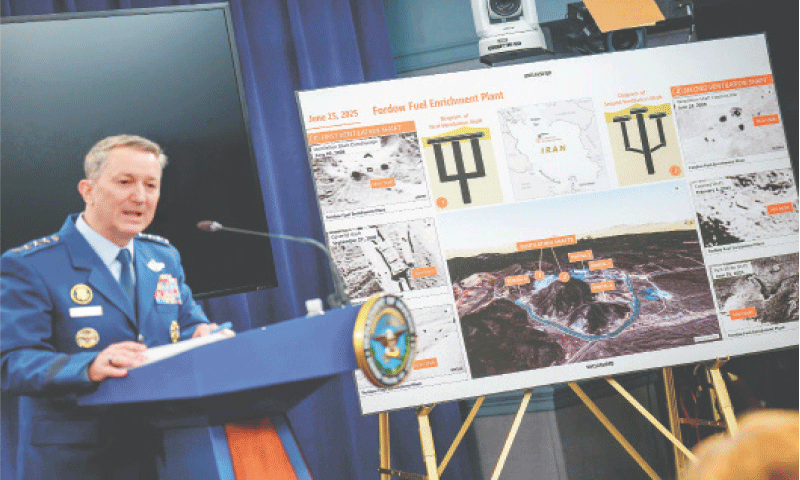


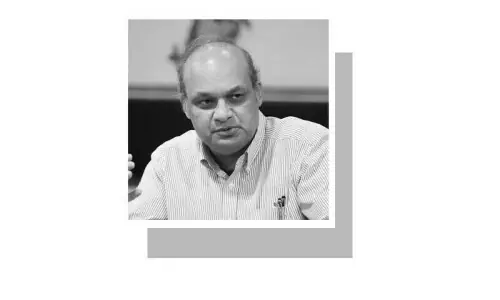
WASHINGTON: Despite a temporary pause in hostilities, long-term peace between Iran and Israel remains elusive without renewed US-Iran diplomacy, warns Dr Vali Nasr, a former adviser to the US State Department and a leading expert on Iran and the Middle East.
In two essays, published on Thursday in The New York Times and Time Magazine, offer a sobering analysis of the recent Iran-Israel conflict and its aftermath.
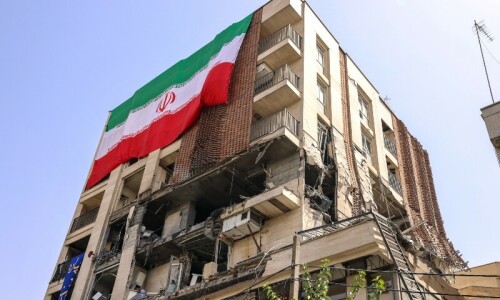
Writing in NYT, Dr Nasr notes that the current crisis is “one of the biggest challenges to the Islamic Republic since its founding in 1979” and a moment of reckoning for Iran’s Supreme Leader Ayatollah Ali Khamenei.
“Khamenei has maintained Iran’s hostility to the West during his 36 years in power,” he observes, arguing that this latest conflict — triggered by Israeli strikes on Iran’s nuclear infrastructure — will likely reinforce rather than soften that stance.
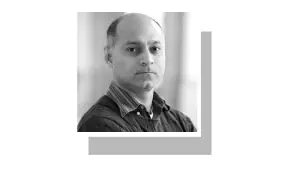
In essays for Time and NYT, Dr Vali Nasr argues that without sustained US-Iran diplomacy, the latter may seek to revive its N-ambitions
“Iran’s rulers are no strangers to war,” Nasr writes.
“As Ayatollah Khamenei sees it, Iran is locked in a struggle for survival with the United States and its allies, including Israel.”
The NYT article suggests that rather than seeking escalation for its own sake, Tehran’s response has been calibrated to signal strength without crossing thresholds that would provoke full-scale war. “Iran is unlikely to back down,” Nasr writes, “but it may still look for ways to avoid a war with the United States and Israel.”
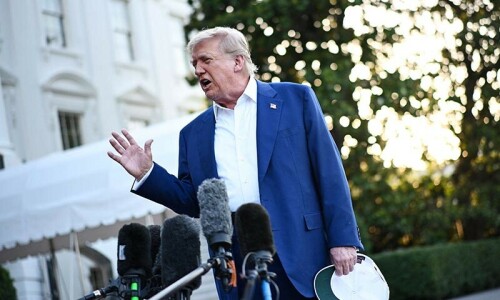
In Time Magazine, Nasr offers a parallel analysis, noting that Iran and Israel “were ready to stop fighting” after President Donald Trump declared a ceasefire following what he calls Tehran’s “choreographed response” to the Israeli and U.S. attacks. Still, he warns that this ceasefire “does not lay the foundations of peace.”
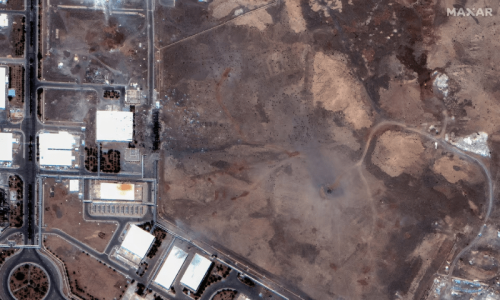
According to Nasr, “Israel’s military success was undisputed,” but the attack failed to fully eliminate Iran’s nuclear capacity. “Unless there is a new comprehensive nuclear deal between Iran and the United States, Tehran is likely to seek to reassemble its nuclear program,” he writes.
Iran still has “its stockpile of 400 kilograms of highly enriched uranium that, according to some estimates, could be used to build as many as 10 nuclear bombs.”
He argues that a lasting resolution would require not just military deterrence but meaningful diplomacy. “Even after this war, diplomacy is still possible, and remains the best option for both Iran and the United States,” he writes.
However, the prospects for diplomacy are complicated by a deep lack of trust. Nasr recalls that the 2015 nuclear deal was abandoned by the US in 2018, a decision that badly damaged Iranian faith in American commitments.
“The Iranians do not trust the US leader,” he writes. To bring them back to the table, Washington may need to offer “greater economic relief, security guarantees, and assurances that it will not support future Israeli attacks.”
Public sentiment inside Iran also plays a critical role. In Time Magazine, Nasr notes that “Iranians are patriotic but they also crave peace, security, and economic prosperity.” While some US officials hoped civilian hardship might turn the population against the regime, Nasr concludes that “Iranians did no such thing,” despite significant losses and fuel shortages.
If anything, he suggests, the conflict has reaffirmed Iranian nationalism and hardened the leadership’s resolve. Still, cracks remain: “There will be serious questioning of the Islamic Republic’s policies,” he predicts, especially if economic hardship persists.
Ultimately, Nasr presents a choice for both sides. For Iran, that means considering whether the pursuit of nuclear deterrence is worth further isolation. For the US, it means deciding whether to engage or risk another round of conflict. “Diplomacy will be hard,” Nasr concludes, “but it is still possible.”
And in his view, it remains “the only way to avoid a repeat of this war—and perhaps something much worse.”
Published in Dawn, June 27th, 2025