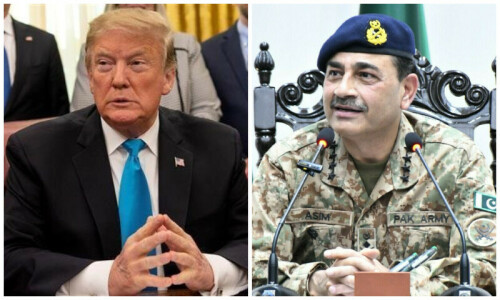
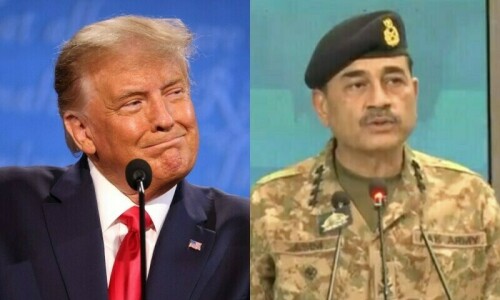
WASHINGTON: US President Donald Trump on Wednesday once again credited Field Marshal Asim Munir for helping prevent a nuclear conflict with India, adding that he persuaded both sides to back down by linking peace to trade.
Explaining how he helped defuse tensions across the globe — from Ukraine to Serbia — Trump said “the most important” of these conflicts was last month’s war scare between India and Pakistan.
“And that was not whether or not they may someday have nukes, like we are talking about the Middle East, like we are talking about with Israel and Iran. This is — they have nuclear weapons,” President Trump said at his news conference in The Hague, at the conclusion of a Nato summit.
Referring to recent tensions between the two South Asian neighbours, Trump said, “I ended that with a series of phone calls on trade. I said, ‘Look, if you are going to be fighting each other…’ It was getting very bad — you know how bad that last attack was. It was very bad. If you are really going to go fighting with each other, we are not going to do any trade.’ They said, ‘No, no. No, you have to do a trade deal’.”
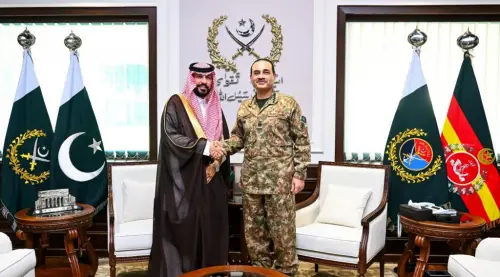
He described a conversation with Pakistan’s army chief and praised him in personal terms: “In fact, I had the general — he was really very impressive — the general from Pakistan was in my office last week. You know Prime Minister Modi is a great friend of mine. He is a great gentleman. He is a great man. And I got them to reason. I said, ‘We are not doing any trade deal if you are going to be fighting. And if you are going to be fighting each other, we are not doing any trade deal’.”
Trump concluded, “And you know what? They said, ‘No, I want to do a trade deal.’ And we stopped the nuclear war.”
The remarks highlighted the key role played by Field Marshal Munir in easing regional tensions.
Although Trump did not name the general directly in his public remarks, he had earlier described Munir as “an exceptional human being and an inspiring personality.”
These statements stand in contrast to India’s official position, which maintains that New Delhi acted independently during the May crisis and that Washington did not mediate. Trump’s remarks support Pakistan’s view that quiet US diplomacy — and direct intervention from the White House — helped calm tensions.
In broader comments during the Nato summit, Trump also said, “The Pakistanis know Iran very well, better than most. But they are not happy.” While brief, the comment underscored Washington’s view of Pakistan as a key regional player, especially as the US explores reopening talks with Tehran.
Trump indicated negotiations with Iran could resume “as early as next week.”
Published in Dawn, June 26th, 2025