First carbon capture cement facility opens in Norway


 0
0
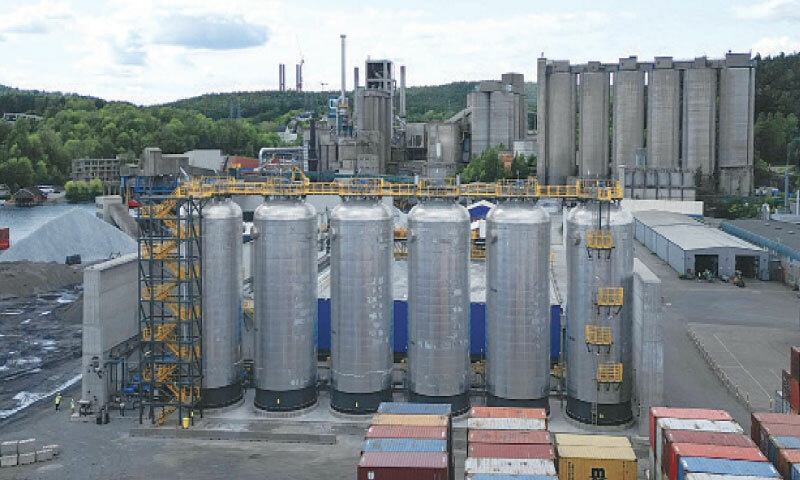
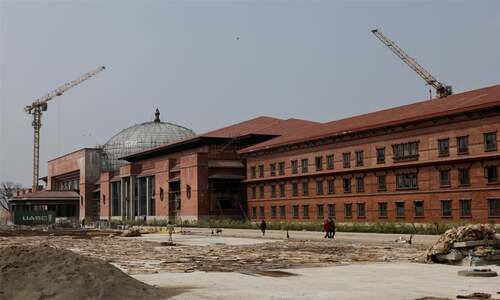
BREVIK: Norway on Wednesday inaugurated the first large-scale facility for capturing carbon dioxide emissions at a cement plant, making it possible to manufacture the world’s first “carbon free” cement.
The Heidelberg Materials plant in Brevik in southeastern Norway can now capture up to 400,000 tonnes of CO2 per year — 50 percent of its emissions — thanks to amino-based solvents.
Through a “book and claim” system, the company, one of the world’s biggest cement producers and more than a century old, will be able to virtually redistribute the gain to its other cement plants and thereby offer clients partially or fully decarbonised products. “This cement product will be near zero (emissions),” Heidelberg Materials chief executive Dominik von Achten said.
Once transformed into the final product concrete, which absorbs small quantities of CO2 throughout its life cycle, “it will be net zero”, he said. The volume of decarbonised cement sold will depend on the amount of CO2 actually captured at Brevik, and the type of cement sold, as the amount of carbon varies from product to product.
But according to Heidelberg Materials, it will be around several hundreds of thousands of tonnes — a fraction of the annual global cement production of 4.2 billion tonnes. Cement production alone accounts for seven percent of global greenhouse gases, according to the Global Cement and Concrete Association.
The partial decarbonisation of the cement plant in Brevik is part of the Longship project, backed by the Norwegian state, aimed at reducing greenhouse gas emissions.
Launched on Tuesday, Longship will capture carbon dioxide emitted from industrial sites — the Heidelberg cement plant and, in a later stage, an incineration plant — and transport it by ship to a terminal on Norway’s west coast, where it will be injected and stored beneath the seabed.
Published in Dawn, June 19th, 2025