PAKISTAN is on the front lines of the global climate crisis, yet continues to approach the challenge with a troubling mix of policy confusion, underfunding, and institutional weakness.
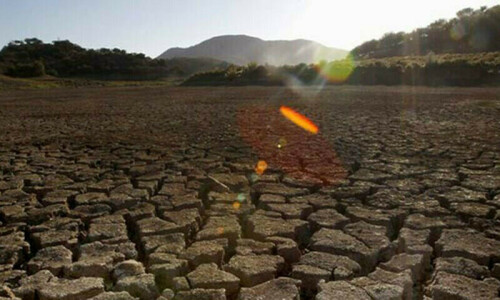
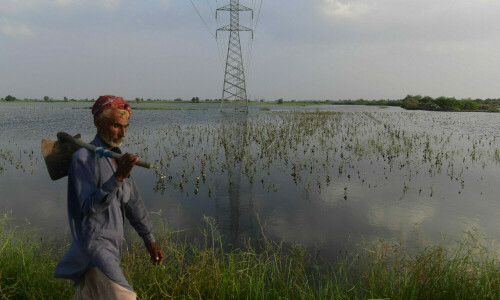
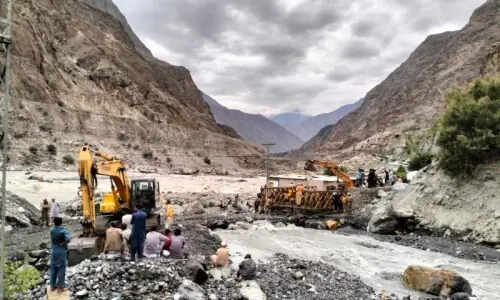
The country remains among the most climate-vulnerable in the world, without contributing even 1pc to GHG emissions. From the devastating floods of 2022 that affected over 33m people, to the recurring heatwaves, droughts and water shortages, the evidence is everywhere.
What remains missing is a credible, well-resourced plan to take these challenges head-on — a plan rooted in data, foresight and political commitment.
The recently unveiled federal budget once again reveals the contradictions that have long plagued our climate policy. While the government claims to prioritise climate resilience, its actual allocations tell a different story.
Only Rs85bn has been allocated to adaptation — the category that includes essential interventions such as disaster preparedness, food and water security, early warning systems, and climate-resilient infrastructure.
A staggering Rs603bn, on the other hand, has gone to mitigation, largely centred around energy sector subsidies and rebranded hydropower projects.
This imbalance is difficult to justify. The finance minister himself has acknowledged that adaptation is our foremost climate challenge. Yet, year after year, budgets continue to reflect a lopsided focus on mitigation — a domain where Pakistan’s global emissions profile gives it limited room to make meaningful impact.
It is the country’s exposure to floods, heat, glacial melt and food insecurity that requires urgent and sustained investment, particularly in vulnerable regions such as Sindh, Balochistan and south Punjab.
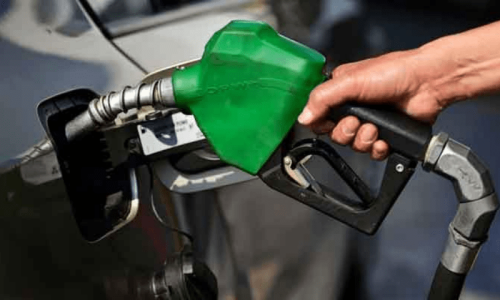
Compounding the problem are self-defeating fiscal decisions. While a carbon levy has been introduced to curb fossil fuel consumption — a step in the right direction — the government has increased taxes on solar panel imports and hybrid vehicles.
Incentives for EVs have also been rolled back. These contradictory signals only undermine public confidence in the government’s commitment to a green transition and discourage much-needed private sector participation.
Institutional capacity is another concern. The Ministry of Climate Change has seen its funding slashed from Rs3.5bn to Rs2.7bn. This not only weakens its ability to conduct research and develop evidence-based policies, but also limits its role in coordinating and implementing climate finance from international donors.
Meanwhile, the provinces lack the resources and expertise to implement adaptation measures effectively. We cannot afford to continue down this path. The costs of inaction are already evident — in economic losses, in displaced communities and in rising climate-related deaths.
If the country is to weather the storms ahead, it must align its words with actions, prioritise adaptation, eliminate policy contradictions, and empower its institutions to lead from the front. The climate clock is ticking — and Pakistan is running out of time.
Published in Dawn, June 17th, 2025