MIGRATION: PERILS OF THE PROMISED LAND
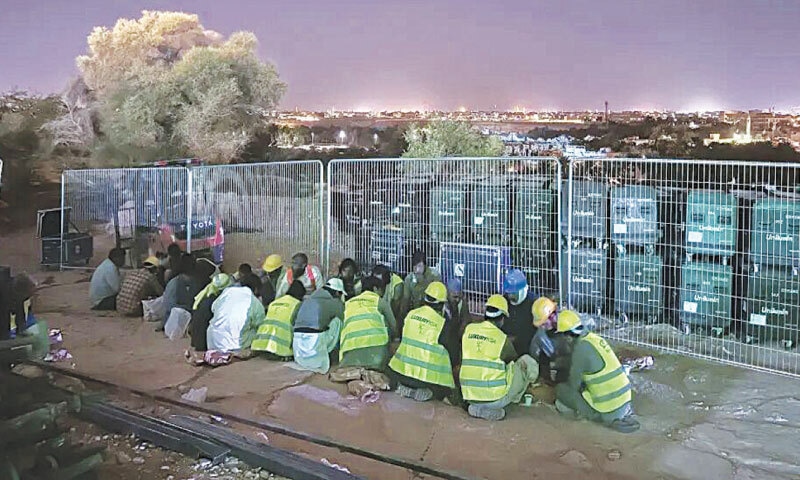


At 23, Ahmed Faraz left Karachi for Saudi Arabia for a better future. A recruitment agent had promised him a stable hotel job in Saudi Arabia with good pay, benefits, and even days off. Like thousands of young Pakistanis each year, he sold family assets — in his case, jewellery — to pay the agent’s fee and boarded a plane full of hope.
But upon landing in Riyadh, Faraz’s dream quickly unravelled.
“I was unemployed for three months,” he tells Eos, his voice still carrying the shock of that experience. “The agent had lied about everything — there was no job waiting, no company expecting me,” he says. “When there’s no job and the kafeel [sponsor] starts demanding more money, many workers have no choice but to become fugitives to avoid deportation or jail.”
Faraz’s story represents just one thread in a vast tapestry of migrant suffering. Conversations with dozens of Pakistani workers across the Gulf reveal a disturbing, systemic pattern of exploitation. Unscrupulous agents routinely lure workers with false promises, charge exorbitant fees and then abandon them to navigate the treacherous waters of the kafala [sponsorship] system alone.
Every year, hundreds of thousands of Pakistanis sell everything for a shot at Gulf prosperity, only to find themselves trapped in a system of debt and control. Why does their home country ignore their suffering?
The Kafala Trap
At the heart of this exploitation lies the kafala system, a sponsorship framework that originated in the 1950s to regulate temporary migrant labour in the Gulf states. The system legally binds a worker’s residency status to their employer, requiring sponsor approval for everything from job changes to exit visas. While all Gulf Cooperation Council (GCC) countries employ some version of this system, Saudi Arabia and Qatar maintain particularly strict implementations.
The International Labour Organisation (ILO) has repeatedly condemned kafala as “a breeding ground for forced labour and abuse.” In practice, it creates a power imbalance so severe that workers often tolerate unpaid wages, excessive working hours and even physical abuse rather than risk deportation.
Shamsul Alam’s story illustrates this dynamic perfectly. Now 64 and back in his hometown of Abbottabad after two decades in the United Arab Emirates (UAE), he recounts how his agent promised 850 dirhams (about $230) monthly for work as a night watchman. “In reality, I received half that amount,” he tells Eos. “Being illiterate, I didn’t understand I should have demanded a contract. The kafeel knew this and exploited it fully.”
Success Amidst the Struggle
Not all experiences are uniformly negative. Shahzaman Majid, 25, works at a visa consultancy firm in Riyadh and represents one of the success stories. “For skilled workers with proper documentation, the Gulf can offer opportunities unimaginable in Pakistan. I’ve tripled what I could earn back home,” he tells Eos via email.
Yet even successful migrants such as Majid acknowledge the system’s flaws. “The biggest challenge comes when you want to progress,” he notes. “Finding a better job means begging your current employer to release you. Many would rather keep you trapped than see you advance.”
THE REMITTANCE ROLODEX
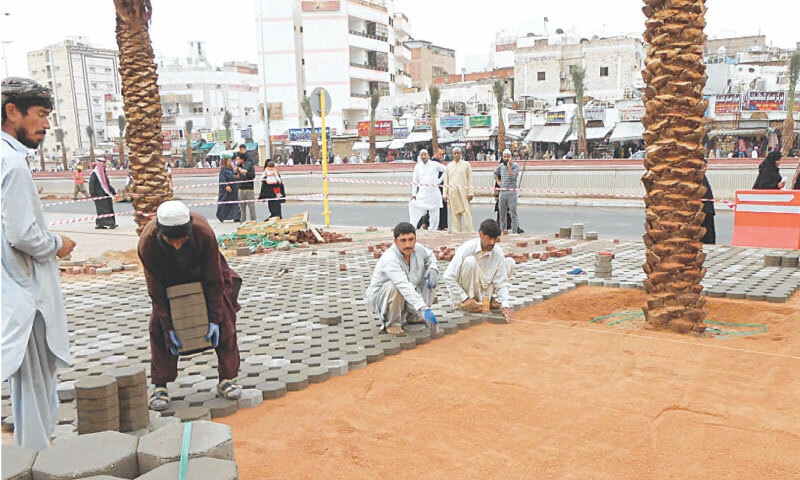
The economic significance of these migrant workers cannot be overstated. According to Pakistan’s central bank, the State Bank of Pakistan, remittances hit a staggering $4.1 billion in May 2025 alone — enough to cover nearly half of Pakistan’s monthly import bill. These flows represent the nation’s single largest source of foreign exchange, consistently outperforming exports and foreign direct investment combined.
The Bureau of Emigration & Overseas Employment reports that over 450,000 Pakistanis migrated to Saudi Arabia in 2024, with another 64,130 choosing the UAE. These numbers, while impressive, only tell part of the story. The Ministry of Overseas Pakistanis data reveals that approximately 3.2 million citizens — about 1.3 percent of the population — have left over the past five years, with Gulf states absorbing the overwhelming majority.
Economist Dr Ayesha Khan, who studies migration patterns at the Lahore University of Management Sciences, explains: “Every one of these workers supports an average of five family members back home. Their remittances don’t just prevent household poverty — they fund education, healthcare and small businesses that employ others,” she tells Eos.
Yet this economic lifeline comes at tremendous personal cost. Many migrants endure years of separation from families, harsh working conditions and psychological trauma — all the while knowing their homeland offers few alternatives.
Half-Measures: The Limits of Gulf Reforms
In March 2021, Saudi Arabia announced landmark labour reforms, theoretically allowing workers to change jobs without sponsor consent after one year. Other Gulf states have implemented similar measures, responding to international pressure following high-profile cases of abuse, particularly in the run-up to Qatar’s 2022 World Cup.
However, as Human Rights Watch researcher Hiba Zayadin explains, these reforms contain critical loopholes. “Employers still control visa renewals and residency status,” she tells Eos. “Many workers report being forced to sign ‘voluntary’ resignation letters when they arrive, effectively nullifying the new protections,” she adds.
The financial exploitation begins even before migration. Despite regulations banning recruitment fees, Pakistani workers routinely pay agents between Rs300,000 to Rs500,000 (between $1,100 - $1,800), often going into crippling debt. Upon arrival, many face bait-and-switch scenarios, where promised salaries are halved or jobs are completely different than described.
Pakistan’s Failure to Protect Its Own
Perhaps, most damning is the Pakistani government’s failure to protect its overseas citizens. Multiple interviewees described consular services as indifferent at best, hostile at worst.
Amir Basharat, a Pakistani expat in Riyadh since 1996, recounted his experience. “At the consulate, they treat us like criminals, asking for favours rather than citizens seeking rights,” he tells Eos. The attitude, Basharat says, seems to be: ‘You chose to come here, now deal with it.’
This neglect persists despite migrants’ economic importance. While Pakistan has laws against illegal recruitment practices, enforcement remains weak. The Protectorate of Emigrants offices, meant to oversee the migration process, is often understaffed and underfunded.
When asked why they endure such conditions, most migrants give variations of the same answer: “What alternative do we have?”
Faraz, now working at a Riyadh restaurant after months of struggle, explains: “My father was a shopowner who has passed away. My younger siblings’ education depends on my earnings. Returning isn’t an option.”
Shamsul Alam, despite his bitter experience, admits: “If I had the chance, I’d go back to the UAE tomorrow. Here in Pakistan, I might earn 25,000 rupees [per month] if I’m lucky. There, even exploited, I could save more.”
This heartbreaking calculus underscores Pakistan’s fundamental failure to create viable economic opportunities at home. Until meaningful job creation accompanies serious labour protections for migrants, the cycle of exploitation will continue — sustained by desperation and enabled by indifference.
The writer is a member of staff. He can be contacted at munibalxo@gmail.com
Published in Dawn, EOS, May 25th, 2025