ISLAMABAD: For the third time in two months, the government on Thursday did not pass on the full impact of lower international oil prices to consumers and kept the price of petrol unchanged and reduced that of high-speed diesel by Rs2 per litre for the current fortnight ending May 31.
The government increased the Inland Freight Equalisation Margin (IFEM) on both petrol and diesel to clear about Rs34 billion loss to the oil industry owing to a tax loophole in the Finance Bill 2024-25.
In a late-night announcement, the Ministry of Finance said the Oil and Gas Regulatory Authority (Ogra) had reviewed and adjusted prices for petroleum products in view of the fluctuations in the international market.
The ex-depot price of high-speed diesel was reduced by Rs2 per litre to Rs254.64 per litre for the current fortnight from Rs256.64.
Most of the transport sector runs on high-speed diesel. Its price is considered inflationary as it is mostly used in heavy transport vehicles, trains and agricultural engines like trucks, buses, tractors, tube wells and threshers and particularly adds to the prices of vegetables and other eatables.
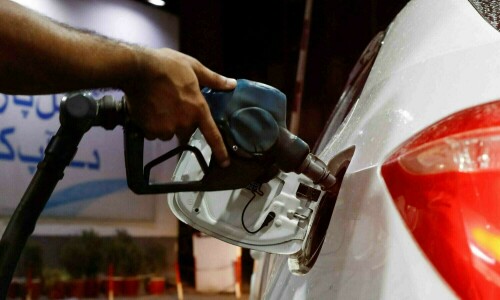
The ex-depot price of petrol was kept unchanged at Rs252.63 per litre. Petrol is mostly used in private transport, small vehicles, rickshaws and two-wheelers and has a direct effect on middle- and lower-income households.
At present, the government charges about Rs96 per litre tax on both petrol and high-speed diesel.
Although general sales tax (GST) is zero on all the petroleum products, the government charges Rs78 per litre petroleum development levy (PDL) on petrol, diesel and high-octane products that normally impact the masses.
The government also charges about Rs17 per litre customs duty on petrol and high-speed diesel, irrespective of their local production or imports. In addition, about Rs17 per litre distribution and sale margins are going to oil companies and their dealers.
Over the last two months, the government has disallowed about Rs18 per litre of potential reduction in petroleum prices to discourage a rise in petroleum consumption. This was done through an increase in the petroleum levy through a special presidential ordinance, to divert funds for higher subsidies on electricity rates and the construction of highways and motorways in Balochistan and Sindh.
At the request of the Petroleum Division, IFEM has now been increased by Rs1.87 per litre to address losses faced by refineries and oil marketing companies (OMCs). The financial impact, estimated at Rs34bn for FY25, stems from the reclassification of petroleum products as “exempt” under the new Finance Act, rendering input sales tax non-refundable for refineries and OMCs.
The Petroleum Division proposed that the Rs34bn shortfall be recovered through IFEM over a 12-month period, with the adjustment automatically ending in the 13th month.
Petrol and HSD remain the government’s top revenue generators, accounting for monthly sales of 700,000 to 800,000 tonnes, compared to just 10,000 tonnes for kerosene.
Published in Dawn, May 16th, 2025