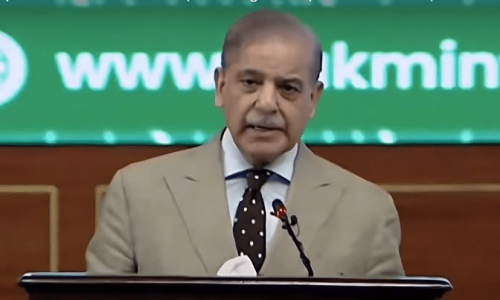
THE recently concluded Mineral Summit was proclaimed a success by federal officials. Yet beneath the celebratory tone lies a contentious debate — particularly in KP and Balochistan — over a draft mining legislation reportedly prepared under the supervision of the SIFC. The Balochistan government has already enacted a version of this bill, while KP continues to deliberate.
The timing of this legislation, and the opaque process that birthed it, have raised legitimate concerns about its constitutional validity, centralising tendencies, and potential sociopolitical fallout. Constitutionally, provinces in Pakistan have long held exclusive jurisdiction over minerals — excluding nuclear-related resources — even prior to the 18th Amendment. In this context, fears of federal encroachment are not without basis.
The KP bill, while imperfect, retains essential elements of provincial control. Its references to the federal mineral wing are advisory and non-binding. Still, their very inclusion invites future overreach. In contrast, the Balochistan Act goes a step further. It not only permits the federal mineral wing to make recommendations on mineral development, licensing, leasing, and financial aspects including royalties, but appears to surrender the province’s right to initiate proposals on these matters, reducing its role to one of passive review. Though technically non-binding, the legal role of the federal government can potentially lead to serious encroachment.
Legally binding frameworks are needed for benefit-sharing and local ownership.
Both the KP and Balochistan frameworks allow temporary permits to be granted for projects deemed of “national interest” — a vague designation that includes licences to federally owned public enterprises. Such provisions undermine provincial autonomy.
To their credit, the laws decentralise some authority to newly established provincial mineral authorities and district committees, replacing the erstwhile discretion of secretaries, directors general, and deputy commissioners. However, the inclusion of two federal representatives with voting rights in provincial authority might be problematic. These members should serve as observers, not decision-making members.
One of the most glaring omissions in both laws is the absence of meaningful representation for local communities, mining associations, and independent experts in the governance structures. In a sector as complex and high-stakes as mining, leaving governance solely to bureaucrats and politicians is a recipe for failure. Equally problematic are vague, largely non-enforceable clauses on community benefits and employment preferences. What is needed are legally binding frameworks for community participation, benefit-sharing, and local ownership. In short, while the KP bill requires minor amendments, the Balochistan Act needs to be repealed, as it contains clauses that effectively hand over certain powers to federal authorities.
Just as troubling is the process through which the legislation has been drafted and enacted. The SIFC — an extra-constitutional body — has driven the process with apparently little transparency. In a context where political legitimacy of both federal and provincial governments remains contested, this top-down approach is counterproductive. It risks deepening community mistrust and fuelling provincial grievances, even if the resulting agreements are legally sound.
Mining is a long-horizon sector. It demands political stability, policy continuity, and social licence to operate. But Pakistan’s political elite functions on extremely short time horizons, motivated more by immediate gains and rent-seeking than long-term planning. Past episodes — Reko Diq, IPPs — are cautionary tales of rushed, opaque deals that ended in litigation or disrepute. On a technical level, the country lacks the institutional depth and financial capacity to negotiate mining contracts that balance investor interest with public good. In the current climate, any foreign-backed agreements are more likely to serve short-term gains than long-term development.
Similarly, our history of community benefit-sharing in mining is dismal. Corporate social responsibility remains tokenistic at best, with few tangible gains for affected populations. The new legislations do little to reverse this trend. What is needed is a complete rethink of the model — one that places local communities at the heart of decision-making and revenue-sharing. To ensure community ownership and provincial autonomy, the following steps are essential:
-
Peace and consensus first: No foreign investor can operate sustainably without peace, political stability and provincial buy-in. The experience of CPEC in Balochistan offers a stark warning.
-
Eliminate federal overreach: All references to the federal mineral wing should be removed. An ‘Inter-Provincial Mineral Coordination Council’ may be established, instead, to harmonise policy among provinces while respecting their autonomy.
-
Mandatory community consent: The free, prior and informed consent of local communities must be a legal prerequisite for all large-scale mining projects.
-
Revenue sharing with community: At least five per cent of royaltiesmust go directly to resource-producing districts, over and above provincial royalty.
-
Employment guarantees: Mining legislation should mandate 100pc local employment in unskilled jobs and a minimum of 50pc in skilled roles, with a plan to raise the latter to 90pc over 10 years.
-
Establish a provincial mineral wealth and development fund: This should include: a provincial wealth fund, where 25-40pc of royalties are saved for future generations under strict fiduciary rules and independent oversight; a community development fund to pool 5pc district royalties, 3-5pc company profits and other funds for investment in infrastructure and services of local community.
-
Transparency as policy: All mining licences and contracts, including those for Reko Diq and Saindak, must be fully disclosed; companies linked to politically exposed persons should be flagged; and detailed, disaggregated data on royalties, production, taxes, and social expenditures must be published regularly.
Pakistan stands at a crossroads. It can either repeat the mistakes of opaque, centralised, and authoritarian resource governance—or it can reimagine mining as a platform for inclusive, democratic, and community-led development. If reforms are not grounded in transparency, accountability, and respect for provincial and community rights, then no summit, however well-marketed, will bring lasting prosperity.
The writer is a public policy and development specialist from Balochistan.
Published in Dawn, April 18th, 2025