0
0

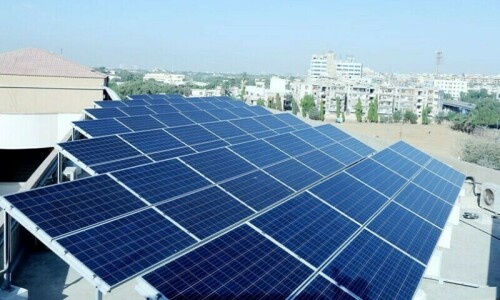
The government decided on Wednesday to broaden the scope of consultation on the Solar Net Metering Regulations approved by the Economic Coordination Committee (ECC) and re-submit the recommendations to the federal cabinet after taking further feedback from all stakeholders following widespread backlash.
The decision was taken in a meeting of the federal cabinet today.
In a knee-jerk reaction to curb renewable energy growth through solar net metering amid high grid electricity costs, the government on March 13 had reduced the buyback rate by two-thirds to Rs10 per unit and scrapped net billing.
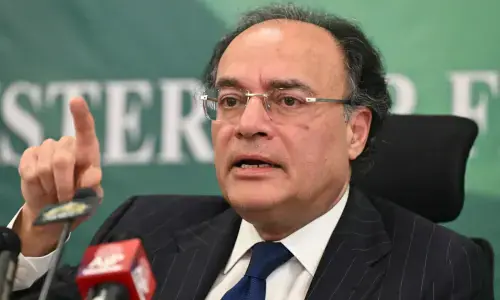
The decision, applicable to new net-metering consumers, was taken at an ECC meeting, presided over by Finance Minister Muhammad Aurangzeb.
Under the revised policy, power companies would purchase surplus solar electricity from consumers at Rs10 per unit during the day while selling grid electricity at Rs42 per unit (off-peak) and Rs48 per unit (peak) after sunset — excluding taxes and duties.
Additionally, consumers would no longer be allowed to install solar capacity exceeding their sanctioned load, except for a 10 per cent cushion, compared to the 50pc margin permitted under the previous policy.
Existing consumers would gradually come under this new framework as their seven-year contracts expired.
The announcement was met with widespread criticism with even Petroleum Minister Ali Pervez Malik criticising the move, saying it would send a bad signal to the market and consumers and could have been handled better.
The business community had called on the government to engage with relevant stakeholders, including traders and industry representatives, to devise a balanced and comprehensive energy policy. Such a policy, they emphasised, should encourage the growth of renewable energy while safeguarding the interests of all power consumers.
Among those joining the chorus of backlash was former finance minister and economist Miftah Ismail who last week slammed the government for the move and for allowing electricity prices to reach an exorbitant level.
Sources said a meeting chaired by the prime minister on Sunday had discussed the devastating impact of criticism from Ismail on social media against changes in the solar net metering policy.
A statement by the PM’s Office after the meeting had quoted the premier as saying that the promotion of renewable energy was the government’s priority. He had also directed officials that confusion over the solarisation policy should be addressed through facts and figures.
“There is no change in the government’s solar energy policy and priority,” he was quoted as saying.