IS the state deliberately unconversant with the desolation faced by females? On International Women’s Day, global communities applaud women’s contributions in various spheres.
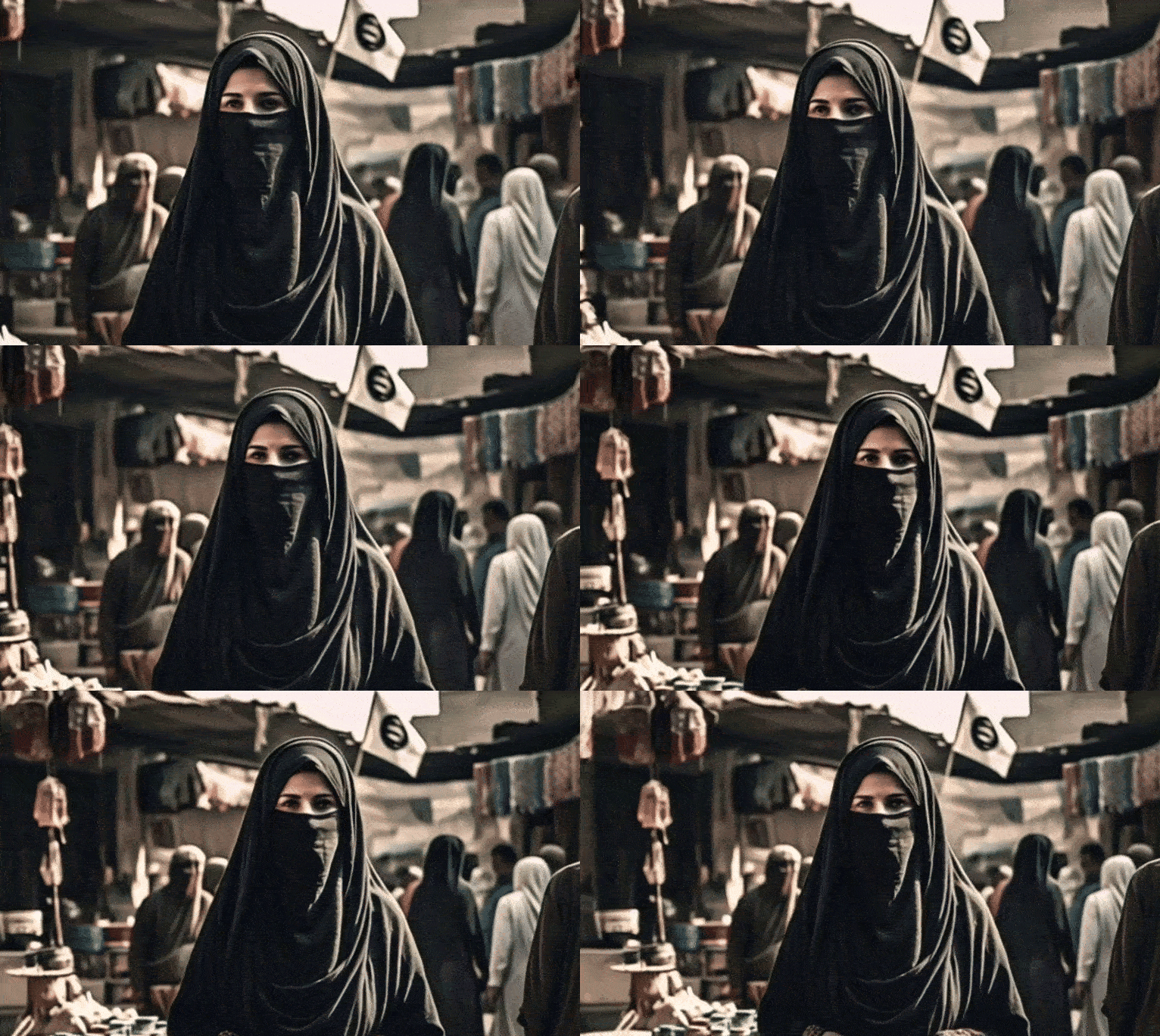
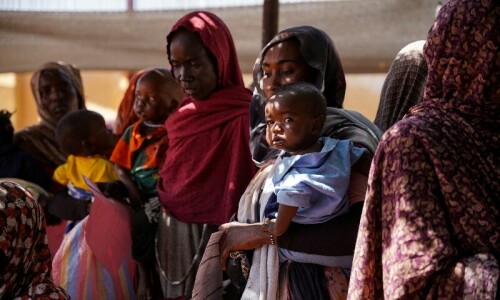
But for many places, this day is a reflection of the challenges that plague women’s journey towards empowerment. Take regressive societies and conflict zones — Afghanistan and Gaza — where women endure adversities that beggar description: they are made invisible through moral policing, denial of education, healthcare and employment, and experience violence, aggression, starvation and more.
On the home front, the realisation that a large part of Pakistan’s misfortunes is a consequence of women’s oppression is lost on the rulers. Pakistan’s women, largely encumbered by poverty, health risks and abuse, with scanty access to knowledge and opportunities, bear a weighty cross. Hence, the UN theme ‘For ALL women and girls: Rights. Equality. Empowerment’, which demands action that assures equal rights, prospects and a “feminist future”, particularly for young females and adolescent girls, holds particular significance for a country devoid of them.
Over the years, the reluctance shown by our leadership to liberate the country’s institutions from the visceral language and culture of patriarchy and power has turned the possibility of moving towards purposeful empathy into a tall ask.
Despite definitive movement in the form of pro-women legislation, constitutional protections and commitments to international treaties, the statistics narrate a sorry tale: in 2024, the human rights ministry said that in the last three years, 63,000 cases of violence against women were reported; most cases, sadly, do not come to light.
The Global Gender Gap Index 2023, released by the World Economic Forum, ranks Pakistan 142 out of 146 countries and as one of the worst performing countries in gender parity, with grim literacy and high school dropout rates, and an age-old climate of disdain towards women’s education. The Labour Force Survey 2020-21 shows that female participation stood at 15.5pc.
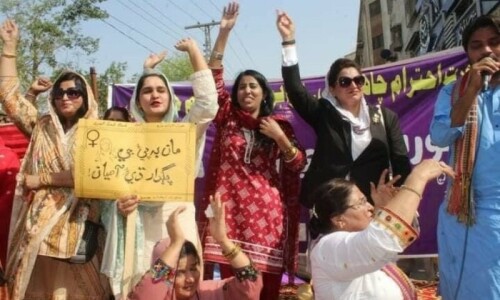
So what hope do Pakistani women have of breathing in an equitable rights environment? There is defiance aplenty alongside some glimmers of hope. Two Pakistani women became international portraits of courage under fire — Baloch rights activist Mahrang Baloch and singer Hadiqa Kiyani featured in the BBC 100 Women 2024 list, and novelist Alishba Khan Barech was a finalist for the 2025 Women Changing the World Awards.
Interestingly, Aurat March will occur on multiple dates; ‘2025: The year of the Aurat March Caravan’ states that challenging norms and accommodating varied feminist representations are central to the movement.
But the fact that a new order remains a utopian dream is a brutal indictment of the state. Patronage extended to reactionary quarters is the original sin. Without it, this struggle could have been condensed into years. We now face a moment of truth.
Published in Dawn, March 8th, 2025