• Remedial steps may include curbing development programme, higher revenue collection from retail, real estate
• Pakistan ‘well positioned’ for first review of Fund’s bailout, says finance minister
ISLAMABAD: The government may need to implement a combination of revenue measures and fiscal tightening — primarily by curbing development spending — in the final quarter of the current fiscal year before securing the next $1.1 billion disbursement from the International Monetary Fund (IMF).
Informed sources said that new fiscal measures, likely to take effect from April 1, could involve a three-pronged approach: stricter control over the Public Sector Development Programme (PSDP); enhanced revenue collection from sectors with lenient enforcement, such as retail and real estate; and activation of contingency measures committed under the $7 billion Extended Fund Facility (EFF) last year to make up for the revenue shortfall in the first half of the year as well as subsequent months.
Officials estimate that these measures could help bridge the Rs600 billion fiscal gap accumulated over the past eight months. However, with business as usual, the shortfall could exceed Rs1 trillion by the end of the fiscal year.
There could be some adjustments for lower-than-forecast inflation and other trade realities, but “strong commitment for reforms must now translate into robust numbers on the table, not just the talk, and authorities have to show quality implementation in new areas”, an official said. He added that the FBR had committed about Rs250bn new revenue from retailers and substantial flows from the real estate as well.
The IMF staff mission and the Pakistan authorities will be working out further details to determine how much each measure should exactly fill the gap as they continue talks until March 14. The IMF mission had a “kick-off meeting” with a Ministry of Finance team led by Finance Minister Muhammad Aurangzeb on Tuesday, although it had started sectoral engagements on Monday.
If negotiations conclude successfully, Pakistan is anticipating a second tranche of more than $1bn of the $7bn loan programme.
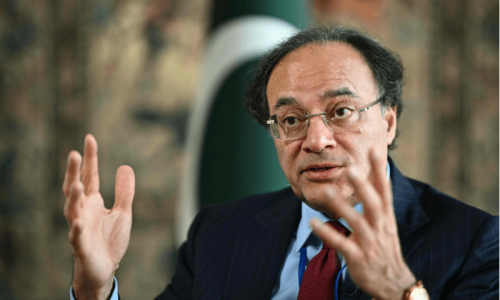
The finance minister said Pakistan was “well positioned” for the first review of the bailout programme. “They are here. We will have two rounds of talks, first technical and then policy level,” he told Reuters. “I think we are well positioned” for the review.
The 37-month facility was finalised in July last year based on budgets approved by the parliament and formally signed in September 2024. The first tranche worth about $1.1bn was disbursed upfront. All seven equal tranches should flow every six months, subject to full compliance with quantitative performance criteria, structural benchmarks and indicative targets.
To meet IMF-mandated fiscal targets, the government had already committed to contingency revenue measures, triggered if the three-month rolling average revenue collection falls short by 1pc. These measures include higher advance income tax on industrial and commercial imports; a 1pc increase in withholding tax on supplies, services and contracts; and a 5pc hike in the Federal Excise Duty on aerated and sugary drinks.
Last week, a senior government official involved in preparations for the IMF review said there were some technical slippages for certain given deadlines, but they had been overcome with some delays — within weeks or a month. “The performance review, in principle, is based on the first half of the current fiscal year — July 1 to Dec 31, 2024 — and while some shortcomings could be observed at that time, all those missing links have now been covered,” he said.
The most critical weakness observed so far had been the revenue shortfall against programme targets, which had been compensated by a higher-than-targeted primary budget surplus and greater-than-estimated revenue-to-GDP ratio owing to better receipts from non-tax revenues like central bank profit, petroleum levy, telecom profits, etc.
According to the IMF, a significant share (around 45pc) of the EFF-envisaged fiscal adjustment (about 3pc of GDP) was legislated upfront as a prior action in federal budget 2024-25, alongside implementation of a large increase in electricity tariffs as part of a new energy policy.
The remaining structural conditionality was oriented towards strengthening the tax system, addressing energy bottlenecks, restructuring or privatising public sector enterprises, strengthening central bank operational independence, enhancing financial sector stability and protecting the most vulnerable.
Just before the IMF mission’s visit, the lender reiterated last week that its programme aimed to raise Pakistan’s notably low tax-to-GDP ratio by 3pc of GDP while improving the fairness and efficiency of the tax system by broadening the tax base and improving compliance.
Three key areas of focus include expanding direct taxes by bringing retailers, property owners and agricultural income into the tax net; rationalising personal and corporate income taxes by reducing exemptions and streamlining rates in the general sales tax system; and enhancing Federal Excise Duty coverage and eliminating tariff exemptions to increase customs revenue.
Published in Dawn, March 5th, 2025