Local NGOs allowed to help flood-hit families



ISLAMABAD: The government has allowed all local non-governmental organisations (NGOs) to conduct relief, rehabilitation and reconstruction activities in flood-affected provinces for six months — from August 2022 to February 2023.
It may be recalled that in 2013, the government introduced a policy for “regulation of organisations receiving foreign contributions”.
The policy serves as a framework to facilitate the NGO sector in accessing foreign funding for their planned activities. Thus, only those local NGOs can carry out relief activities in the flood-battered provinces which have met the required criteria.
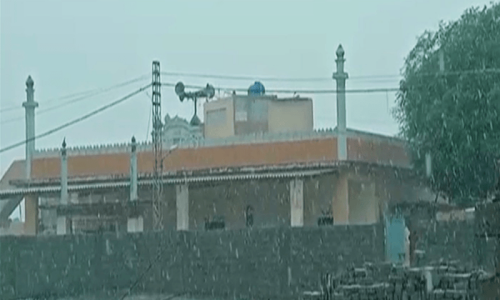
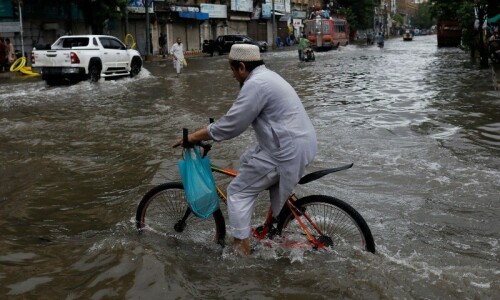
Over one million people have been affected by heavy rains and floods across Pakistan during the prevalent monsoon season.
A total of 580 people have been killed and another 939 injured.
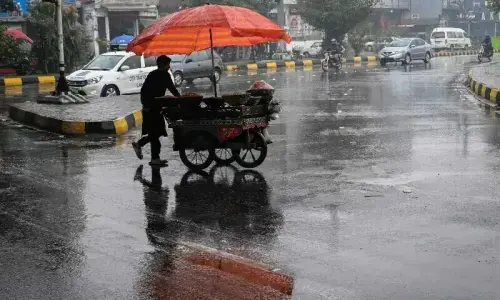
Heavy monsoon rains and increased thunderstorms are forecast across Pakistan till Aug 19, mostly affecting southern areas.
According to a report issued by the UN Office for the Coordination of Humanitarian Affairs (UNOCHA) on Saturday, the Balochistan PDMA in collaboration with UN and its partners has launched a rapid multi-sectoral needs assessment in 10 most affected districts.
The exercise is being done in coordination with relevant parties to avoid duplication and ensure complementarity between this and the damaged needs assessment being done by the Asian Development Bank and World Bank.
The assessment pays particular attention to protection, gender-based violence and gender dimensions given the heightened risks during emergencies. The report says humanitarian partners are working together with national and provincial disaster management authorities, the Pakistan Army and the Frontier Corps to conduct rescue and relief activities.
The government has identified food security, agriculture and livestock; health; water, sanitation and hygiene; and shelter and non-food items as priority needs for the immediate flood response.
Some 107,000 livestock, including 29,000 large ruminants, have perished during the floods, according to the National Disaster Management Authority.
Published in Dawn, August 14th, 2022