Chinese rights lawyer jailed for 'state subversion'


 8
8
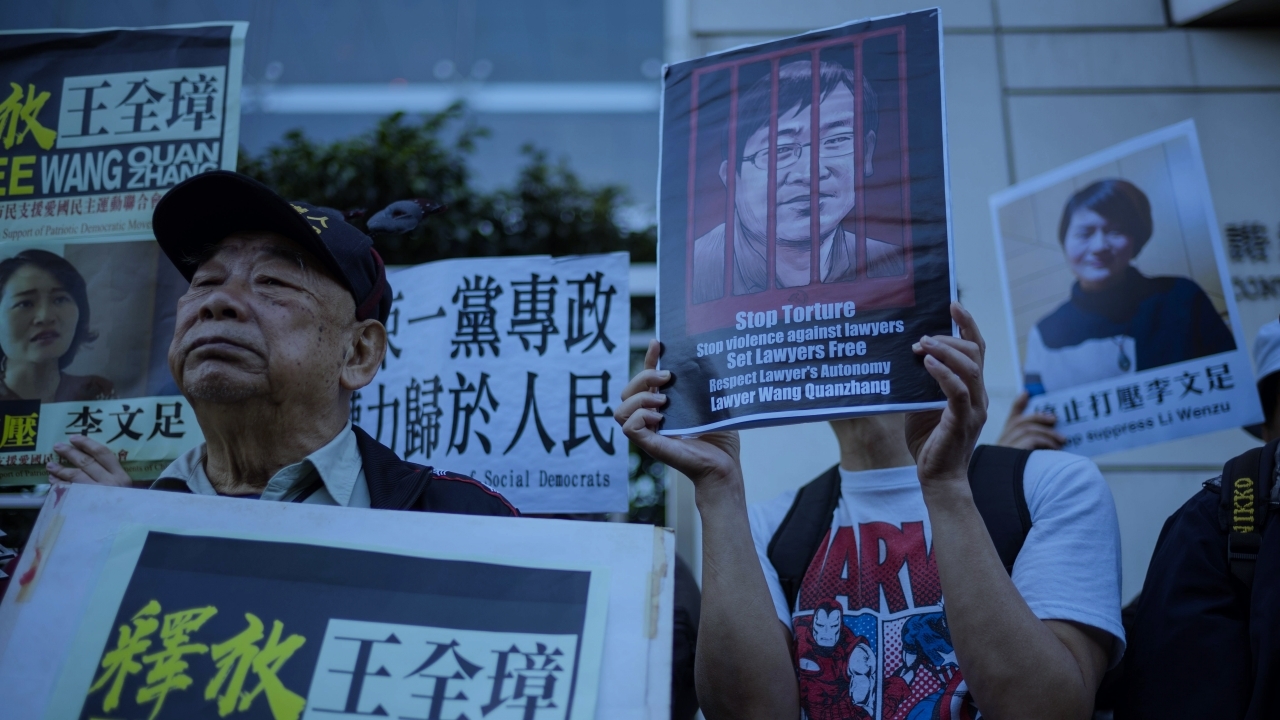
Prominent Chinese human rights lawyer Wang Quanzhang was sentenced on Monday to four and a half years in prison for state subversion, sealing the fate of another attorney swept up in a 2015 crackdown.
Wang, 42, who defended political activists and victims of land seizures, disappeared in the sweep — known as the "709" clampdown — aimed at courtroom critics of Communist authorities.
Charged in January 2016 with alleged state subversion, Wang had been the last of more than 200 lawyers and activists arrested in the crackdown to be tried or released. The event is dubbed "709" because the arrests started on July 9, 2015.
Wang was "found guilty of subverting state power, sentenced to four years and six months in prison, and deprived of political rights for five years", the Tianjin Second Intermediate People's Court said in a statement.
"He has not committed any crimes, so there shouldn't be a sentence," Li Wenzu, Wang's wife, told AFP at her home in Beijing, adding that she found out about his sentence over the internet.
"I think the ones who are guilty are the judicial authorities, not him," she said.

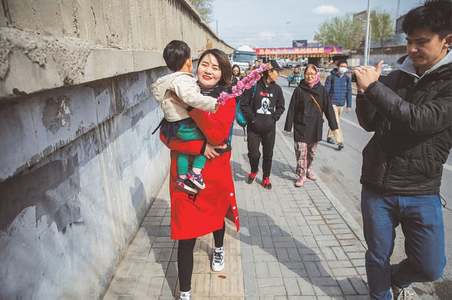
Wearing a black hoodie with her husband's name and face printed on the front, Li said she was "very worried" about his health.
Citing Wang's lawyer, Li said the 10-day period to submit an appeal starts Tuesday and that they will "of course appeal".
After more than two years of being in legal limbo — detained without a trial date — Wang's court hearing took place behind closed doors in Tianjin on December 26.
Li, who has actively protested her husband's detention, was placed under de facto house arrest the day before the trial to prevent her from attending.
In December, before Wang's court date was announced, Li and three supporters shaved their heads and tried to submit a petition to a Beijing court protesting his detention.
Last April, Li attempted to march 100 kilometres (60 miles) to the detention facility in Tianjin where her husband had been held.
She plans to try visiting it again on Chinese New Year's Eve next week, she said.
"I still cannot stop — I must continue to defend civil rights."
'Gross injustice'
Rights organisations denounced Wang's jail sentence, with Amnesty International calling it "a gross injustice".
"His sentence is part of the Chinese government's ongoing crackdown on rights lawyers," said Maya Wang, senior researcher at Human Rights Watch.
"In the past three years, the Chinese government has not only detained and imprisoned rights lawyers but also debarred them," she told AFP.
According to Doriane Lau, China researcher at Amnesty International, Wang's four-and-a-half year prison sentence includes the more than three years the rights lawyer spent in detention.
"He should be released in a little over a year," she wrote on Twitter.
Article 47 of China's criminal law says that prison terms are "to be shortened by one day for each day spent in custody" for cases where imprisonment is "employed before the judgement".
'Disrupting social order'
In addition to Wang, a number of other rights lawyers and activists detained by Chinese authorities in the 709 crackdown have also been charged with state subversion.
In December 2017, Chinese dissident Wu Gan was sentenced to eight years in prison, one of the harshest punishments meted out in the sweep.
Wang was part of a now defunct law firm called Beijing Fengrui, which specialised in cases involving farmers' land rights, labour camps and criminal rights.
The firm had also frequently defended victims of sexual abuse, dissident scholars, and members of banned religious groups. Wang, for instance, had worked on several cases defending Falun Gong practitioners.
The law firm had been at the centre of the 709 crackdown, with at least five lawyers detained in 2015.
At the time, state media called Beijing Fengrui a "major criminal gang", and accused Zhou Shifeng, the firm's founder, and his colleagues of "disrupt(ing) social order".
Other attorneys at the firm, such as Liu Xiaoyuan, who told AFP that he believed Wang had been "wrongfully convicted", have been unemployed since the crackdown.