Chinese human rights lawyers jailed for two years for 'inciting subversion of state power'



A prominent Chinese human rights lawyer was sentenced to two years in prison for “inciting subversion” on Tuesday, the latest jailing in an intensifying crackdown on rights defenders and activists.
Jiang Tianyong, 46, took on many high-profile cases including those of Falun Gong practitioners, Tibetan protesters and victims of the 2008 contaminated milk powder scandal, before being disbarred in 2009.
He sat in court flanked by two police officers as a judge read the sentence and told him he would also be deprived of political rights for three years, according to a video released by the Changsha Intermediate People's Court.
The court accused him of “inciting subversion of state power” and defaming the government, following a trial that Amnesty International on Tuesday called a “total sham”.
“Jiang Tianyong has long been infiltrated and influenced by anti-China forces and gradually formed the idea of overthrowing the existing political system of the country,” the judge said.
The court said he had gone abroad for training on how to accomplish the goal and “applied for financial support from foreign anti-China forces.”
In the years leading up to his detention, Jiang had repeatedly met with foreign officials and politicians to discuss China's human rights situation.
The United Nations special rapporteur on human rights has said he feared Jiang's previous disappearance was in part retaliation for the lawyer's assistance to UN experts.
Jiang's family has been unable to contact him since his sudden disappearance last November en route from Beijing to Changsha, where he had gone to inquire about detained human rights lawyer Xie Yang.
Xie was detained in the “709 crackdown” of July 2015, and his claims of being tortured in custody, which Jiang helped to publicise, prompted international concern.
In that crackdown, more than 200 people were detained, including lawyers who took on civil rights cases considered sensitive by the ruling Communist Party.
'Chilling effect'
In August, Jiang told judges he was “ashamed” of having incited “subversion”.
Amnesty called the proceedings “an act of political theatre” featuring testimony “most likely extracted under duress.”
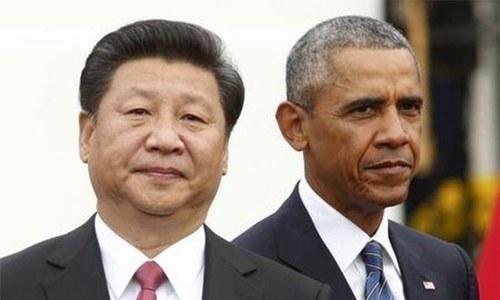
There has been a resurgence of reports of public confessions since Chinese President Xi Jinping took power in 2012 and tightened controls on civil society.
The government initially targeted political activists and human rights campaigners, but it has increasingly turned its attention to the legal professionals who represent them.
Jiang's sentence was “a textbook example of the Chinese authorities' systematic persecution of those who are brave enough to defend human rights in China today,” said Amnesty International China researcher William Nee.
Nee said it was likely to have a “chilling effect” on other activists, since the evidence used against him was so minimal: critical social media comments, attendance of overseas trainings, and showing moral support to other human rights defenders facing trials.
“Many activists also do these things, and now they are likely to be frightened by how the government is spinning this case and demonising Jiang Tianyong,” he said.
'History will remember'
Jiang's wife, Jin Bianling, said none of the lawyers she had hired were allowed to see her husband and she only learned in August that the court had appointed one.
“I contacted him continuously, but as soon as he heard I was Jiang Tianyong's wife, he would immediately hang up the phone,” Jin, who fled to the US in 2013, told AFP by telephone.
She said the court had tried to pit Jiang's parents against her, telling them she had been “brainwashed by the West” and to cut off contact.
His father was allowed into the courtroom Tuesday, but his sister was blocked from attending, she added.
Four wives of lawyers detained in the 709 crackdown who came to show support were harassed by plainclothes agents and also denied entry in Changsha.
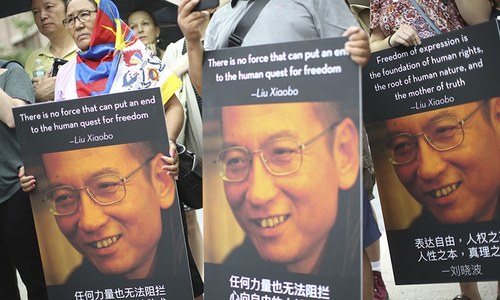
Jin voiced fears for her husband's health in prison, citing the cases of other activists, such as Nobel laureate Liu Xiaobo, who died of liver cancer in July after years of imprisonment.
“When I heard all the charges they listed against him, I felt my husband was very righteous. They made me greatly admire him,” she said.
“I think history will remember what my husband has done.”