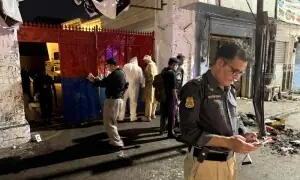
RADDUL Fasaad, the ‘mopping up’ phase of Operation Zarb-i-Azb, was always going to be a dangerous undertaking, albeit a necessary one. As reported by the ISPR on Wednesday, an intelligence-based operation in Quetta district’s Killi Almas area claimed the life of a senior military official in a fierce exchange of gunfire with the terrorists. Colonel Sohail Abid was martyred in the line of duty, even as his courage and that of the security forces accompanying him — four soldiers were wounded, two of them critically — resulted in the death of Salman Badeni, a key Lashkar-i-Jhangvi leader. Badeni, who had a Rs2m bounty on his head, is believed to have been involved in the murder of over 100 Shia Hazaras and policemen in Balochistan. Two would-be suicide bombers were also killed, and one militant taken into custody. The intelligence leading to the operation had been provided by previously arrested ‘high-value’ targets.
Over the past decade, Balochistan has come to be viewed purely through a narrow, securitised lens which has for various reasons contributed to the province becoming a melting pot for all manner of outlawed groups, including both Baloch insurgents and violent extremists, with dire consequences for all Pakistanis. In particular, the Shia Hazaras have been consistently targeted by bloodthirsty sectarian groups such as the LeJ. The spike in attacks against them recently was clearly the catalyst for the latest military action. And that is where the state falls short in its counterterrorism strategy. While such intelligence-based operations are vital, they deal with the symptoms rather than the disease. Last June, there was a similar IBO in the aftermath of the kidnapping of two Chinese nationals from Quetta, and a number of hard-core terrorists militants were slain in an area that was an operational base for the LeJ and elements of the militant Islamic State group. Yet, the targeted killings of the Hazaras — who live in the backyard of these violent groups — did not end, even as the rest of the country heaved a sigh of relief at the respite from violence. To ensure the gains from kinetic operations are sustained, extremist ideologies must be eradicated. That requires steps such as ensuring no one gets away with inciting hatred and violence, whether in sermons or in wall chalkings, no banned groups hold rallies, none of their activists/members stand for elections, etc. In short, it requires an unflinching application of the National Action Plan.
Published in Dawn, May 18th, 2018