1
1

Q. I have a hawthorn tree that flowers profusely but does not bear berries. What could be the problem?
A. Hawthorn — botanical name Crataegus — is a beautiful small tree or bushy shrub which smothers itself in delicately-scented blossom in spring. This species, only indigenous in localised pockets in the Northern areas, can take as long as 20 years to begin bearing fruit. This being the case, perhaps your specimen is still too young to fruit. Hawthorn thrives in poor, well-drained soil conditions and in areas blessed with very cold, snowy, winters. Alternatively, it could be that it will not fruit in your particular local climate. It would have helped if you had provided your location rather than leaving me to guess: different plant species have differing climatic needs which is why information about locality is so important.
Q. I planted a pecan tree 12 years ago and it began bearing nuts three years back. I have observed that its bearing on the northern and western sides is richer than on the eastern and southern sides. May I know the reason for this?
All your gardening queries answered
A. A very interesting observation indeed and one which has certainly made me wrack my brain. I can only surmise — in the absence of any traceable scientific commentary — that this is related to the amount of direct sunlight, and associated, concentrated seasonal heat, each side of the tree receives. It seems that the tree is fruiting best on its cooler sides but I know of no specific reason for this.
Q. My lemon tree used to give lots of fruit but, a few months back it started to dry out and completely stopped fruiting. How can I save the tree? I live in Karachi.
A. Unfortunately, action should have been taken immediately when you noticed that your tree was dying. All these months later the tree is, sadly, past the stage where it can be saved. There are many reasons why it got sick and much more information is required before I could comment on the possible problem. Now, though, the best thing to do is to completely remove the poor tree, also digging out as much of its root system as possible and — in case of soil infection — also remove quite a bit of the existing soil from the tree root area: disposing of this possibly infected soil in a sensible manner well away from your garden. Replace the soil with new sweet earth mixed with some old, well-rotted, organic manure/organic compost and, this being December, go and purchase a replacement tree from your local nursery and patiently begin again.
Q. How can I grow coriander/cilantro in pots?
A. Use clean pots with clear drainage holes in their base. Simply fill these to within an inch or so of the top — 10-inch clay pots are ideal — with a good quality, preferably organic (chemical free) mix of sweet soil and compost. Scatter a few coriander seeds on top of the soil mixture and then cover, with no more than a light sprinkling, with more of the soil mixture. Water, but do not flood, the seed pot to settle everything into place, stand the pot in a bright, sunny place where it gets plenty of winter sunshine, water lightly each evening and the seeds should begin to germinate within seven to 10 days. Good luck!
Q. I really enjoyed your recent article about growing vines and creepers and now want to do this in my Islamabad garden. Please suggest some species that will do well here and which are easy to find in the local nurseries.
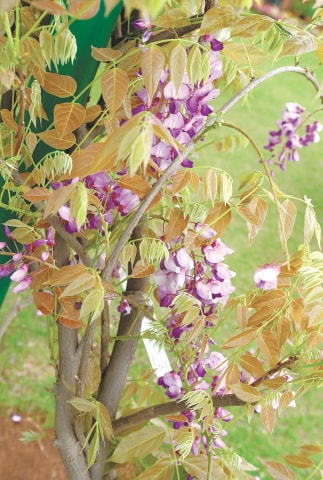
A. Passiflora (passionflower vines), Tecoma grandiflora (trumpet vine), climbing jasmine, Wisteria sinensis (wisteria), Bougainvillea and Bignonia venusta (golden shower) should all meet your requirements and are relatively easy to find in local nurseries.

Q. Is it a good idea to transplant/re-pot plants gradually from their existing pot to a little larger one and so on until eventually they are in a suitably large pot/container rather than simply transplanting/re-potting directly from a small pot into a very large one in just one step?
A. It all depends on the plant species involved. A fast growing species that is quickly going to reach a large size would benefit from being transplanted directly from the small pot in which it was initially grown directly into a large one in which it will be happy for a long time to come. On the other hand, a very slow growing species, one that is going to take a long time to attain a large size, may be quite lost if transplanted from a small pot directly into a huge one where it may take years to utilise the space. It is, of course, always preferable not to disturb plant roots if it can be avoided but, as explained, different species have different growing habits and space requirements so please try to judge transplanting/re-potting after giving careful consideration to each plant species involved.
Q. Should we de-bud and remove damaged leaves/stems from all plants from late autumn onwards?
A. Damaged leaves/stems should be removed from plants, irrespective of species, whenever they are seen, all around the year, to help avoid infection/disease and insect infestation. De-budding only applies to certain plant species under certain conditions and for specific reasons. Please get back with exact plant names if more information is required.

Q. Can Peace lilies, lavender and African violets be grown in Lahore?
A. Yes to all, as long as species’ specific care and growing conditions are provided and maintained.
Please continue sending your gardening queries to zahrahnasir@hotmail.com. Remember to include your location. The writer does not respond directly by email. Emails with attachments will not be opened.
Commercial enquiries will be ignored
Published in Dawn, EOS, December 17th, 2017