REGION: DEATH OF THE ‘RULES-BASED ORDER’
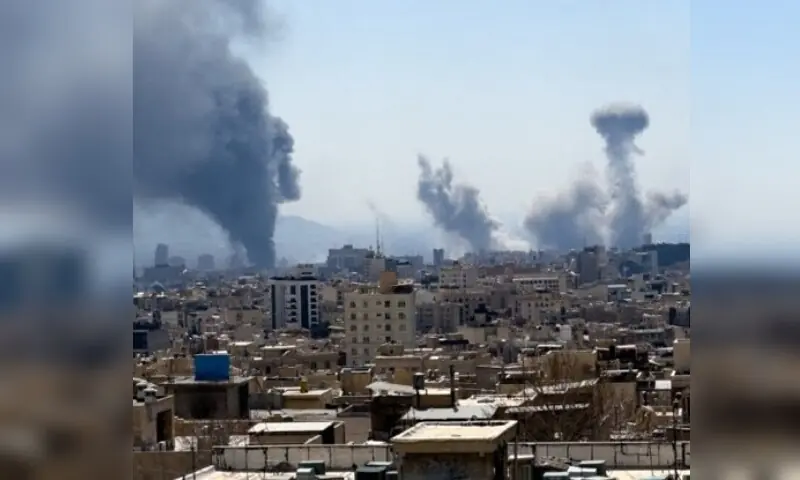
The joint US-Israeli strikes on Iran represent a further erosion of the international legal order. Under international law, these attacks are neither preemptive nor lawful.
Israel and the United States launched Operation Shield of Judah and Operation Epic Fury while diplomatic negotiations between Washington and Tehran were actively underway on Iran’s nuclear programme.
Just two days earlier [on February 27], the most intense round of US-Iran talks concluded in Geneva, with both sides agreeing to continue. US President Donald Trump indicated he would give negotiators more time. Then came the bombs.
Neither preemptive nor legal, US‑Israeli strikes on Iran have blown up international law
The illegality of the attack
Israel said the strikes were “preventive”, meaning they were to prevent Iran from developing a capacity to be a threat. But preventive war has no legal basis under international law. The UN Security Council did not authorise any military action, meaning the sole lawful pathway for the use of force for self-defence was never pursued.
Article 2(4) of the UN Charter prohibits the use of force against the territorial integrity or political independence of any state. Preemptive self-defence, as we have argued previously, has extremely narrow prescriptions under the Caroline doctrine. It requires a threat to be “instant, overwhelming, and leaving no choice of means.” No such conditions existed with Iran on February 28.
Central to the current crisis is that it was [US President Donald] Trump who ended the Joint Comprehensive Plan of Action (JCPOA) in 2018, which had regional support for controlling Iran’s nuclear programme. The US director of national intelligence testified in March 2025 that Iran was not pursuing nuclear weapons, which the head of the International Atomic Energy Agency affirmed.
US intelligence also reportedly indicated it would take three years for Iran to build a nuclear weapon. Moreover, US and Israeli strikes on Iran last year had put the programme back by months. Trump claimed Iran’s nuclear program had been obliterated.
Regime change by force is unlawful
Trump said the attacks were intended to end Iran’s nuclear weapons programme and bring about regime change. Trump urged Iranians to “take over your government”, while Israeli Prime Minister Benjamin Netanyahu declared the goal was to “remove the existential threat posed by the terrorist regime in Iran.”
Forcible regime change violates the foundational principles of state sovereignty and non-intervention under the UN Charter.
The strikes targeted Iran’s supreme leader, president and military chief of staff, as well as military infrastructure. Deliberately targeting heads of state also crosses a threshold that distinguishes military operations from acts of aggression.
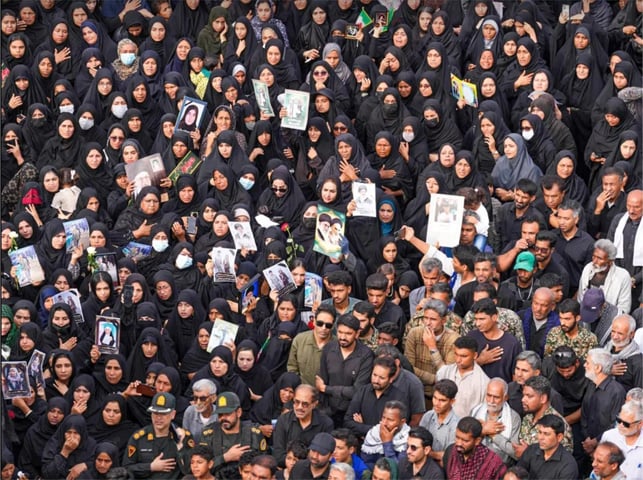
Attacking heads of state is illegal under the New York Convention, for obvious reasons of stability. With the death of Iran’s supreme leader, Ayatollah Ali Khamenei, the power vacuum will only increase the hardship on the ground for Iranians.
In addition, promises to return the shah — Iran’s previous monarch — have not considered the authoritarian implications of such rule.
Reports that an airstrike on an elementary school in Minab killed at least 100 girls [latest count: 171 fatalities] aged between seven and 12 underscore the human cost of unplanned regime change.
US and Israeli statements imply that regime change is prioritised over any plans of a replacement. But just like the aftermath of the death of Libyan leader Muammar Qaddafi that saw slavery return to Libya, or how Islamic State filled the power vacuum after the death of dictator Saddam Hussein in Iraq, regime change requires extremely careful planning.
In this case, there is no obvious plan to rebuild or stabilise Iran after these strikes. Western allies have expressed concern that Washington lacks a coherent strategy for the aftermath of the attacks, noting the minimal preparation for post-conflict reconstruction and government transition.
As Mexico’s representative stated at the UN Security Council following recent US actions in Venezuela, the historical record of regime change shows it has only “exacerbated conflicts and weakened the social and political fabric of nations.” According to The Atlantic, “complete chaos” is likely.
Launching strikes during active negotiations violates the principle of good faith in Article 2(2) of the UN Charter. As the Arms Control Association noted, Iranian policymakers had already accused the US of bad faith after the June 2025 strikes disrupted previously scheduled talks.
Iran’s Foreign Ministry denounced the February 28 attacks as striking during negotiations, violating international law.
World leaders’ response
We should be dismayed by the worrying acceptance of increased brazen illegality by Western leaders, including our own [Australia’s] prime minister. [Australian PM] Anthony Albanese has supported the strikes as “acting to prevent Iran from obtaining a nuclear weapon.” This places Australia, once again, in open contradiction with basic principles of liberal international order.
France, Germany and the United Kingdom issued a joint statement urging Iran to negotiate a solution, condemning Iranian retaliatory attacks. However, they did not directly comment on the US and Israeli strikes on Iran. Their silence is deafening.
Russia and China criticised the US-Israeli actions and urged an immediate end to military operations and a return to diplomatic negotiations.
The international legal order is now in free-fall. When powerful states conduct illegal wars under the guise of prevention, weaponise diplomacy as cover and openly pursue regime change, the “rules-based order” is literally dead.
Shannon Brincat is Senior Lecturer in Politics and International Relations at the University of the Sunshine Coast in Queensland, Australia
Juan Zahir Naranjo Cáceres is a PhD Candidate in Political Science, International Relations and Constitutional Law at the University of the Sunshine Coast in Queensland, Australia
Republished from The Conversation
Published in Dawn, EOS, March 8th, 2026