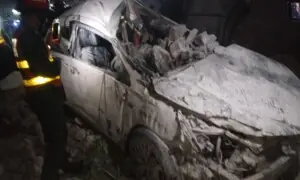
‘Rescuers don’t enter blazing buildings when facing life threat’
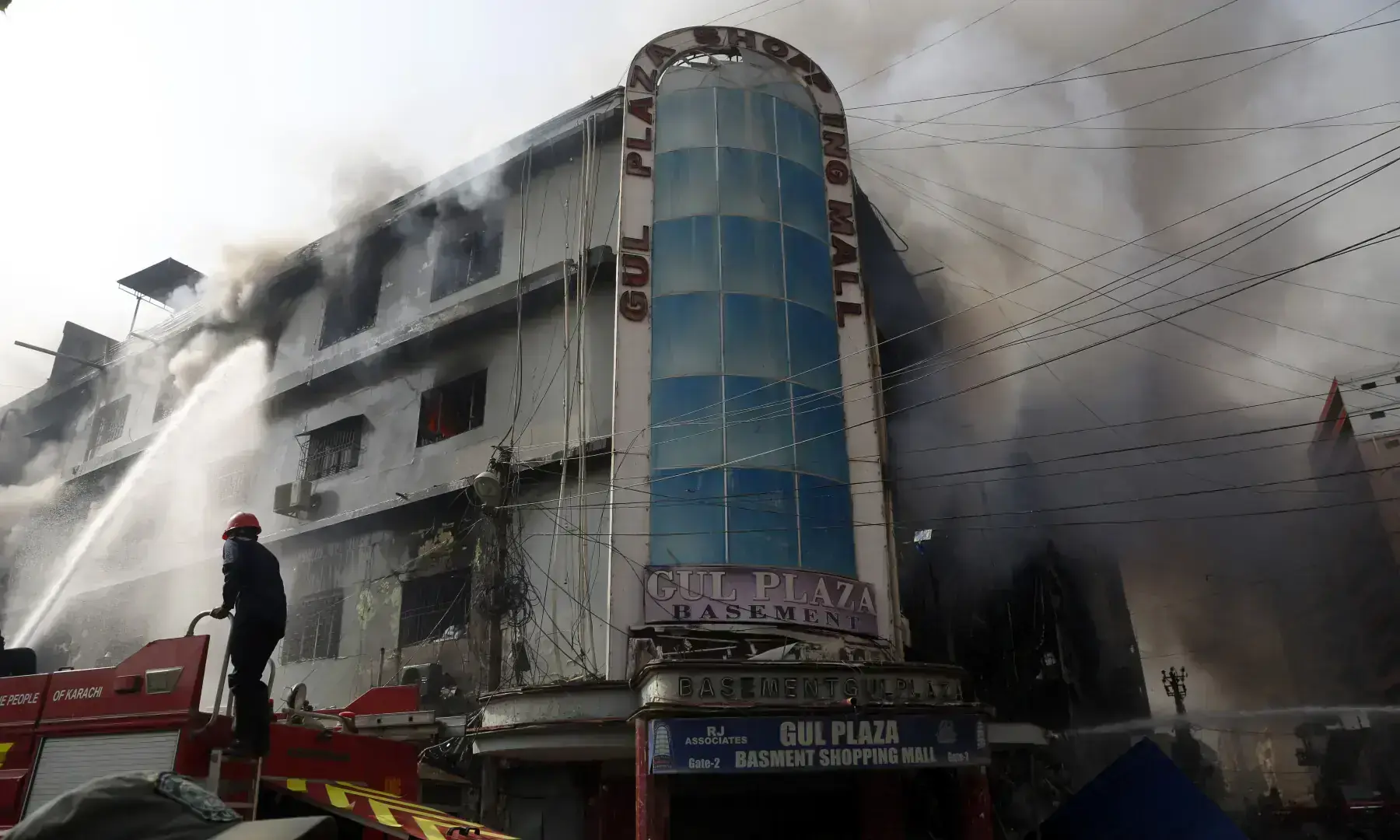
KARACHI: The Gul Plaza Judicial Commission was informed that delayed information flow, shortage of trained manpower and limited specialised machinery with Rescue-1122, access constraints and lack of a unified command structure have collectively reduced operational effectiveness during the deadly inferno.
The Sindh Emergency Rescue Service, commonly known as Rescue 1122, also submitted that the tragic incident had exposed critical gaps in both preventive fire safety measures and emergency response mechanism as deficiencies in building safety infrastructure, lack of awareness and training as well as absence of fixed fire protection systems had significantly increased vulnerability prior to the incident.
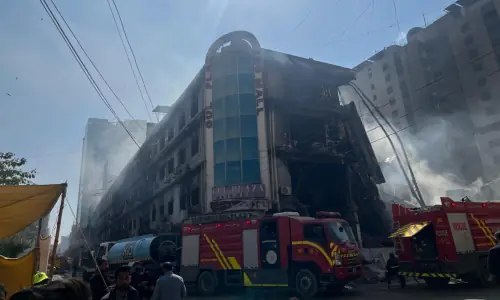
The director general of Rescue-1122, retired Brigadier Wajid Sibghatullah Mahar, in a statement / reply to various questions of the single-member commission headed by Justice Agha Faisal of the Sindh High Court also maintained that the rescue service had attempted to enter the building to evacuate trapped people, but the plaza was already engulfed in a category-III fire when the rescue team had arrived.
The DG Rescue-1122 in his reply submitted that the rescue service had received information about the fire at 10:36pm, teams had arrived at the site at 10:53pm and visible victims were extricated through the windows and top floor of the building.
Rescue 1122 chief submits reply before Gul Plaza Judicial Commission; highlights limited specialised equipment, lack of unified command for reduced operational effectiveness
About a query whether Rescue-1122 attempted entry into the building, the reply said, “Yes, team tried from M.A. Jinnah Road/ramp, but team observed that the fire had already escalated to a third-degree blaze, fully engulfing the structure with dense smoke. Interior rescue operations in fully developed fire conditions are governed by life-risk versus responder-risk protocols. Entry is not undertaken where thermal conditions, smoke density, or structural integrity present imminent threat to responder safety”.
It also stated that the fire brigade was the first responder at the incident site and the lead agency throughout the emergency response and the Rescue-1122 had remained fully coordinated with it, but upon arrival of rescue teams the fire had engulfed the entire building substantially reducing survivability window for the trapped people.
Additionally, the DG maintained that delay in reporting the incident, shutdown of electricity resulting in complete darkness inside the building and absence of illuminated exit signage had adversely affected evacuation and survivability before the arrival of emergency responders.
Responding to another question of the commission about missed rescue opportunity, the Rescue-1122 chief was of the view that rescue opportunities were considerably constrained due to advanced fire development upon arrival and multiple environmental and structural risk factors beyond operational control including lack of adequate exit routes, closure of windows particularly at mezzanine floor and early shutdown of power without coordination.
It claimed that there was a significant delay in relay of information from the Gul Plaza administration to relevant authorities as emergency services were informed when the fire had already engulfed a major portion of the structure.
However, it also conceded that specialised equipment such as fire tenders with high-capacity pumps, snorkels and aerial ladder platforms were not available with Rescue-1122 to manage high-intensity and multi-storied nature of fire and the absence of such machinery restricted access to upper floors and delayed rescue operations for trapped occupants.
The DG was also of the view that lack of unified command integration evolved during the course of operations with the KMC maintaining lead firefighting authority in accordance with local jurisdiction.
It further blamed the ongoing mass transit infrastructure works for reducing operational space around Gul Plaza and uncoordinated presence of various charitable organizations and ambulances had also blocked critical access routes furthering slowing response time while a large uncontrolled crowed gathered at the scene interfered with emergency operations.
About internal accountability measures, the Rescue-1122 chief also said that an inquiry was conducted to assess operational performance and the same has highlighted specific operational and systemic deficiencies which have been formally documented for corrective action.
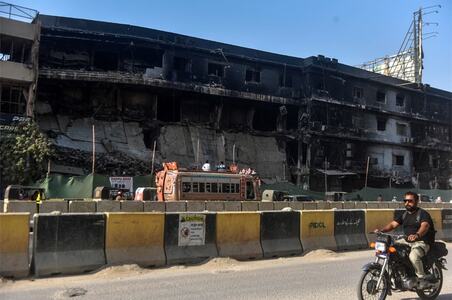
The rescue service chief also maintained that as per initial analysis, the building lacked a proper fire suppression system as sprinkler system, hydrant system and fire alarm system were not in place while fire exits were either blocked or encroached upon and the floors were vertically interconnected through ventilation ducts which facilitated the rapid speared of fire from the ground to upper floors.
It further said that the Rescue-1122 has a total of 15 fire tenders and 10 were deployed in Karachi division.
Published in Dawn, March 12th, 2026