The Human Rights Commission of Pakistan (HRCP) on Monday flayed Punjab government officials for the "apparent racial profiling" and "stereotyping" of Pashtuns in the province as authorities step up a crackdown against militancy after a recent surge in terror attacks across the country.
An HRCP press release said administrative officials in some Punjab districts had issued formal or informal orders "asking the population to keep an eye on suspicious individuals who look like Pashtuns or are from the Federally Administered Tribal Areas, and to report any suspicious activity by them."
The HRCP, expressing 'grave concern' over the matter, called for unequivocal condemnation of "stereotyping that makes suspects of an entire ethnic group" and emphasised the need for corrective measures to be introduced for officials at the training and execution stages in order to prevent recurrence of 'racial profiling'.
"Safeguards must be announced to protect individuals from harassment or being treated as suspects because of the their appearance or facial features," the statement added.
It can be inferred that Punjab authorities believe that terrorism and militancy have been perpetrated by 'outsiders', the HRCP statement claimed.
"There are many problems with such an assertion, not least that it treats citizens with suspicion without evidence and flies in the face of the guarantee for equality of citizens and non-discrimination."
Additionally, among the consequences of "such offensive profiling is that it treats parts of population above suspicion because of ethnic identity markers".
"No longer can we live in the state of denial," the HRCP said, adding that "only across-the-board targeting of suspects can yield results."
"If the dimensions of terrorism and militancy have taught us anything, it is that domiciles do not curb the spread of their tentacles."
The HRCP's statement comes as leaders of various political parties also strongly condemn what they call the racial profiling and harassment of Pashtuns by the Punjab police after recent terror attacks across the country, and particularly in Lahore.
Know more: KP politicians slam ‘racial profiling’ of Pakhtuns in Punjab
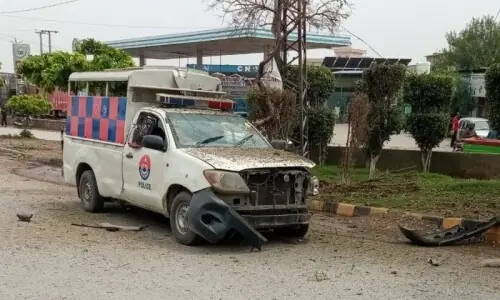
Following a suicide attack on Lahore's Mall Road on Feb 13 which claimed the lives of at least six police officials, Punjab’s law enforcement agencies launched a province-wide crackdown on banned militant organisations.
Days after the attack, the Provincial Intelligence Centre of the Punjab Home Department issued a letter directing police high-ups to tighten security in different cities of the province.
"Combing operations [must] be conducted in all targeted areas, particularly where the Afghan/Pathan community is residing," the letter read as the Home Department instructed law enforcement agencies to ensure extreme vigilance.
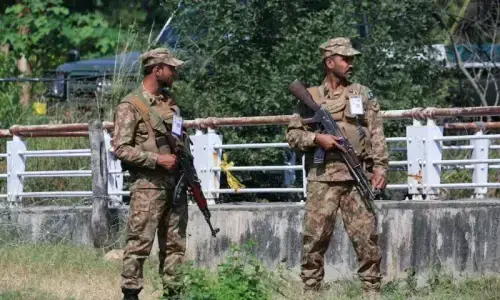
Last week, police in the Rawalpindi division also began surveillance of people belonging to Fata and considered issuing them chip-based national identity cards equipped with security features.
A senior police official had told Dawn that strict surveillance of more than 5,400 people belonging to the tribal areas and living in the Rawalpindi division had begun. He said police were also considering containing them to a specific place so that they could be watched.
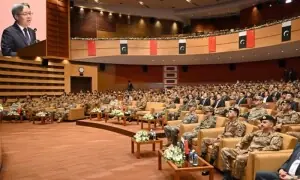
The Punjab Apex Committee, during a meeting in Lahore on Sunday, decided to expand the scope of the recently launched military operation Raddul Fasaad targeting terrorists, their facilitators and financiers. Ongoing counterterrorism operations by civil and military law enforcement agencies have resolved to root out terrorism, extremism and sectarianism
Participants of the meeting were told that over 100 suspects had been taken into custody in just one day (Sunday) from different parts of the province.
Explore: Tracking the footprints: All roads lead to South Punjab
'Intensify crackdown against illegal immigrants'
Sindh police chief A.D. Khawaja in a high-level huddle today also directed law enforcement officials to intensify a crackdown against illegal immigrants living in the province, ordering them to submit reports on a daily basis via WhatsApp, an instant messaging mobile application.
Read more: Asfandyar deplores racial profiling of Pakhtuns
The inspector general police also ordered deployment of law enforcement officials at airports, bus terminals and train stations, mosques, imambargahs, madressahs, shrines and tombs as well as schools, colleges and universities.
IGP Khawaja also called for tighter security across all government buildings and sensitive installations.