0
0
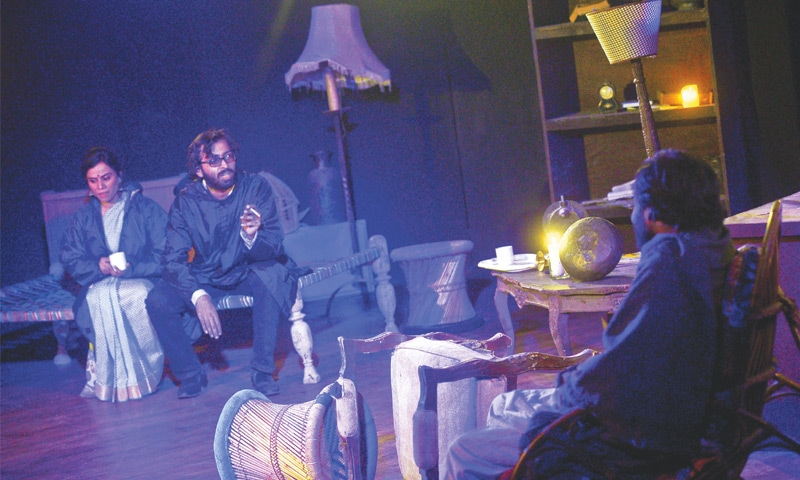
KARACHI: For a playwright, perhaps more than a novelist, nothing can be more intriguing, enigmatic and fascinating than exploring the depths or understanding the shallowness of human relationships. The themes of love, betrayal, fidelity and corroded intimate bonds have always managed to get the writers going. Indian playwright Badal Sarkar is no exception. Although his plays boast of a wide variety of subjects, discussing human ties by virtue of readily identifiable characters remains his forte.
Saari Raat, the second play presented at the Young Directors Festival organised by the National Academy of Performing Arts (Napa) directed by Syeda Maha Ali on Saturday, was an insightful study of how a married couple looks back, and forward, to assess their lives together.
The story, as can be gauged from the title, takes place in one night. At the heart of it are the married pair (Farhan Alam and Muzaina Malik) who, when the curtains go up, takes refuge in a rundown house on a day when it’s raining cats and dogs. The house is owned by an old man (Nazrul Hasan). He has no one else living with him and exudes a mysterious aura.
As they strike up a conversation, the man and his wife begin to take the lid off their personalities. The term seven-year-itch springs to mind. Their discussion with the owner of the house reveals that they’ve been living together for seven years. Ostensibly they have no issues with each other.
It’s false. They have issues because both, in terms of their outlook on life, represent different worlds. The wife is the brooding sort. She is into poetry. When the old man gets poetic during the conversation, she acknowledges it. Whereas the husband has a pragmatic approach to life, the word that he uses for the approach is ‘practical’.
Half an hour into the play the differences between the two emerge. The old man becomes the catalyst for bringing their true selves out, and soon he himself becomes an important part of the equation — the third side of the triangle. The masks start to come off and a brutal picture comes to the fore.
Saari Raat was marked by impressive performances, especially by Muzaina Malik. The ‘tone’ that she was able to develop for the character, if it’s not how she usually speaks, was pitch-perfect and suited the part to a tee. The ambience created by the director by having the room, where the action takes place, dimly lit added to the intensity of the drama. So kudos to that!
It has to be said, though, that the venue chosen for the play did not fit the bill. It cramped the actors for room. A little bit of more movement would’ve served the director’s purpose better.
Published in Dawn, January 15th, 2017