0
0
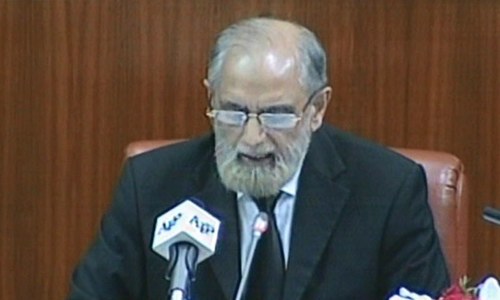
QUETTA: Chief Justice of Pakistan Justice Anwar Zaheer Jamali on Monday said the apex court is not ignorant about the all important issue of missing persons of Balochistan.
Speaking at a reception hosted by members of Balochistan High Court Bar Association, the chief justice said that "the judiciary must not forget its duties while campaigning for rights".
Zaheer Jamali was of the view that courts and judges are doing their bid to uphold rule of law in the country but to further the process "we have to follow the rule of self-accountability", he said.
The chief justice claimed that lawyers' movement played important part for the restoration of independent judiciary which led to liberating the judiciary from the clutches of dictatorship.
He, however, added that some controversial judgments in the aftermath of November 3, 2007, emergency damaged the standing and freedom of judiciary.
"But today judiciary is independent and strong," said Jamali.
Earlier, lawyers' leader Baz Muhammad Kakar said judiciary was third pillar of the State. Addressing the lawyers, he pointed out that the issues of missing persons was important in Balochistan and their solution was too important.
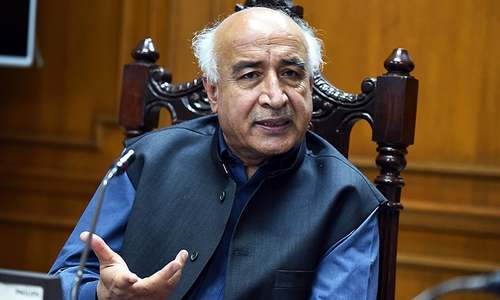
Chief Justice Balochistan High Court (BHC) Justice Muhammad Noor Muskanzai said that since 2007, a total of 190 petitions regarding the missing persons were filed in BHC.
"177 petitions were disposed off, whereas, 110 missing persons were recovered", said Muskanzai.
Related: SC seeks report on number of missing persons
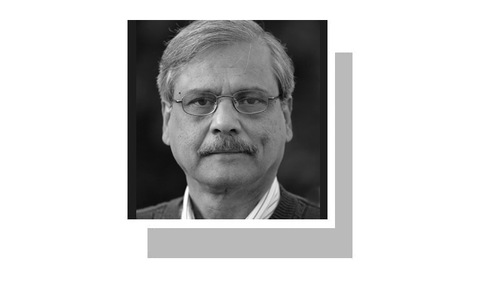
Back in April, Mir Mohammad Ali Talpur, a columnist and Baloch rights activist, during a seminar at Lahore University of Management Sciences (LUMS) said that people such as Mama Qadeer claim that over 23,000 people are missing in Balochistan while Aftab Ahmed Khan Sherpao, the interior minister in 2005, admitted that close to 4,000 Baloch were in custody.
Earlier this year the Commission of Inquiry on Enforced Disappearances (CIED) had stated that during last four years 982 missing persons had been located while 1273 cases were still pending.
In its report submitted to the Supreme Court, the commission had stated that out of the pending cases, 632 belonged to Khyber Pakhtunkhwa, 198 to Punjab, 186 to Sindh, 122 to Balochistan, 43 to Fata, 11 to Azad Jammu Kashmir and 30 to Islamabad Capital Territory (ICT).
Similarly, 409 of the traced persons belonged to KP, 254 to Punjab, 199 to Sindh and 50 to Balochistan.