0
0
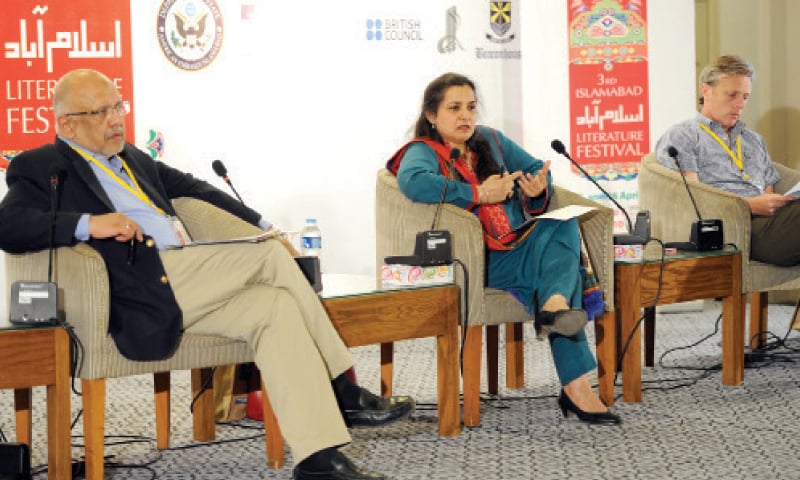

ISLAMABAD: Two discussions at the Islamabad Literature Festival explored literary fiction and journalistic sensationalism, forcing the audience to question their own preconceptions about both subjects, but failed to deliver the kind of hard-hitting or incisive commentary that is expected of panel discussions on journalism featuring top practitioners themselves.
The first of these, a candid talk by Pulitzer prize-winning author Paul Harding, was an engaging affair, mostly because the author refused to take himself too seriously. In stark contrast, however, the discussion on ‘News, Views and Sensationalism’ fell prey to the over-earnestness of the panelists, who seemed determined not to make light of the subject at hand, even at the cost of the audience’s wandering attention.
Mr Harding, who won the Pulitzer prize for fiction for his first novel, ‘Tinkers’, recounted how many times his manuscript was rejected by publishers, sometimes quite militantly.
“I rejected their rejection letters,” he told the audience proudly, who responded with peals of laughter.
A musician who bloomed as a writer very late in life, Mr Harding justified his rejection of the rejections by pointing out that the initial criticisms of his work were quite oxymoronic.
“I was told that given the frantic pace of life today, no one wants to read a quiet, meditative, pastoral account,” he said, adding that a story told from multiple points of view was also confusing for some.
But his argument was that the frantic nature of modern life was exactly why there was space for his kind of fiction. “I am not a famous author, I just wrote a famous book and shepherded it around,” he said.
Talking about the Pulitzer, he said that most book prizes strung out the nomination process because they were showcasing the books themselves.
“So there’s a long list, a kinda long list, a short list and a kinda short list. Literary prizes are a rowdy spectator sport,” he mused.
 |
| Pulitzer prize-winning writer Paul Harding. |
He also described the competition and the jealousy within literary circles, saying that there are two very bad reactions to winning a Pulitzer: “Acting like you deserve the prize, and acting like you don’t.”
He described his creative process candidly, saying, “I write one sentence at a time, and if I wake up in the morning already knowing what I’m going to write, it’s probably not worth putting down on paper.”
Serious business
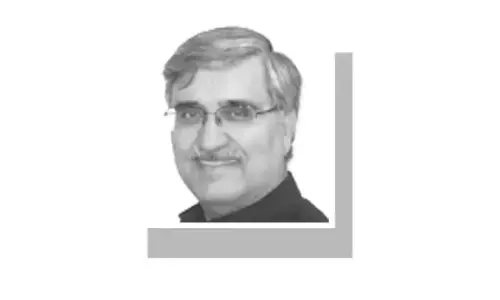
At the second session, veteran editor Rashed Rahman opened the discussion by ruminating on the changing nature of journalism, saying that while in his day it was extremely difficult to obtain information from remote areas, technology had made the task as easy as the click of a button.
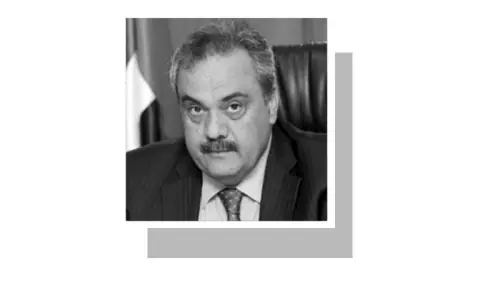
Robin Pagnamenta, the South Asia correspondent for the Times of London, then offered an insight into the British and European experience with the changing realities of print.
He also pointed out the pitfalls of extensive social media use, saying that it was easier to filter out voices that did not agree with the user’s world view.
“Viewing the world solely through the eyes of those who agree with you is potentially very dangerous,” he concluded.
However, when asked about transitioning from print to TV journalism, Nasim Zehra pointed out the necessity of writing responsibly.
“There’s nothing like writing for print,” she said, but pointed out that technology had become critical to all media, especially TV.
In an anecdote-laden talk, Financial Times correspondent Farhan Bokhari recounted how, the more things changed for journalists, the more they stayed the same. He recalled the story of a restaurant owner from Islamabad’s Aabpara Market who, in 1983, was picked up by law enforcement agencies for daring to tune BBC’s flagship ‘Sairbeen’ programme on the shop’s transistor set.
“Today, whenever I receive a call from a Peshawar landline number, I’m apprehensive that it will be bad news regarding a friend or a colleague,” he said.
Published in Dawn, April 26th, 2015
On a mobile phone? Get the Dawn Mobile App: Apple Store | Google Play