0
0

Edison dies
October 18, 1931
ON this day, Thomas Alva Edison, one of the most prolific inventors in history, dies in West Orange, New Jersey, at the age of 84.
He was born in Milan, Ohio, in 1847. Edison received little formal schooling, which was customary for most Americans at the time. He developed serious hearing problems at an early age, and this disability provided the motivation for many of his inventions. By 1869, he was pursuing invention full-time and in 1876 moved into a laboratory and machine shop in Menlo Park, New Jersey.
Among other notable inventions, Edison and his assistants developed the first practical incandescent light bulb, a forerunner of the movie camera and projector in the late 1880s. In 1887, he opened the world’s first industrial research laboratory at West Orange, where he employed dozens of workers to systematically investigate a given subject.
Edison continued to work into his 80s and acquired 1,093 patents in his lifetime.
The first parachutist
October 22, 1797
THIS day, the first parachute jump of note is made by André-Jacques Garnerin from a hydrogen balloon 3,200 feet above Paris.
It was Leonardo da Vinci who conceived the idea of the parachute in his writings. However, André-Jacques Garnerin was the first to design and test parachutes capable of slowing a man’s fall from a high altitude.
Garnerin attached the parachute to a hydrogen balloon and ascended to an altitude of 3,200 feet. As he failed to include an air vent at the top of the prototype, Garnerin oscillated wildly in his descent and he landed shaken but unhurt half a mile from the balloon’s takeoff site. In 1802, Garnerin made a spectacular jump from 8,000 feet. He died in a balloon accident in 1823 while preparing to test a new parachute.
UN formally established
October 24, 1945
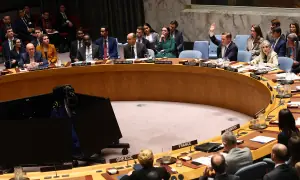
ON this day, less than two months after the end of World War II, the United Nations is formally established with the ratification of the United Nations Charter by the five permanent members of the Security Council and a majority of other signatories.
The idea of the United Nations began to be articulated in August 1941, when the US President Franklin D. Roosevelt and British Prime Minister Winston Churchill signed the Atlantic Charter, proposing a set of principles for international collaboration in maintaining peace and security.
Thus on this day, the UN Charter came into force upon its ratification by the five permanent members of the Security Council and a majority of other signatories.