1
1
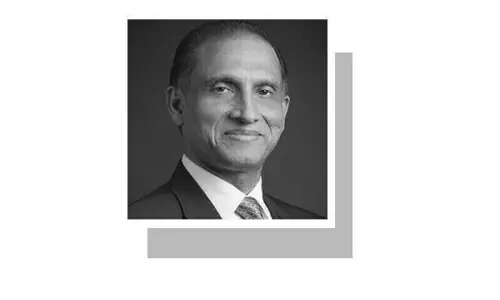
LAHORE, Nov 9: Refusing to give any deadline for ending loadshedding and lowering of electricity rate, Minister of State for Water and Power Abid Sher Ali said on Saturday power theft would be made a non-bailable offence in the next cabinet meeting.
Addressing a press conference at Wapda House where he presided over a meeting to review performance of the Lahore Electric Supply Company and the Pakistan Electric Power Company, he insisted the government was determined to control power theft, line losses and corruption.
Making power theft a non-bailable offence was part of the same effort. It would be taken up in the cabinet in its next meeting and made into law, he said.
The state minister said total losses on this head were reported to be Rs242 billion last year. “How can any government tolerate such leakage in the system?” he asked and said: “Not just the thieves, but all the officials concerned, right up to the executive engineer (EXEN) in the area, will be held responsible.”
“There are feeders where losses range from 80 per cent to 99.99 per cent. All of them have been identified and a ruthless action plan is ready, without favour or fear. In Peshawar, an MPA was booked because he interfered in the official work of power theft checking,” the minister said.
Accompanying the minister was Pepco acting managing director Zargham Ishaque, who agreed to a question that line losses had increased from 19.8 per cent to 21 per cent and bill recoveries dropped by over one per cent this year.
“That is precisely why we had meetings in Pepco and Lesco today. Their performance will be put under the microscope and reasons identified. Other distribution companies have also been told to get third-party audit conducted so that actual losses and reasons behind them could be identified. Once they are with us, they will be taken to the regulator to deal with them on a permanent basis,” he said.
He also conceded that Rs170 billion circular debt had accumulated in the last four months despite one-time clearance of Rs480 billion.
“But out of those Rs170 billion, Rs60 billion are in the billing pipeline; it thus leaves Rs110 billion as what we call circular debt. It builds up because of two reasons: line losses and general sales tax. The regulator allows only 16.50 per cent losses, whereas they were 22 per cent last year.
“This difference of 5.5 per cent adds to the debt. The second factor is GST, which is levied on billing, not collection. Once a certain amount of units is billed, the GST is calculated.
“If that amount is not recovered, it doubly hits the sector: bill is not recovered, yet GST is paid. Both these factors are being taken up with the relevant authorities. Unless dealt with, they would continue adding to the circular debt and affecting financial health of the sector.”