0
0

BASRA Iraqis living alongside the ancient Shatt al-Arab waterway — the site, local legend says, of the Garden of Eden — face an environmental catastrophe because of massive dams built by neighbouring Iran.
A vibrant freshwater lifeline teeming with fish has become a salty, polluted channel which is driving people away from its banks and where fishermen struggle to make a living, local residents and officials say.
At the centre of the dispute is the Karoun river, which this year has been completely staunched by Iran to stop its water feeding into the Shatt al-Arab just above the Iranian oil city of Abadan, local people say.
'Iran completely cut the water from the Karoun and diverted it to the Bahman Shir,' an Iranian river, said Oun Dhiab, director of the Iraqi National Centre for Hydro Resources.
'Iranian dams had reduced the flow since 2002, but this year not a drop has reached us. This shortage of water and the increasing saltiness will cause a huge environmental crisis, and is changing the Shatt al-Arab environment,' he said.
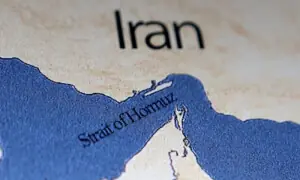
The Shatt al-Arab, a strategic 200 kilometre-long extension of the Tigris and Euphrates rivers, runs between Iraq and Iran, separating the two countries by a width of 400 to 1,500 metres before flowing into the Gulf.
The loss of the fresh torrent that the Karoun brought down from the Iranian mountains has left Iraqi fishermen working in salt-filled waters.
Their ever-shrinking catches are also being polluted by toxic emissions from Irans Abadan refinery, its largest, on the opposite bank.
Behind the dams, the 890-kilometre Karoun has a flow of between 1,200 and 1,800 cubic metres per second, and the loss of its huge volumes has had a dramatic impact on Iraqis.
'The Abadan refinery is expelling contaminated gases which have polluted the Shatt al-Arab environment and the water, as well as killing fish,' said Nama Ghadhban Mansur, governor of Seema district near Basra.
'Now we are suffering from migration because of water pollution, especially as the source of the peoples living is animals and agriculture. They have started to leave their homes.'
Water reaching the Shatt al-Arab from the Tigris and Euphrates, Iraqs two great rivers, has also fallen sharply, so the Karoun dispute could not have come at a worse time.
Iraqs water minister last month accused Turkey of breaking a promise to increase water flows down the Euphrates. Turkey says it does not have enough water in its reservoirs to send any more.
The lack of fresh water and the pollution has led fishermen in southern Iraq to break long-standing rules.
'The fishing was very good a few years ago,' said Adnan Ali Qassim, a father of eight who lives in the port of Al-Faw, home to an estimated 10,000 fishermen.
'There was no fishing during the reproduction season,' said the tall 38-year-old, wearing a traditional white dishdasha.
'But fishermen are not respecting the law and are now using illegal methods, such as explosions and electric shocks.'
His livelihood has suffered badly. 'We were getting dozens of tonnes of fish per day, but now the number cannot be more than five or six tonnes, all because of the pollution and the increased salt level,' Qassim said.
Mohsen Abdul Hai, an agriculture adviser to the governor of Basra province, blamed Iran both for stopping the Karouns waters from reaching its mouth and for allowing the Abadan refinery to pollute the Shatt al-Arab.
'Fish are dying because of it, and it is also causing the death of large numbers of animals from blindness after drinking salt water,' he said.
Asked how the problem might be solved, Hai said the province had appealed to Baghdad to intervene, asking ministers to press both Turkey and Iran to increase the flow of water to Iraq.
Iranian Foreign Minister Manouchehr Mottaki said on a visit to Baghdad on August 29 that a meeting would soon be held to discuss the issue.
But to fishermen such as Fakhir Abdul Imam, 45, whose small boat 'Al-Safa' — ironically meaning 'Purity' in Arabic — the time for talk is almost over.
'It is becoming impossible to fish in the Shatt al-Arab,' said Imam, a portly married man with five children, who goes out fishing at dawn and spends three or four days at a time out on the water.
'Even the living fish we catch smell of oil. Agriculture in this area is almost finished.'