0
0
PESHAWAR, July 4: The flow of funding from foreign donors has increased the interest of international and national nongovernmental organisations in the militancy-infested Federally Administered Tribal Areas (Fata).
The Fata Disaster Management Authority (FDMA) has issued 104 no objection certificates (NoCs) to various foreign and local NGOs to carry out development schemes in tribal areas, while there is a long list of applications being processed, according to the relevant officials.
The FDMA has the task to facilitate foreign and national NGOs and donor agencies in undertaking development, reconstruction and rehabilitation work and advocacy programmes in all seven agencies and six Frontier Regions of Fata.
NoCs are issued to interested organisations after verification of documents and getting clearance from the army and other security agencies.
Officials said in entire Fata, North and South Waziristan agencies were the main places of attraction for foreign donors and international NGOs.
An official said it was encouraging to note that locals were forming NGOs and community based organisation (CBO). He said formation of such organisations at local levels was an indication that civil society was taking root in Fata and the people were preparing themselves for taking responsibility.
NGOs are registered under Voluntary Social Welfare Agencies’ Ordinance, 1961 and Societies Act, 1860 in the country.
However, the government has yet to extend the relevant laws to Fata. In this light, Fata people have to register their NGOs or CBOs in Khyber Pakhtunkhwa.
Since foreign donors showed interest in Fata, locals have begun establishing NGOs in tribal agencies.
According to reports, three NGOs have been set up in South Waziristan Agency, Kurram Agency and Bajaur Agency each.
Officials said Fata people had direct stakes and therefore, they were establishing NGOs and CBOs at local level.
Officials in the provincial industry department, which registers NGOs under Societies Act, 1860, said applications for registration of NGOs by tribesmen were under process in Peshawar.
According to FDMA, several donor agencies, including United States Agency for International Development (USAID), UN agencies, European Union, Korea International Cooperation Agency, British High Commission, German Embassy, Swiss Agency for Development and Cooperation, Norwegian Refugee Council and The Asia Foundation, are spending funds through dozens of NGOs.
Interestingly, the FDMA’s lists don’t carry names of the Middle East-based donors and charity organisations. Major dilemma with foreign donor agencies is that they don’t have direct access to Fata for security reasons. For that reason, they are unable to monitor and evaluate projects in the restive region.
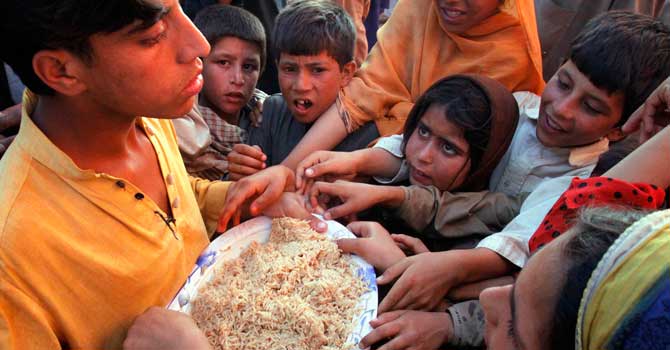
NGOs have undertaken health, education, communication, sanitation, drinking water and agriculture schemes, and conducting advocacy programmes in Fata. Some organisations are distributing food supplements among malnourished children and women. Schemes are carried out in collaboration with the FDMA and line departments of the Civil Secretariat.
Officials are skeptical about mushroom growth of NGOs in Fata, saying transparency in utilisation of funds is major concern for donors as well as the government.
“The problem is that some NGOs have established their monopoly in Fata and they are working in health, education, IDPs, conflict, communication and livelihood sectors simultaneously without having professional and qualified staff,” said an official in FDMA.
Mariam Bibi, chairwoman of Khwendo Kor, an NGO, which runs various development projects in Fata, including South Waziristan Agency, said there was a negative perception about the activities of many NGOs operating in Fata and that was correct to some extent.
She said the government officials were issuing permits to NGOs to work in Fata on personal contact and that was a wrong practice. “This is the government’s responsibility to properly verify credibility and record of NGOs before issuing NoCs for launching activities in tribal areas,” she said.
Ms Mariam, who belongs to South Waziristan, said despite presence of many local and international NGOs, there was a big space for other organisations. “There is abject poverty and social problems in tribal areas and the area desperately need the donors’ attention,” she said.