0
0

NEW YORK: The United States is withdrawing its forces from Pech valley in the Kunar province of Afghanistan, after years of fighting for the control of the region it once called vital to its campaign against Taliban and Al Qaeda, the New York Times reported on Friday.
The withdrawal formally began on Feb 15. The military says that the withdrawal will take about two months, part of a shift of western forces to the province's more populated areas. Afghan units will remain in the valley, a test of their military readiness.While American officials say the withdrawal matches the latest counter-insurgency doctrine's emphasis on protecting civilians, Afghan officials worry that the shift of troops amounts to an abandonment of territory where multiple insurgent groups are well established, an area that Afghans fear they may not be ready to defend on their own, the newspaper reported.
Besides, the report said: “It is an emotional issue for American troops, who fear that their service and sacrifices could be squandered. At least 103 American soldiers have died in or near the valley's maze of steep gullies and soaring peaks, according to a count by The New York Times, and many times more have been wounded, often severely.”
Military officials say they are sensitive to those perceptions. “People say, 'You are coming out of the Pech'; I prefer to look at it as realigning to provide better security for the Afghan people,” said Maj-Gen John F. Campbell, the commander for eastern Afghanistan.
“I don't want the impression we're abandoning the Pech.”
The newspaper said the pullback has international implications as well.
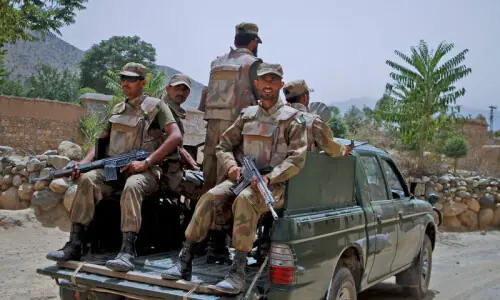
Senior Pakistani commanders have complained since last summer that as American troops withdraw from Kunar province, fighters and some commanders from the Haqqani network and other militant groups have crossed into Afghanistan from Pakistan to create a “reverse safe haven” from which to carry out attacks against Pakistani troops in the tribal areas.