0
0
WOMEN in Pakistan have always experienced disadvantage. Social, cultural and religious factors have reduced the number of women entering the job market.
Throughout the history of Pakistan, Muslim women have suffered a great deal of unnecessary restrictions owing to religious misconceptions. Women are brought up to believe they should stay within the four walls of their homes and avoid any contact with men they are not related to.
These misconceptions are still prevalent in society, and women, particularly working women, face lots of problems.
This is not just the subject of a discreet debate these days; it is a topic arousing passionate argument and ideological fervour. Besides, the controversy is not limited just to the Muslim population.
Much has changed in the last decade, but even in urban areas, when a woman travels to work, she must still be ready for stares and rude remarks from strangers.
The influx of women entering the job market has brought about a certain level of change in public attitudes and promoted acceptance of women's professional potential. Many employers prefer women for certain jobs, since they are thought of as and expected to be obedient and docile.
Still, many men have wrong notions about them.
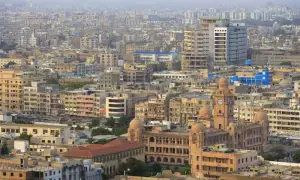
The metropolis of Karachi is a mix of social classes and people from all walks of life where women can be found working in a broad assortment of professions.
There are highly qualified women working in white-collar management and administrative jobs, and creative and academic positions. Middle class women have entered the ranks of retailers and restaurateurs as well as other responsible positions.
Women belonging to the lower class work as maids and charwomen for their survival.
Hence, when women leave their house to fulfil their economic responsibility, they are discouraged rather than encouraged to support their families.
People should realise that when a woman goes out to earn, she should be considered the pride of the family rather than made to feel awkward about it.
ZOHAIB SHABIH
University of Karachi