



 0
0

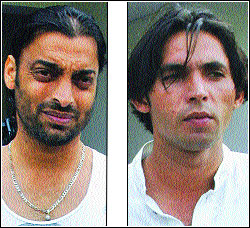 KARACHI, Dec 5: Fast bowlers Shoaib Akhtar and Mohammad Asif on Tuesday won their appeals against doping bans, paving the way for their return to international cricket.
A three-member appeals committee here accepted the new-ball duo's defence that neither was advised on taking vitamin supplements, which may have led to positive tests for the banned steroid nandrolone.
Akhtar, 31, and Asif, 23, were banned from all cricket for two years and one year respectively by an internal Pakistani tribunal in November 1. Both denied taking any illegal substances.
The decision means both will now likely play in next year's World Cup in the Caribbean and ends fears that the career of Akhtar -- known as the Rawalpindi Express -- had reached the end of the line.
“I missed playing cricket for my country and now I hope that I will resume my career.”
Emerging star Asif said his family had been in turmoil since the dope test results were revealed in October, causing the pair to be sent home from the Champions Trophy.
“I am delighted to hear that I will be playing again. These two months have been the worst of my life and only today I resumed training,” said Asif, adding he had lost six pounds through worry.
“I hope the bad days are over now. I badly want to play and it was only through the support of my captain, Inzamam-ul-Haq, and coach Bob Woolmer that I kept myself going.”
The Pakistan Cricket Board (PCB) said it would not rush the pacemen into the five-match one-day series against the West Indies and would instead allow them to play domestic matches to gain match fitness.
The first match, in Rawalpindi, was washed out on Tuesday.
Appeals committee chairman Fakhruddin Ibrahim told reporters the team's management was to blame for failing to inform the two bowlers about vitamin supplements, which both had been taking to recover from injury.
“This appeal committee... holds that Shoaib Akhtar and Mohammad Asif will not be deemed to have committed a doping offence,” said Mr Ibrahim, a retired judge.
“The ban and punishment imposed by the earlier tribunal is hereby set aside as being contrary to the provision of laws.” The committee, also including former Test cricketer Haseeb Ahsan and doping expert Dr Danish Zaheer, made its decision by a 2-1 majority, with Mr Zaheer the dissenting voice because he wanted more tests on both players, Mr Ibrahim said.
But the committee found it was “clearly, plainly evident that (neither) Shoaib Akhtar nor Mohammad Asif were ever warned or cautioned against taking supplements”.
Asif was only told to stop taking the supplements when he told team physio Darryn Lifson about them in August 2006, Mr Ibrahim said, and neither player was provided with any publication warning about their use.
PCB chairman Nasim Ashraf defended the handling of the doping episode, saying he did not expect any intervention from the International Cricket Council (ICC) or the World Anti-Doping Agency (WADA).
The ICC had previously praised the board and the initial drugs tribunal for imposing the stiff penalties.—AFP





























