Bakarwals keep centuries-old migration alive


 0
0

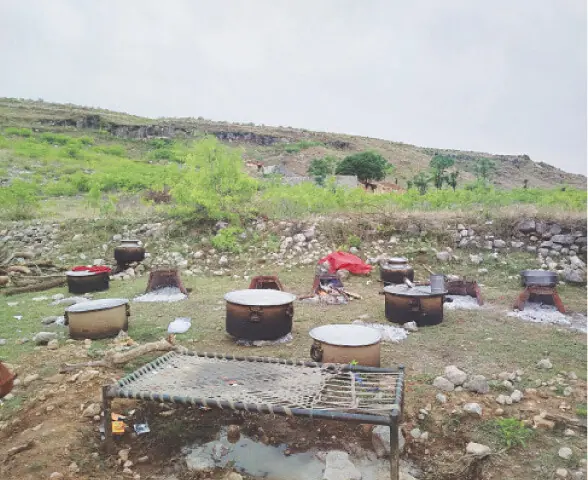
The sky blushed pink as April’s balmy evening settled over the slopes of the Salt Range, which were about to witness an unusual event. Soon, the lush green valley, located 2km south of the mystic Katas Raj, echoed with the beating of the dhol.
Women sang folk songs in the local Dhanni dialect, or rather in Gojri, as young men danced. Tents were erected, tables and chairs were arranged, and cooks put the finishing touches to the meals. A marriage ceremony was taking place in this rugged terrain as the groom, Liaquat Hussain, 22, looked shy.
The unusual event was linked to the herders, who wanted to celebrate the wedding before setting out on a long and hazardous odyssey back to the Himalayas from the Dhanni belt.
They were already two weeks behind schedule as rains delayed their departure.
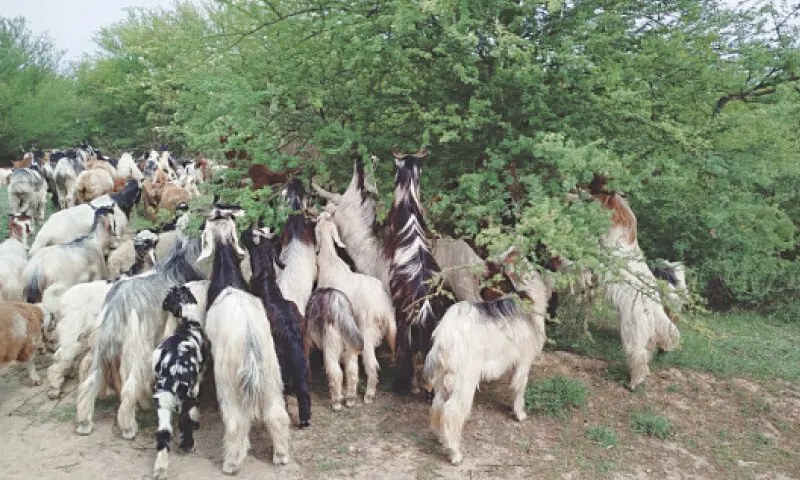
Each November, scores of pastoralists known as Bakarwals descend into the valleys of the Salt Range after a month-and-a-half trek on foot with their flocks of goats and sheep and caravans of mules, keeping the ancient tradition of nomadic pastoralism alive even in the modern era. Their arrival heralds the beginning of winter, while their departure in mid-March proclaims the onset of summer.
“We have been coming to the highlands of Chakwal and Jhelum for many centuries in pursuit of greener pastures and favourable weather,” Babu Mohammad Hussain, 75, told Dawn.
Nomadic pastoralism, also known as nomadic herding, is a way of life in which herders move their flocks of domestic animals to distant regions in search of green pastures while escaping harsh weather. The tradition began some 12,000 years ago during the Neolithic Revolution, also known as the First Agricultural Revolution.
According to reports, the global nomadic population stands at between 30 million and 40 million, while Pakistan is home to between seven million and 15 million nomads, many of whom remain undocumented. Contrary to the hustle and bustle of modern life, with its many conveniences, these mountain people cling to their centuries-old lifestyle of perpetual migration despite its countless risks.
“We spend summer, from mid-May to mid-September, in Gilgit and Astore, while our winter, from mid-November to mid-March, is spent in the Salt Range. Spring and autumn are consumed by a long journey spanning more than 500km,” said Mohammad Nazeer, 42, a member of the extended family.
These herders belong to the Gujjar tribe, which, according to the Jhelum Gazetteer 1904, is among the earliest settlers of the region, predating the Mairs, Kassars and Kahoots, the three influential castes of the Dhanni region in Potohar. Many Gujjars who once migrated to the Salt Range from the Himalayas settled permanently in Chakwal and Jhelum, establishing numerous Gujjar villages. However, many still cling to the old tradition of perpetual migration.
“We have to endure insults and abuse in Punjabi from local landlords and face the wrath of officials from the forest and wildlife departments. Landowners do not allow us to stay near their lands, while officials refuse to issue us permits,” said Mohammad Shabir, 30, a father of four young children.
The dangers are ever-present for these pastoralists.
“Three years ago, while travelling towards Gilgit, we had to scale a peak. Suddenly, torrential rain, coupled with fog and snow, lashed the highlands and we became trapped. Eight members of our tribe, including four women, a child, a teenager and two young men, perished,” Babu Mohammad Hussain recalled in a heavy voice.
“I remained trapped in the snow for 36 hours but survived miraculously. My feet still burn,” he added, looking down at them.
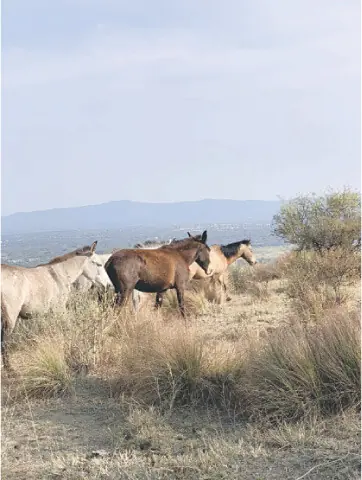
These Bakarwals rear goats belonging to cold-adapted breeds such as Pameri, Gojali, Baltistani, Dareli and Jerakheli. Mules are an integral part of their lives, as these powerful animals not only transport their luggage but also carry infants, the sick and the elderly. Along with goats and mules, they also keep Bakarwal mastiffs, large mountain dogs that guard the herds against wolves, jackals and thieves during their stay in the forest-covered hills.
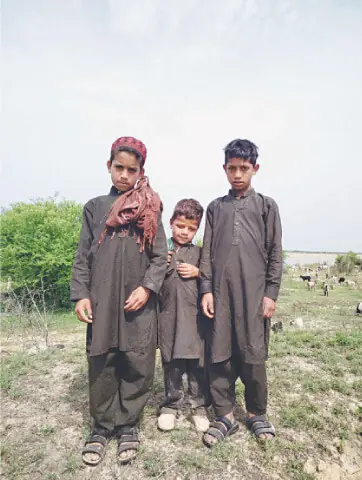
“At the time of departure from the Gilgit area, our animals and mules are in good health because summer rains provide ample grass. That is why it takes us a month to reach the Salt Range. However, the return trek to Gilgit takes longer because the animals are weaker and many have young, as they breed in the Salt Range,” said Nazeer, adding that many bucklings and doelings die along the way.
“Eight animals were killed by wolves during this season in the Salt Range, while 35, including young ones, died on the way back to Astore,” Shabir told Dawn.
These herders also transport rations and ammunition to Pakistan Army soldiers stationed on snow-covered peaks, using their mules.
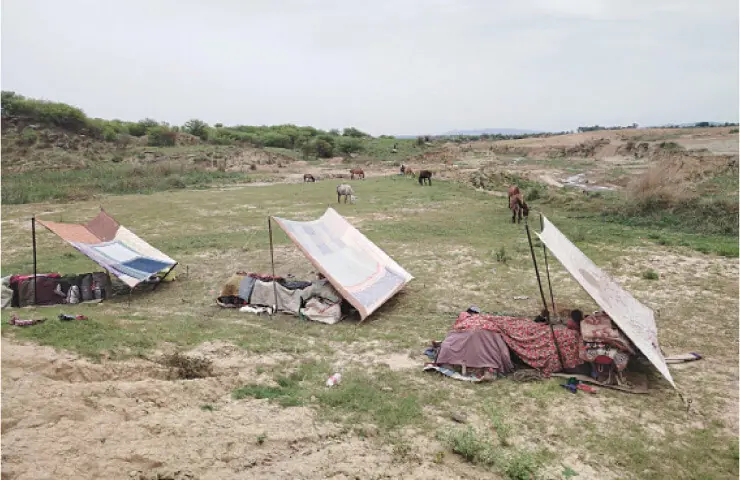
Many have settled in Chakwal and Jhelum in recent years, but the majority still prefer the nomadic way of life.
“I settled here ten years ago,” said Mohammad Israel, adding that one of their relatives had built a grand and spacious house near Phadial village.
“We serve the country on snowy peaks, our animals increase forest cover, we protect wildlife, but the government never looks towards us,” lamented Babu Mohammad Hussain.
Published in Dawn, July 20th, 2026