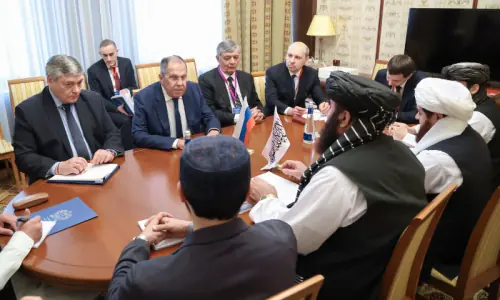
Iran’s Interior Minister Eskandar Momeni arrives in Pakistan
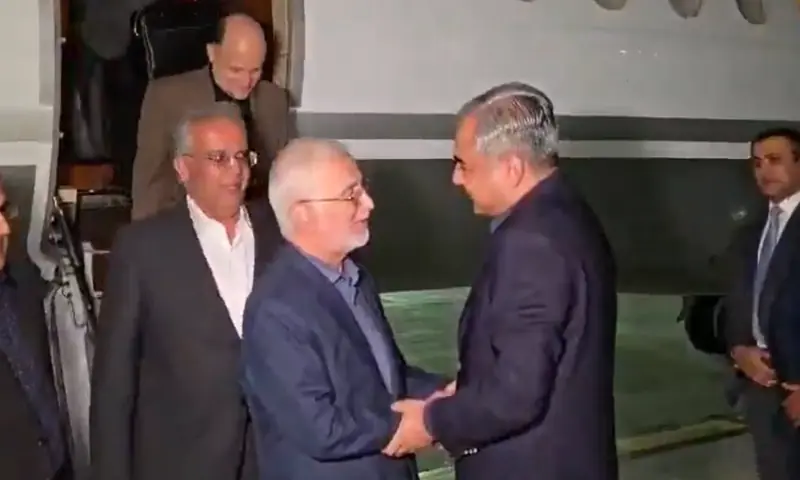
Iran’s Interior Minister Eskandar Momeni on Monday night arrived in Islamabad on an official visit.
Upon his arrival in Pakistan, the senior Iranian official was received by Interior Minister Mohsin Naqvi.
The visiting dignitary is accompanied by a high-level delegation.
During his visit, Momeni will meet Prime Minister Shehbaz Sharif and Chief of Defence Forces and Chief of the Army Staff Field Marshal Syed Asim Munir, reported state-run Pakistan TV.
Earlier reports had suggested that Momeni was likely to engage with Pakistani officials who previously mediated a now-collapsed interim ceasefire between the US and Iran.
Momeni’s visit comes as mediator Pakistan continues its diplomatic efforts to rescue the Islamabad Memorandum of Understanding (MoU) signed last month between the US and Iran.
In the ninth consecutive night of attacks on Monday, Washington expanded its strikes across Iran, including a city hosting a nuclear power plant.
Iran kept up its own attacks across the region in response, with its Islamic Revolutionary Guards Corps (IRGC) announcing they had hit targets in Bahrain, Jordan and Syria, while Bahrain said Tehran had targeted its air navigation systems.
After US President Donald Trump’s remarks earlier this month that the ceasefire was “over”, his Iranian counterpart Masoud Pezeshkian also said on Monday that they were fighting a “full-scale war”. Tehran has blamed Washington for breaching the MoU.
Despite the latest attacks, Iranian foreign ministry spokesman Esmaeil Baqaei said diplomatic exchanges with the US via mediators were ongoing.
The Middle East war resumed after a weeks-long lull prompted by an agreement signed in June, and oil prices surged to a one-month high as the foes battled to control the vital Strait of Hormuz.
As its truce with the US collapsed, Tehran reimposed its blockade of the waterway, while Washington hit back by again blockading Iran’s ports.
Pakistan has been leading the peace efforts since the US and Israel launched attacks on Iran on February 28, setting off a war and global fuel crisis as Tehran took measures to disrupt traffic in the Strait of Hormuz — a vital maritime corridor for the supply of oil and gas.
The Pakistan-mediated Islamabad MoU — a 14-point interim peace deal aimed at ending the war and reopening the Strait of Hormuz — was signed between the US and Iran on June 18.