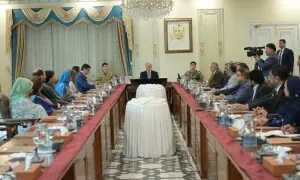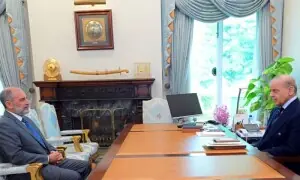
AN average week in the life of the nation, as reflected by the travel itineraries of its top leaders: the president of the country recently on a four-day visit to Kyrgyzstan; the prime minister on a three-day visit to Iran and Türkiye; the deputy PM also on a three-day visit to the same countries; and the interior minister on a five-day visit to Iran and the US.
Let us shift gears and examine the priorities and practices of those who remained behind to steer the ship of state. A provincial assembly enacts a new law to enhance powers, immunities and privileges of its members. It includes blanket immunity for members from preventive detention and permission from the Speaker before arresting a member even for a criminal offence. Each MPA will be entitled to eight gun licences, four of which will be issued free of charge. MPAs and their spouses will be entitled to lifetime official passports and use of VIP lounges.
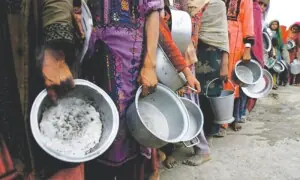
The week in question once again legitimised the lavish pampering of the rich by robbing the poor. The government approved special honoraria (regressive rewards), running up to six additional salaries, for the 10 ministries involved in the making of the federal budget. An extra Rs10 million was sanctioned to feed the parliamentarians with tea and chicken patties for the few extra hours they put in for the budget session. No one ever told them that over a million security guards perform hours of unpaid overtime every single day throughout the year — and receive less than half of the minimum wage to which they are legally entitled.
An average week in the life of ordinary workers is much longer, heavier and harder. For 80 years, the state chose to bestow extraordinary and illegal favours on the already privileged, by extracting resources that should instead have been invested in the wages and well-being of the poor. Only in the last seven months, 17 sanitation workers perished in the toxic fumes of poisonous sewage gutters because they were not provided the machinery and equipment needed to do the job. A single village in D.G. Khan recorded 113 deaths and another 150 critically ill because of unprotected exposure to crystalline silica dust in the stone-crushing industry. At least 331 children in Taunsa Sharif and more than 200 adults in Karachi were found to be HIV-positive. Clearly, investing in the well-being of the poor threatens the entrenched class hierarchy — an outcome entirely unacceptable to our ruling elite.
The desire to see one’s name on every wall, road and university is insatiable.
Without belittling a recognised illness, the features of megalomania — feelings of personal importance and grandeur — are evident in Pakistan’s ruling elite. The desire to see one’s name on every wall, road, university, hospital and ration bag is insatiable. Punjab renamed its 2,800 primary healthcare facilities as Maryam Nawaz Health Clinics. The Nawaz Sharif IT city, Maryam Nawaz Institute of Cardiovascular Diseases, Bilawal Bhutto Engineering College, Aseefa Dental College and Bilawal Sports Complex (to name a few), glorify individuals who did not contribute a single penny to their formation. Most importantly, this extravagant exercise in self-promotion is sustained by resources that rightfully belong to the poor and not the contractors.
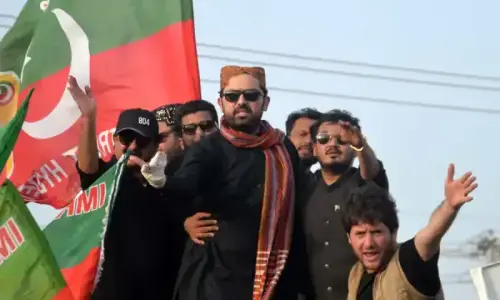
Instead of celebrating with dignity and simplicity, our public spaces are overwhelmed by self-congratulatory posters, billboards and banners, displaying pictures of our rulers and lavishly eulogising their achievements.
Two remarkable learnings, however, cheered up the otherwise gloomy week in the life of the nation. A lesson in simplicity and dignity was taught single-handedly by a determined young girl, who inspired communities across interior Sindh to build more than 5,000 toilets on a self-help basis. A lesson in avoiding self-publicity was taught by our eastern neighbour, Bangladesh, who took the outstanding step of banning the use of Prime Minister Tarique Rahman’s image on banners and billboards at all public spaces. The official circular issued by the Bangladesh government refreshingly stated that the banners and billboards should contain only necessary and relevant information and be designed in a way that clearly reflects the purpose and message of the event.
While this may appear to be a relatively minor decision, it conveys a powerful and progressive message: that public institutions should focus on strengthening processes rather than glorifying individuals. One feels a sense of pride and respect for the prime minister and the government of Bangladesh, for an extraordinary step that could serve as an ethical benchmark for all countries to learn from and emulate.
The writer is an industrial engineer and a volunteer social activist.
Published in Dawn, July 20th, 2026