0
0

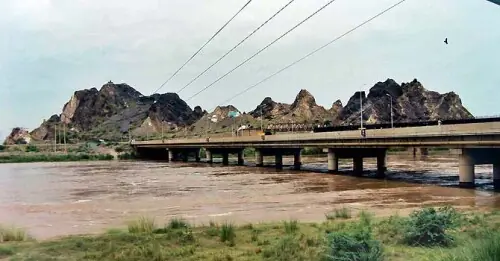
In the third week of July, 1976, Karachi received its first spell of monsoon rains. On July 18, after nonstop downpour – from light to moderate showers – the city had recorded about five inches of rain in the span of 24 hours. Unfortunately, five persons lost their lives due to heavy rain – three were electrocuted and two drowned [into deep waters]. The monsoon season brought in its wake misery and hardship to the thousands who lived near river beds, low-lying areas and in hutments. At least 60 families of hut dwellers living closest to the banks of the Malir River in Mahmoodabad were shifted to safer places. A contingent of 20 men of the Karachi Municipal Corporation (KMC) Fire Service and a unit of the Pakistan Navy with two boats stood by in the area because the river was likely to overflow its banks. The shifted families belonged to Azam Basti, Manzoor Colony and Akhtar Colony.
On July 20, an additional two inches of rain and high velocity winds around midnight caused more damage to property in the city, aggravating the problems of those living in low-lying areas. One person died in Abyssinia Lines after an electricity wire fell on him. It took the death toll to six. The winds which raged for a few minutes uprooted 14 trees in Sherpao Gardens and damaged another 130 trees in the rest of Karachi. Unofficial estimates put the number of broken hutments and kutcha houses at 120, including more than a dozen jhuggis that were badly affected in Abyssinia Lines. In Sarafa Bazaar, a portion of a double-story building collapsed while parts of the boundary wall of a cemetery and New Haji Camp were broken. The [newly] repaired roads in the vicinity also caved in, causing traffic jams. To salvage the situation, the local administration set up seven relief centres – four in Mahmoodabad and three in Gizri.
On July 22, an MPA, Zahoorul Hasan Bhopali, visited the rain-affected neighborhoods. He lamented that the accumulated rainwater had not yet been drained out and claimed at least 200 hutments were damaged.
Oftentimes shortcomings and inefficacy of rescue work get exposed in times of crises, such as the one caused by monsoon showers. On July 22, it was learnt that the KMC had proposed to decentralise its institutional setup by entrusting its various responsibilities to its zonal offices in order to improve efficiency of municipal services. It had been observed that the existing administrative setup was outdated and ill-organised. Owing to complicated procedures, there were numerous complaints of inefficiency and delays in dealing with citizens’ problems. The proposed scheme would make a single person responsible for, and would be overall in charge of, all operating units and divisions in his zone. The new approach – that had partially been implemented in Lyari, Landhi-Korangi and North Karachi zones – would be extended to more parts of the city. The zonal offices were advised to do away with time-consuming procedures. Another measure being taken by the corporation to improve its working was to simplify the byelaws which governed and regulated municipal functions.
Published in Dawn, July 20th, 2026