Pakistan’s circus history goes back much further than many people think. Even before the British arrived, travelling performers were already roaming the Subcontinent, performing tricks and earning a living.
Then, in 1880, an Italian circus led by Giuseppe Chiarini toured British India. It inspired local performers so much that they started the Great Indian Circus the very next year.
By 1970, one of the biggest names in the business was born: Lucky Irani Circus. It was founded in Lahore by film producer Mian Farzand Ali, who later brought in performers from Iran. After he passed away in 2000, his son, Mian Amjad Farzand, took over and expanded the circus by hiring international artists from Japan, Korea, Italy, Germany, Russia and Ukraine. At its peak, the circus had around 450 workers and 32 animals.
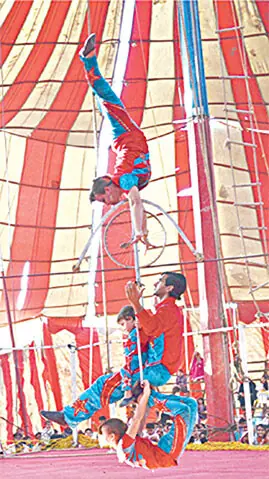
For the people who work there, the circus is the only home they have ever known. Children start training as young as four or five because they are born into circus families. But it is a tough life. The risk is high, injuries are common, there is little or no medical insurance, and the pay is low.
These days, we hardly see big circuses in major cities anymore. People now prefer shopping malls, amusement parks and digital entertainment. Yet circuses are still alive in smaller towns and villages. After Lucky Irani Circus, two notable names are The Great Pakistani Circus and Janbaz Circus. Janbaz Circus gained wider recognition after it was featured by The Guardian in 2010.
Besides these, several small local groups continue to perform at melas (fairs) across Punjab and Sindh. They are rarely covered by television channels, but videos of their performances regularly appear on TikTok and Facebook.
At the same time, there is growing pressure to stop using animals in circuses. World Animal Protection has been calling for a complete ban. Pakistan is also beginning to take animal welfare more seriously. In 2024, Khyber Pakhtunkhwa passed a new Animal Welfare Act to replace a 134-year-old law from the British era, while Islamabad has started imposing fines for animal cruelty. Meanwhile, countries such as India and Iran have already banned the use of wild animals in circuses.
With rising inflation, limited government support and restrictions on animal acts, circus performers are going through a difficult time. Circuses were once among the most affordable forms of entertainment for ordinary people. Today, for many performers, it is a struggle simply to survive.
Published in Dawn, Young World, July 18th, 2026