RAWALPINDI: Frequent power cuts have made life difficult for residents of the twin cities of Rawalpindi and Islamabad and have also affected the water distribution system amid hot weather.
Though the PML-N-led federal government attributed the crisis to rising fuel prices, stating that electricity generation would lead to a manifold increase in tariffs, people did not accept this explanation and termed it the government’s inefficiency in managing the situation.
Frequent power outages have not only caused problems for residents of the twin cities but have also created serious difficulties for students and patients in private and government hospitals, as well as disrupted traffic flow due to non-functional traffic signals during load shedding.
Students appearing in the annual Secondary School Certificate (SSC) Part-I examinations and those preparing for intermediate examinations scheduled from May 4 have suffered badly.
People term loadshedding government’s inefficiency to manage the situation
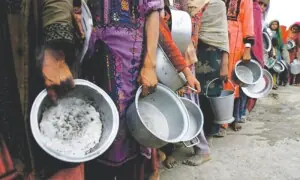
Load shedding has also disrupted the smooth supply of water in city and cantonment areas, as power failures affected the functioning of 320 tube wells, including 480 in the city, with the remaining in cantonment areas.
Residents of city and cantonment areas have been badly affected by water shortages, while the Water and Sanitation Agency (Wasa) and Rawalpindi Cantonment Board (RCB) blamed the situation on power outages.
Wasa spokesman Muhammad Umer said it was difficult for the agency to keep tube well machinery operational during unannounced power outages.
He said there were two tube wells in each union council, and both needed to operate simultaneously to maintain adequate water pressure. However, Iesco had provided power connections to these tube wells from different feeders, making it difficult to run them at the same time due to varying load-shedding schedules.
Residents said that six to eight hours of daily load shedding was creating numerous problems. Ahsan Javed, a resident of Media Town, said frequent outages made it difficult for students to prepare for annual examinations, as load shedding mostly occurred from afternoon to evening.
He said he had purchased an emergency light and a rechargeable table fan to provide a better study environment for his children preparing for exams. Muhammad Akram, a resident of Nayyar Colony near Chaklala Scheme-III, said that although many houses had installed solar panels and supplied electricity to Iesco, the company had failed to manage electricity distribution.
He added that it was difficult for many people in adjoining areas to afford an Uninterrupted Power Supply (UPS) system costing around Rs50,000, especially as petrol prices had reached an all-time high.
Muhammad Akbar, a resident of Shah Khalid Colony, said people were facing water shortages and enduring intense heat without electricity. He said it was the government’s responsibility to ensure uninterrupted power supply, as it collected electricity bills regularly from residents of the twin cities.
Residents said they paid all bills but received no relief in return. Traders were also badly affected by power cuts and said forced load shedding was hurting businesses. In view of excessive load shedding, the Rawalpindi Cantonment Traders Association held a meeting on Thursday with General Secretary Zafar Qadri in the chair.
Serious concern was expressed over the ongoing load shedding. Participants said businesses were being badly affected by unannounced outages, while the smart lockdown and closure of shops by 8pm had created additional problems.
They demanded that authorities reconsider the decision to close businesses at 8pm and extend working hours so traders could operate without disruption.
The Rawalpindi Restaurant Association also demanded extension of dining hours till 12am and an end to unannounced load shedding, warning of province-wide protests if demands were not met.
A core committee meeting of the Rawalpindi Restaurant, Caterer, Sweet & Baker Association also demanded extension of dining hours from 10pm to 12am and an end to load shedding, warning of province-wide protests if demands were not accepted.
The meeting was chaired by President Muhammad Farooq Chaudhry, with Chairman Mumtaz Ahmad and Patron-in-Chief Chaudhry Muhammad Naeem attending as special guests.
When contacted, Iesco spokesman Raja Asim said there was an electricity shortfall and load management was necessary to bridge the gap between demand and supply.
Students appearing in SSC examinations under the Rawalpindi Board of Intermediate and Secondary Education (RBISE) and the Federal Board of Intermediate and Secondary Education (FBISE) expressed anger and concern over prolonged load shedding, saying it was undermining their efforts and putting their results at risk.
In sweltering heat and stifling conditions, students appearing in ongoing SSC examinations are facing immense difficulties due to prolonged and unannounced outages, both in examination halls and at home.
The situation has raised serious concerns among students, parents and educators, as it may adversely affect academic performance and future prospects.
Published in Dawn, April 17th, 2026