Charity to social work


 0
0

PAKISTAN does not have a giving problem. Sunni Muslims in Pakistan pay over Rs619 billion in zakat annually, in addition to sadaqah and waqf endowments. Pakistanis give at mosques, through family networks and civil society organisations that have held communities together for decades. But charity is not social work.
Social work is a scientific discipline grounded in human behaviour, practised with mindfulness and critical reflection on power and privilege. It champions autonomy and dignity, not dependency. Zakat is a redistributive obligation meant to restore self-sufficiency, not establish need. Yet in practice, eligibility determination should be followed by structured follow-up — case management, referrals and ongoing check-ins that help someone move beyond recurring need.
Social work’s history is not one of progress but one of power. In Britain and the US, the profession grew out of frameworks that blurred the line between charity and control and between goodwill and authority. Uncomfortable as that history is, we cannot build accountable, equitable systems without honestly confronting it.
The Elizabethan Poor Laws of 1601 determined that aid was reserved for the ‘deserving poor’ (women, children, elderly, disabled) while able-bodied men were punished for their poverty. This bias crossed into the US in 19th-century America through ‘friendly visitors’. These were largely privileged women who went door to door in poor and immigrant neighbourhoods, deciding who deserved help and how to assimilate them. Their visits disguised surveillance as kindness. In British India, similar philanthropy justified colonial rule. In all cases, relief was dictated by the ‘powerful’, with no input from recipients and little regard for harm.
Social work is not an act of goodwill; it is a profession.
Social work emerged in the US after decades of advocacy and institutional readiness. By 1952, the Council on Social Work Education had standardised curricula and accreditation nationwide. US-based social workers today are trained under nine core competencies covering ethics, diversity, human rights, research, policy and intervention at the individual, community and systems levels. They work in social service agencies, hospitals, schools, courts, child welfare, elder services and emergency response, as clinicians, case managers, programme developers and policy advocates.
Pakistan’s path has differed; not from lesser care but from missing infrastructure. After Partition, the country faced millions of refugees without a professional welfare system. In 1951, the government turned to the UN for help, resulting in emergency training courses focused on refugee care. These were triage responses, not academic programmes. Not until 1954 did the University of Punjab launch the country’s first postgraduate diploma in social work, followed by Karachi (1961), Balochistan (1974) and Peshawar (1978) — each relying heavily on Western curricula. Not until 2014 did human rights education and supervised fieldwork become mandatory.
In 2025, the Higher Education Commission released a nationally standardised, outcome-based curriculum developed by Pakistani academics from all four provinces. The BS requires 143 credit hours, four field placements, a supervised internship and a capstone project. The curriculum addresses Pakistan’s social realities, incorporates Islamic studies, and is rooted in local communities. This is not a borrowed framework translated; it is genuinely indigenous.
Curriculum alone cannot close the gap. The public and many nonprofits still do not distinguish social work from charity work, and that is not a minor semantic difference. Charity flows from goodwill. Social work is grounded in scie_nce that involves structured assessment, evidence-based intervention, ethical accountability and a professional commitment to honest self-reflection. Without a national professional association, a licensing structure and an enforceable code of ethics, the field cannot regulate itself. Without these measures, the well-intentioned philanthropist of Pakistani civil society risks repeating the mistakes of that 19th-century friendly visitor, generous and well-meaning, but still operating within the very hierarchies they hoped to dismantle.
Pakistan has the generosity and an indigenous social work curriculum. It needs the institutional will across government, universities, and civil society to build a profession worthy of the people, built by Pakistanis for Pakistanis on the understanding that social work is not an act of goodwill; it is a profession. It is time we treated it as one.
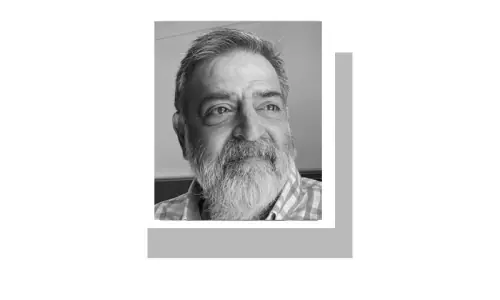
The writer is an associate professor at Fordham University’s Graduate School of Social Service in New York.
Published in Dawn, July 8th, 2026