Can Iran legally impose tolls on the Strait of Hormuz?


 10
10

Tehran has sought to tighten its grip over the Strait of Hormuz by charging tolls on vessels to ensure safe passage, in conjunction with Iran’s Islamic Revolutionary Guard Corps.
The following explains law governing toll collections and actions that countries opposed to tolls might take.
What is the Strait of Hormuz?
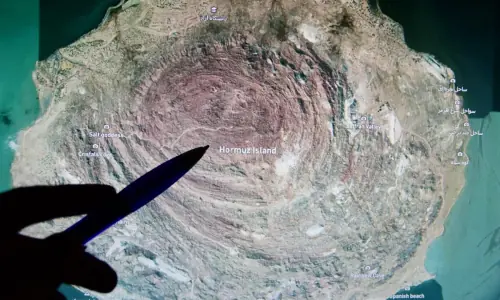
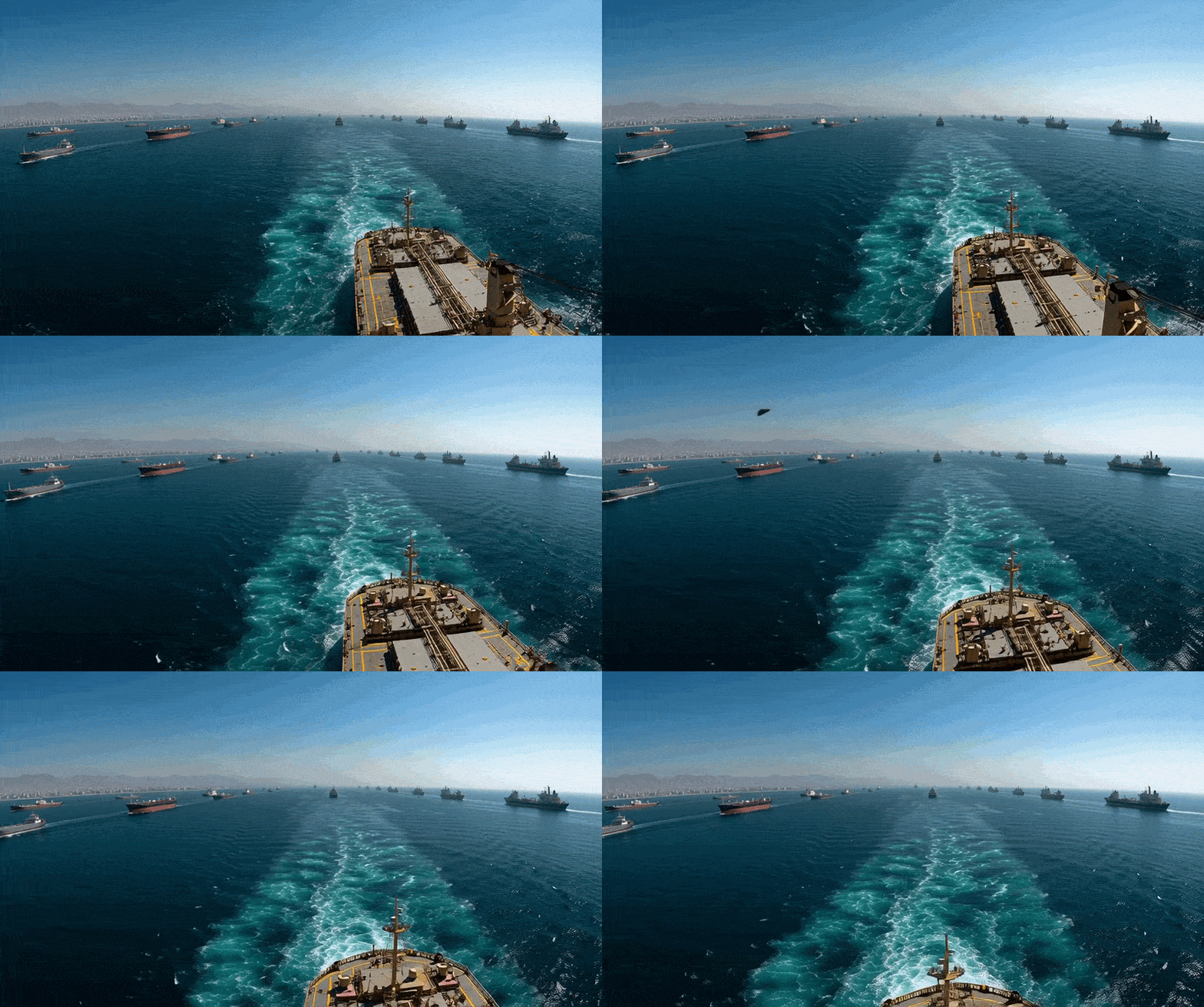
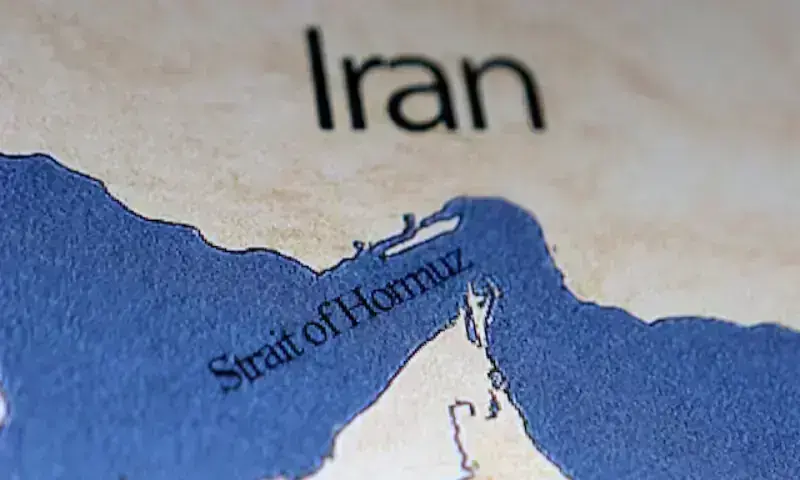
The Strait of Hormuz is a waterway connecting the Gulf with the Gulf of Oman, and is located within Iran’s and Oman’s territorial waters. It is perhaps the world’s most important energy shipping lane. About 20 per cent of the world’s oil passes through it.
The waterway is about 104 miles (167 km) long. Its width varies, and at its narrowest point provides 2-mile channels for inbound and outbound shipping, separated by a 2-mile buffer zone.
Iran effectively closed the strait following US-Israeli strikes on the country, and has demanded the right to collect tolls as a precondition to ending the war. The status of any toll collections so far could not immediately be confirmed.
What law governs on the Strait?
The UN Convention on the Law of the Sea, sometimes known as UNCLOS, was adopted in 1982 and has been in force since 1994.
Article 38 provides vessels a right of unimpeded “transit passage” through more than 100 straits worldwide, including the Strait of Hormuz.
The treaty allows a country bordering a strait to regulate passage within its “territorial sea,” up to 12 nautical miles from its border, but shall permit “innocent passage.”
Passage is innocent if it is not prejudicial to a country’s peace, good order and security. Military action, serious pollution, spying and fishing are not permitted.
The concept of innocent passage was key to a 1949 International Court of Justice case concerning the Corfu Channel, along the coasts of Albania and Greece.
Approximately 170 countries and the European Union have ratified UNCLOS. Iran and the United States have not. This raises the question of whether the treaty’s rules affording freedom of maritime navigation have become part of customary international law, or bind only ratifying countries.
Experts say UNCLOS has become or is generally viewed as customary international law. Some non-ratifying countries may argue that they need not follow the treaty because they persistently and consistently object. Iran has argued that it has made such objections. The United States disputes Iran’s authority to charge tolls.
How can tolls be challenged?
There is no formal mechanism to enforce UNCLOS. The International Tribunal for the Law of the Sea in Hamburg, Germany, which the treaty established, and the International Court of Justice in The Hague, Netherlands, could issue rulings but cannot enforce them.
Countries and businesses have other potential means to counteract tolls.
A willing state or coalition of states could try to enforce the treaty. The UN Security Council could pass a resolution opposing tolls.
Companies could redirect shipments away from the Strait of Hormuz, and have begun doing so. Countries could expand sanctions targeting financial transactions believed to benefit Iran’s government, by sanctioning companies willing to pay tolls.