Exporters up in arms as air cargo charges raised


 0
0
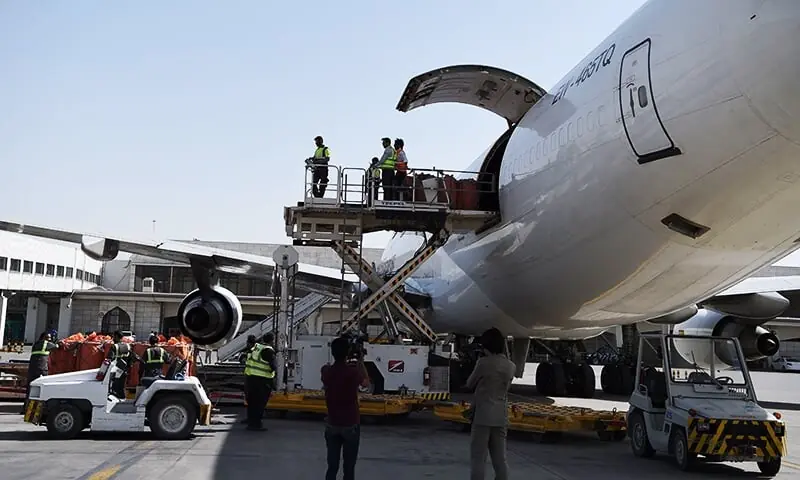

KARACHI: After already struggling with higher war risk and freight charges due to deteriorating geopolitical conditions stemming from the Middle East war, exporters are now facing Rs25–50 per kg in “ad hoc charges” on export cargo shipments by air.
Gerry’s dnata Pakistan has introduced ad hoc charges of Rs50 per kg — excluding all applicable taxes — due to rising costs. The charges will be collected from the party presenting the cargo before acceptance at the warehouse. Shippers or their authorised representatives are required to furnish NTN or CNIC details at the time of acceptance.
Similarly, Menzies Ras Pakistan has introduced ad hoc operating charges of Rs25 per kg — excluding all applicable taxes — on export cargo, effective from March 17. The company said increasing fuel prices have triggered a significant rise in the cost of transportation, ground support services and overall supply chain operations.
The charges have been introduced as temporary operational support to address the extraordinary rise in fuel-related costs and will remain subject to periodic review, with adjustments made as market conditions stabilise, the company said.
‘No prior consultation’
The Air Cargo Agents Association of Pakistan said Gerry’s dnata imposed Rs50 per kg ad hoc charges on cargo shipments without prior consultation with industry stakeholders. It advised its members on March 12 not to deposit export cargo at Gerry’s warehouse until further notice. Members were also advised to refrain from booking cargo with airlines handled through Gerry’s dnata, including DHL, Saudia, Emirates and Turkish Airlines, till the matter was resolved.
Shipping charges
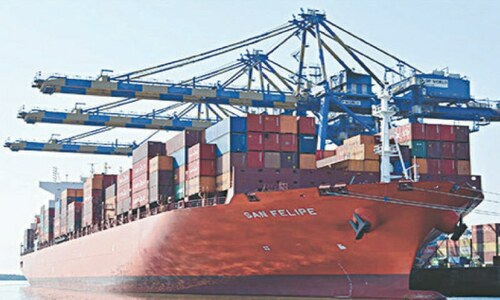
Meanwhile, the Collectorate of Customs (HQ) Exports has been receiving representations from traders regarding the imposition of multiple ancillary charges by shipping lines or carriers and their agents.
In response, the Collectorate on Saturday directed shipping lines, carriers and their agents to refrain from non-transparent or opportunistic pricing practices, including imposition of excessive charges amid prevailing geopolitical situation.
In another circular, it said it had been reported by the trading community that war risk or emergency conflict surcharge was being imposed by shipping lines on consignments that had already departed or were already in transit prior to the escalation of hostilities on Feb 28.
It noted that retroactive billing of surcharges on cargo already in transit prior to Feb 28 was unjustified and required immediate corrective action.
War risk surcharge and emergency conflict surcharge range between $3,500 and $4,000 per twenty-foot equivalent unit, depending on the shipping line.
Published in Dawn, March 16th, 2026