0
0
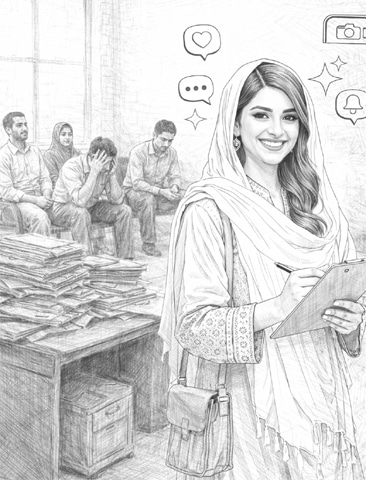
ONCE seen as a quiet pursuit of discipline, sacrifice and intellectual rigour, a career in Central Superior Services (CSS), commonly known as the civil service, has increasingly attained a different vibe on a new stage called social media. Reels and posts, motivational montages, study vlogs, uniform reveals, and carefully curated ‘day in my life’ clips now flood timelines, turning what was once a largely private struggle into a public performance.
There is nothing inherently wrong with visibility. In fact, social media has allowed many aspirants, especially those from less privileged backgrounds, to pick up valuable advice from those who are already part of the system. The CSS examination now stands a little less demystified to them.
This is a positive because relatability can be a powerful tool. However, the growing trend that seems to have captured the fancy of young civil servants does raise an important question: are we raising awareness or glamorising the career?
I raise the question because I have seen even aspirants getting infected by the bug. The CSS examination is one tough nut to crack. It demands years of preparation, repeated failures in many cases and mental resilience. Yet, on social media, this reality is frequently compressed into aesthetically pleasing reels, slow-motion walks into academies, coffee shots with books, captions about ‘manifesting success’, and celebratory content that frames selection as destiny rather than discipline.
Public administration experts caution that when the pursuit of public service begins to resemble influencer culture, the purpose subtly shifts. Public service is built on neutrality, restraint and res-ponsibility, values that tend to clash with constant self-promotion. While aspirants are not yet bound by official conduct protocols, the culture they adopt before selection shapes the officers they become.
Most senior civil servants and education analysts often emphasise that the service was never meant to be performative. The credibility of state institutions depends not on popularity, but on integrity, competence and silence. When public servants turn their journey into a brand, it risks blurring the line between duty and display.
Social media, when used responsibly, can educate, mentor and humanise public servants. The issue is not presence, but excess of it. Not sharing, but over-sharing. Not guidance, but glorification.
Perhaps the real question is: are we preparing for a life of service, or rehearsing for public approval? As the CSS culture evolves in the digital age, balance becomes essential. Public service, at its core, is not about being seen. It is about being accountable even when no one is watching.
Laila Gul
Swabi
Published in Dawn, March 10th, 2026