0
0

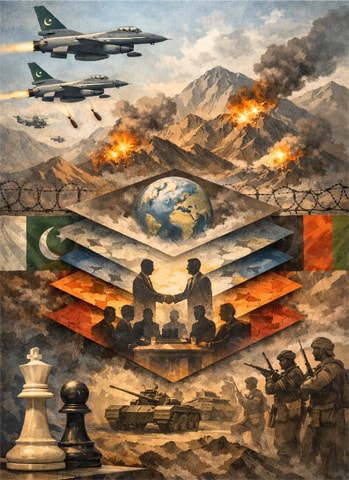
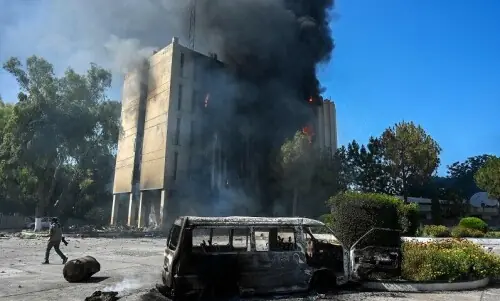
MILITARY tension between Pakistan and Afghanistan has evolved beyond episodic frontier clashes into a structural fault- line within the regional order of South Asia. Developments along the Durand Line reflect more than cross-border militancy; they reveal a layered crisis shaped by non-state armed groups, contested sovereignty, and the absence of sustained institutional engagement.
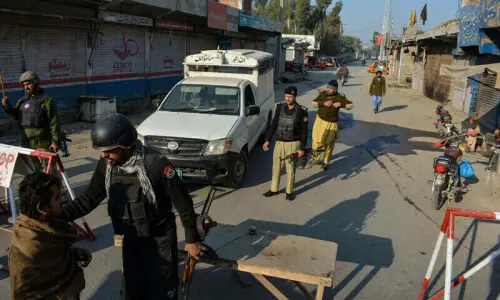
Since the Taliban’s return to power in August 2021, the resurgence of the Tehreek-i-Taliban Pakistan (TTP) has altered the entire internal threat calculus of Islamabad, while Kabul interprets Pakistani military strikes as violations of territorial integrity. In this environment, defensive measures on one side are routinely seen as an offensive spike against the other.
The historical ambiguity surrounding the Durand Line further intensifies mistrust. While Pakistan treats the boundary as settled under international law, successive Afghan governments have questioned its legitimacy. Efforts to fence and regulate crossing points, such as Torkham and Chaman, have repeatedly triggered armed confrontations. In the absence of mutually accepted verification mechanisms and crisis hotlines, even localised incidents risk escalation.
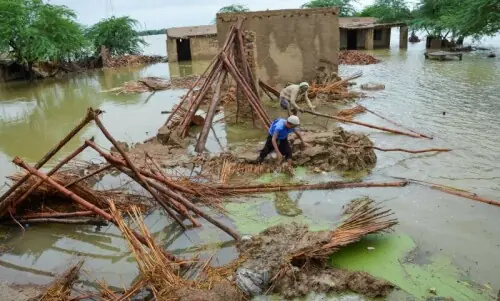
Escalation, naturally, carries substantial strategic costs. More than half of Afghan-istan’s population currently requires humanitarian assistance. On its part, Pakistan faces fiscal strains of its own. A prolonged conflict would only divert resources away from the task of economic stabilisation.
Further, the broader regional context compounds the stakes. China’s connectivity investments under the Belt and Road Initiative (BRI), Central Asian transit ambitions, and Iran’s concerns regarding refugee flows hinge on relative stability. India interprets developments through the lens of strategic rivalry with Pakistan, raising the possibility that bilateral tensions could assume proxy dimensions.
A sustainable response would require institutional layering. Establishing a permanent joint counterterror coordination mechanism with real-time intelligence sharing and agreed verification protocols could reduce miscalculation. Besides, smooth communication channels would help prevent retaliatory spirals. Embedding such engagement within the Shanghai Cooperation Organisation’s Regional Anti-Terrorist Structure would introduce multilateral oversight and continuity. Given its economic leverage and regional investments, China could really facilitate a structured trilateral dialogue.
Also, technical cooperation through the Organisation of Islamic Cooperation (OIC) and United Nations agencies can assist in placing biometric border controls, countering terror financing frameworks, and launching capacity-building initiatives. Depoliticising these technical domains may shift the focus towards measurable outcomes.
The choice confronting both capitals is between unmanaged escalation and institutionalised cooperation. In a fragile regional environment marked by historical mistrust, disciplined diplomacy represents strategic realism. Without structured engagement, the Durand Line risks will continue and it will remain a flashpoint.
Ruqia Khan Nasar
Islamabad
Published in Dawn, March 9th, 2026