3
3

THE 16 Days of Activism against Gender-based Violence was initiated in 1991. Beginning each year on Nov 25 — International Day of Elimination of Violence against Women — and ending on Dec 10 — International Human Rights Day — the global campaign calls on individuals and groups to take action to end violence against women and girls. This year’s theme — ‘UNiTE to End Digital Violence against All Women and Girls’ — draws attention to one of the fastest-growing forms of abuse. Digital tools are increasingly being used to stalk, harass, and abuse women and girls. These acts often lead to offline violence, such as coercion, physical abuse, and even the killing of women and girls. Survivors feel the effects over a prolonged period. Digital violence targets more women than men, especially those with public or online visibility, including activists, journalists, women in politics and young women. The impact is worse for women facing intersecting forms of discrimination, including religion, race, disability or gender identity.
The UN defines violence against women as “any act of gender-based violence that results in, or is likely to result in, physical, sexual or psychological harm or suffering to women, including threats of such acts, coercion or arbitrary deprivation of liberty, whether occurring in public or in private life”. Unless specified differently, the term ‘women’ refers to females of all ages, including girls, according to the UN.
International standards and obligations, such as the Universal Declaration of Human Rights, UN Convention on the Rights of the Child and Convention on the Elimination of All Forms of Discrimination against Women assert the rights of women and girls. The UN Declaration on the Elimination of Violence against Women is the first international instrument specifically addressing VAW that provides a framework for action to eliminate it. The Sustainable Development Goals, specifically SDG5 that deals with gender equality, include targets related to ending VAW. Through its various entities, such as UN Women and Unicef, the UN leads and supports initiatives focused on eliminating VAW. It provides resources, expertise and coordination to facilitate global efforts in preventing and responding to GBV.
Organisations must spread awareness and enhance advocacy against digital GBV.
Likewise, the Constitution ensures equality between men and women in Articles 25 and 34, which serve as the basis for efforts to combat GBV. There are also laws with special protections for women including the Federal Domestic Violence (Prevention and Protection) Act, 2020; Punjab Protection of Women against Violence Act, 2016, etc. Pakistan has laws to combat cybercrimes including the Prevention of Electronic Crimes Act (Peca) 2016, which criminalises actions like sexual threats, defamation, and non-consensual sharing of images or videos — although reservations have been voiced regarding some provisos of the law.
Besides punitive measures, the laws also provide for prevention, protection, and rehabilitation services for survivors. This can include psychosocial support, legal aid, and shelter. However, their effective implementation remains a significant challenge.
For the last year alone, the Digital Rights Foundation reported 3,171 complaints of tech-facilitated GBV. Of these, women filed 1,772. Thanks to underreporting, this is likely just the tip of the iceberg. According to a study, 65 per cent of Pakistani women who experience harassment online do not report abuse due to fear or shame or because they don’t trust institutions.
Going by a 2023 National Commission on the Status of Women report, almost 40pc of the Pakistani women respondents indicated they had faced digital cyber-bullying or harassment. The conviction rates are low; for example, only 92 cybercrime convictions out of 1,375 were secured in2023. The statistics of other forms of VAW are just as alarming. The NCSW estimates that 90pc of women experience some form of domestic violence, yet half of them never tell anyone and only 0.4pc reach out to the courts. Last month, the human rights minister informed the National Assembly that more than 7,500 women had been killed from 2021 to 2024, of which 1,553 were ‘honour’ killings.
According to a recent report by the Sustainable Social Development Organisation, in 2024 alone 32,617 cases of GBV were reported including over 5,339 cases of rape, 24,439 of abduction, 2,238 of domestic violence and 547 of ‘honour killings’.
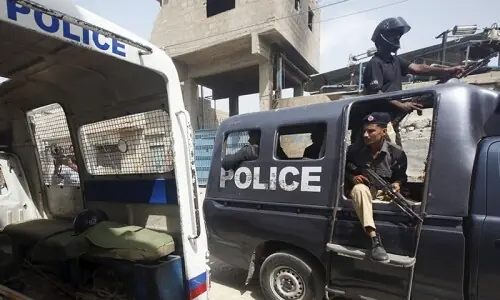
Despite thousands of cases, Pakistan’s conviction rate remains dismally low, at just 0.5pc for rape and killings in the name of honour, 0.1pc for abduction, and 1.3pc for cases of domestic violence, exposing deep-rooted faults in the justice system. As pointed out in media reports, “Weak police investigations, lack of forensic evidence, societal stigma, and judicial inefficiencies prevent survivors from getting justice, allowing perpetrators to walk free”.
This year’s campaign is a reminder that digital safety has become central to the issue of gender equality. The campaign aims to stop digital abuse against women by mobilising society. Governments must enact and implement effective laws; technology companies must ensure the safety of platforms for women; organisations must spread awareness and enhance advocacy against digital GBV. Individuals must speak out, support survivors, challenge harmful online norms, host or participate in digital safety sessions and support male allyship campaigns that reject digital VAW.
Likewise, we should connect with community organisations that are dedicated to ending VAW. Volunteering our time, offering financial support or participating in their events, we can intensify the impact and create safer spaces. We can raise our voice for gender equality and women’s rights by engaging with lawmakers and policymakers to promote laws and policies that protect women from violence.
We must lend an ear to survivors of violence, share their stories, empathise with them and support them in their healing journey. By amplifying their voices, we break the silence surrounding VAW and empower others to seek justice.
The writer is a human rights activist. She is a member of the Working Group at the National Commission on the Rights of Child.
Published in Dawn, December 5th, 2025