FOOTBALL: WHAT KIND OF LEAGUE?


 0
0

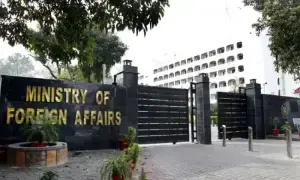
The notice is out: the Pakistan Football Federation (PFF) under its recently-elected chief, Mohsen Gilani, is looking for willing partners in order to launch a new domestic league.
In a public notice, the PFF has asked prospective partners to submit an expression of interest and a detailed proposal by early next month.
The big question remains, however, is whether the new competition would be based on the old model of the Pakistan Premier Football League — which had a mix of departments and smattering of clubs, and hasn’t been held since 2019 — or will it be franchise-based.
Franchise league merchants, several in number in Pakistan, will be quick to jump in; their plans have been in motion for years. The only thing lacking was an endorsement by the PFF.
For departments — many of whom have shut down their sports operations due to changing domestic policies and the decade of crisis in the PFF — and clubs, however, getting a proposal together would be more taxing. A proposal as such will also have to deliberate about the teams promoted from the last edition of the second-tier Pakistan Football Federation League, held in 2020 under the FIFA-appointed Normalisation Committee for the PFF.
Pakistan Football may soon get a new domestic league. But questions remain about what kind of league it will be and whether it will be what Pakistan really needs
PFF’s sense of urgency to start the league has been heightened by the visit to the country last week of the Asian Football Confederation (AFC) president, Sheikh Salman bin Ebrahim Al Khalifa. Sheikh Salman, FIFA’s senior vice-president, reaffirmed AFC’s support for the holding of the league.
“We will offer all the support we can,” Asia’s football chief told Eos in an interview during his visit. “It doesn’t necessarily have to be a pro league [at the outset] but maybe, in the future, it should be one. It will depend on the value of the market and how much we can sustain it.
“The solution is to bring the right people to guide and advise what needs to be done in your country. Each country is different from the other, so maybe a formula that is beneficial for Japan, might not work in Pakistan. If we take it step by step, we will see some difference.”
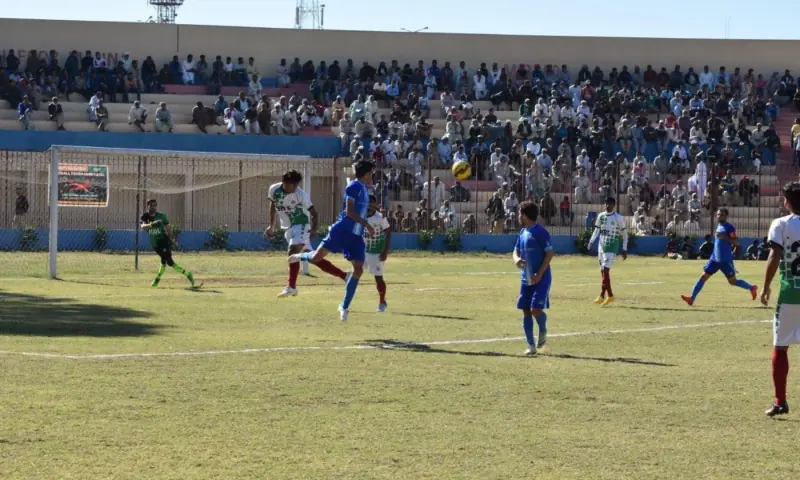
The clamour in Pakistan, though, is about a franchise football league on similar lines to cricket’s hugely-popular Pakistan Super League. There has also been a prolonged infatuation with the Indian Super League (ISL) across the border, which is seemingly teetering to its end after a decade-long run. Those backing the same model in Pakistan, however, remain unflinching.
Sheikh Salman, though, had some words of advice. “It should be a proper league and not one that runs for three months,” he said when asked about taking lessons from India. “It has to be a good balance between the football aspect and the commercial side. We want to keep it hand in hand, not one taking over the other.”
THE PROBLEMS OF ISL
The ISL was launched to huge fanfare in 2014, with hopes it would take football in India to great heights. It didn’t and, instead, it stands on the verge of collapse after the All India Football Federation received no bids on its tender for a new commercial partner by last week’s deadline.
Critics of the ISL said its formation cut the pathways for the grassroots, with the franchise owners more interested in adding more glamour. The former India national team coach, Stephen Constantine — who later steered Pakistan to their first-ever victory in a FIFA World Cup qualifier — said he wouldn’t go to see an “ISL match with seven foreigners in a team.”
Constantine’s reasoning was clear: as the coach of the Indian team, he wanted to see more Indian players play. Other Indian coaches, such as Shanmugam Venkatesh, the assistant of Constantine’s successor Igor Stimac, said the ISL was more about entertainment than about developing local players.
ISL’s short duration (it eventually became a six-month event) was always a talking point. India had to overhaul its running domestic system to make space for it, and its eventual succession to become the top-tier league. Now, its very existence is at stake.
During his tenure as Pakistan coach, Constantine had expressed his constant frustration at the local players not getting enough competition. “Anything would do,” he would say. “Just get the bloody league started.”
The question remains if there will be sizeable local representation in a franchise league. Franchise owners will want a return on their investment quickly and the eyeballs they need are most likely to come through foreign players.
It all boils down to the will of the prospective franchise owners and whether they can promise investment for developing local players with the franchise league, to create the pathways for the clubs — several thousands of them spread across the country — to rise to the very top.
And unlike cricket, where the PSL was to be the crowning jewel, the cream at the top with a domestic system very much running, football in the country at this point in time needs to start at the very base of the pyramid.
THE UZBEK MODEL
Sheikh Salman spoke during his interview about being patient but making steady progress, highlighting the rise of countries such as Uzbekistan and Jordan, who secured World Cup finals qualification for the first time in their history this year.
“When you look at a country like Uzbekistan, they have won the Under-17 Asian Cup [this year] and the Under-20 Asian Cup [in 2023],” he said. “That means progress is going steady, which is great. It is good for Asian football. Tajikistan played well in the last Asian Cup and it also shows football in Central Asia is booming, but that hasn’t been the case in South Asia.”
There’s something common in both Uzbekistan and Jordan: a no fancy-frills league, but one that is sure and steady. Uzbekistan has moved beyond the ill-fated experiment of its club Bunyodkor attempting to become a ‘super club’ in 2009, when it lured Brazilian great Rivaldo.
In fact, its age-group successes that have subsequently powered the national team could well be attributed to one club: Olympic Tashkent. Owned by the Uzbek Olympic Association, it is made up entirely of youth-level players and features in the top-tier league. It acts like a nursery, while ensuring competition for top under-23 talents who would otherwise be warming the benches of bigger clubs.
LEARNING LESSONS
The decade of crisis has meant the new PFF starts with a clean slate, but with a job to not only revive the league but also the domestic cup competition. The National Challenge Cup was last held in 2024 by the Normalisation Committee, featuring departments and clubs.
It is the franchise league that has dominated the agenda, though, with an Eos investigation showing last year that officials from global football body FIFA were also involved in the plan to get it underway during the tenure of the chairman of the Normalisation Committee appointed by it.
Officials of the government seem smitten by the franchise league plan as well, and the strong possibility remains that it will soon be off the ground — the only thing to be decided being which partner the PFF will choose.
Pakistan, though, should make an informed decision on what it needs and what it will get. It should heed the lessons others have learnt the hard way.
The writer is Dawn’s Sports Editor.
X: @UmaidWasim
Published in Dawn, EOS, November 16th, 2025
Umaid Wasim is the sports editor at Dawn. He covers football, having reported from the last three FIFA World Cups and golf, whilst delving into sports governance issues from time to time.
He tweets @UmaidWasim.