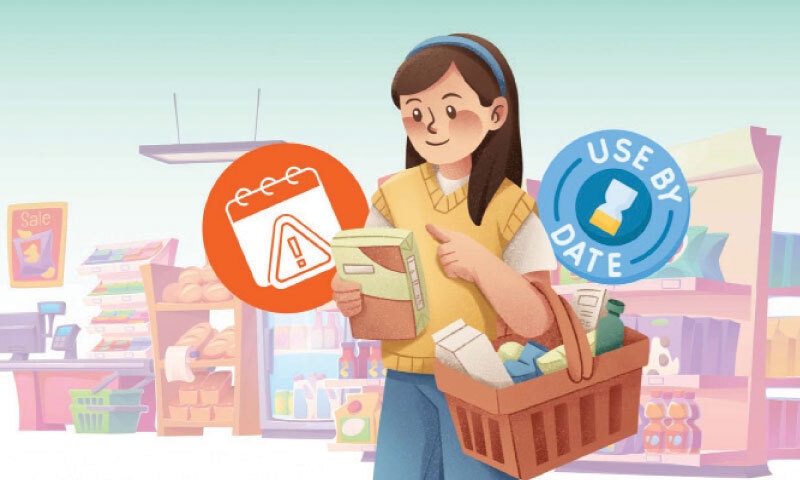
Being a kid, some of the attractions at general stores are the tempting snacks they pile their shelves with, such as biscuits, cakes, chocolates, chips and all sorts of munchies that your eyes just can’t resist, and you want your hands to be full with them. They’re packed in colourful wrappers, with tempting graphics and whatnot, so it’s only natural for youngsters and adults to munch or gulp down those snacks without paying attention to something very crucial.
Or if not this, then has it ever occurred to you that the snack you bought doesn’t taste as good as last time? Or that it felt a bit off, but because you were thirsty or hungry, you just gulped it down anyway without giving a second thought?
The whole emphasis on the second thought is about checking whether the snack you bought falls under a healthy date, ‘Best Before’, ‘Use By,’ or not. If not, then it’s time to return it or tell the shopkeeper to discard it, and also be careful the next time you buy something.
Honestly, there are hardly any of us who bother to look around the packaging to see if we’re even supposed to be eating it or not. Most of the time, people just eat or drink while totally ignoring those small numbers indicating the crucial dates.
Checking the dates printed on packaged food is not just a formality — it’s a safety check. Those tiny words like “Best Before” or “Use By” can help you avoid food that might make you sick
You must remember that businesses are only concerned about making profit. They lure you to keep buying their stuff by putting artificial flavours, stabilisers and chemicals to make it taste better and also to make it last longer on the shelf. Those added chemicals suppress the food’s natural decaying condition for a certain time, not for ‘a lifetime’; these chemicals too have time limits during which they keep the product edible. In simple words, the expiry or ‘best before’ date, indicate that these products are safe or good till the mentioned date.
So what made me compelled to write are the occurrences that happened not just once or twice, but four different times and from four different stores and locations; once I bought a flavoured milk and came home without checking the date; I turned it over and saw that the “Best Before” date was two days ago. I had bought it that day from the shop and wondered how he could sell it after the best before date had passed. I returned it, reminding the shopkeeper not to keep stuff that has passed its best before dates.
There are a couple more similar incidents when I noticed the dates before buying, found they were expired or close to it, and alerted the shopkeepers. It was frustrating to see the packets still there for sale. It made me think about how often people buy and cook with expired items, thinking, “Why did the taste go stale?” It’s alarming, full of carelessness, greed and the kind of risk nobody should take.
These dates actually mean “something,” and ignoring them means we are deliberately playing with our own health. Perhaps this is the reason I’ve become so habitual about checking dates now.
So, let’s just look at what the indicated dates mean on the packaging. There are mainly three types of dates you’ll find on food: “Best Before,” “Use By,” and “Expiry Date.” And some brands write “Manufactured On” or “Packed On.” We’ll also be looking at that.
Best before
You’ll see this on most packaged snacks, biscuits, chips, chocolates and even drinks. “Best Before” basically tells you that the food will taste and feel its best until that date. It doesn’t mean it will suddenly become dangerous the day after.
For example, if you see a packet of biscuits has the date “Best Before 10th November,” it means until that day, the biscuits are at their crunchiest, tastiest and perfect quality. And after that? The company doesn’t guarantee their texture, flavour or health effects and if you eat it, it’s usually not going to make you sick immediately (in most cases). But you cannot hold them for fraud, because they have already mentioned that, and it was your duty to look at the date and then make a purchase.
It’s more about quality and not safety. So if you eat biscuits a day or two past the “Best Before” date and they still taste nice, they probably won’t harm you. But sometimes, if it’s way past the date, you might get a weird taste and perhaps this is the time when your body starts believing that you are taking it for granted.
Use By
You should be taking this date seriously. The “Use By” date is usually found on things like milk, juice, yoghurt, fresh cheese and other perishable items. The ‘use by’ date is not about taste; it’s about safety. The date printed here is the last day the product is considered safe to eat. After that, there’s a real risk of bacteria developing, which can make you sick.
Let’s suppose a chocolate or a strawberry milk has a “Use By” date of November 10th. And if today is November 11th and the milk still tastes fine, it doesn’t mean the milk is safe to drink. Even if the taste is still the same. Likely, harmful bacteria or pathogens have already started growing after the Use By date, and they can cause you food poisoning. If not severe, it might just upset your stomach. Milk might look normal and smell fine, but some bacteria like Listeria or Salmonella can be invisible. That’s why always consider a Use By date as a red flag.
Expiry date
Just like “Use By,” this date is often given on medicines, health supplements, energy drinks or packaged foods that have a shelf life. So when it’s past the expiry date, the manufacturer cannot guarantee it’s safe or effective for your health.
What about other dates?
Some products might show the Manufacture Date (MFD) or Packed On date. These don’t tell you when to consume, but they help you figure out freshness. For example, if your chocolate drink was manufactured three months ago and it has a “Best Before” date of six months, you know you have about three months left.
Tips to avoid date-related problems:
• Always check the product or snack before buying. It sounds obvious, but most people skip this. Make it a habit.
• Don’t rely on taste or smell alone: some bacteria can’t be tasted or smelled.
• Know the type of date: ‘Best Before’ is about quality, and ‘Use By/Expiry’ is about safety.
• Store properly: even fresh milk or juice can go bad faster if left outside and not kept in the refrigerator.
Why does it matter?
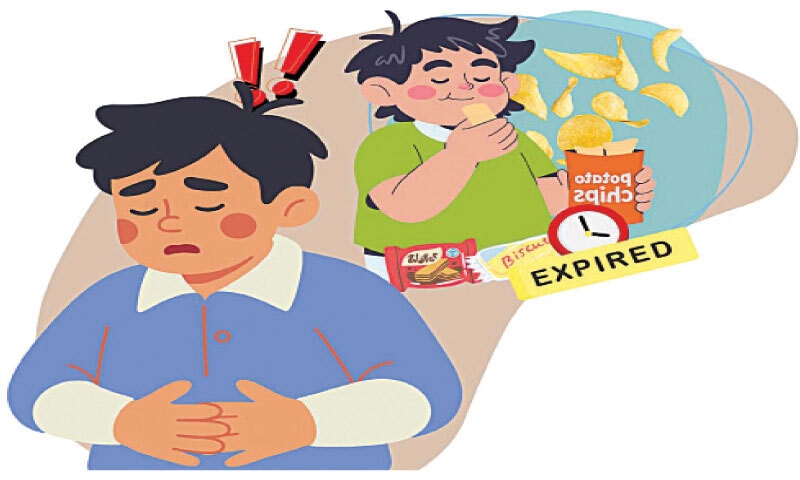
Ignoring dates isn’t just about getting a weird taste in your mouth; it can lead to serious stomach problems, infections or even hospitalisation in extreme cases. And it’s so unnecessary, because checking a tiny date is easier than dealing with hours of nausea, cramps and regret.
Remember kids, those dates on food packets aren’t just there for the sake of numbers, they actually mean a lot and give you quite a serious message. Just start paying a little attention, even for a second or two, and your stomach and your overall body will thank you.
Next time you’re at the shop, don’t just grab that cupcake packaged in a shiny wrapper or the chips that you always grab casually. Just look for the date. If it’s past the Use By or Expiry date, put it back.
Published in Dawn, Young World, November 1st, 2025