Kabul told to take ‘verifiable’ action against TTP
• Cautious optimism after Qatar-mediated talks with Afghanistan on cross-border violence
• Taliban regime seeks confirmed coordinates of TTP hideouts; pledge to address concern
• FO says govt to press Afghan Taliban to honour commitments
• Tarar rebukes ICC over ‘biased, premature’ comment on ‘airstrike deaths’
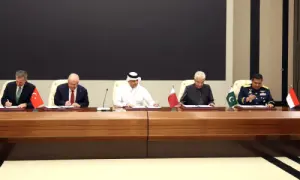
ISLAMABAD: Qatar-mediated talks between Pakistan and Afghanistan were held on Saturday amid cautious optimism on both sides for de-escalation following a week of deadly cross-border clashes, though a breakthrough remained uncertain in the absence of concrete Taliban commitments on ending terrorist sanctuaries on Afghan soil.
The meeting, held in a cordial atmosphere, continued well into the night behind closed doors in Doha.
Participants of the Doha dialogue reportedly kept shifting their stance on the continuation of talks. Initially, both sides considered adjourning the negotiations for a week, but later agreed to reconvene on Sunday.
However, the latest word from sources familiar with the closely guarded proceedings suggested that the discussions, held in deep secrecy, continued late into the night, with a joint communique expected to be issued.
The talks were opened by a senior Qatari intelligence official before the Pakistani and Afghan delegations began direct discussions on outstanding issues.
The Pakistani side was led by Defence Minister Khawaja Asif, accompanied by National Security Adviser and ISI Chief Lt Gen Asim Malik. The Afghan side was represented by Acting Defence Minister Mullah Yaqoob Mujahid and Intelligence Chief Maulvi Abdul Haq Wasiq.
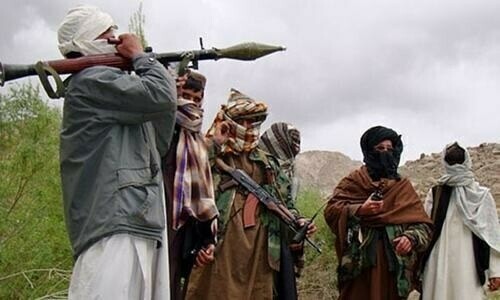
According to diplomatic sources, Pakistan pressed that the presence of the Tehreek-i-Taliban Pakistan (TTP) on Afghan soil was “not acceptable” and urged verifiable action against the group.
The Taliban delegation, while signalling willingness to cooperate, reportedly asked Pakistan to provide verified details of TTP hideouts and promised to address the concerns “to Pakistan’s satisfaction”.
However, Taliban representatives also cautioned that it was “unrealistic” to expect Kabul to entirely stop TTP operations inside Pakistan.
Afghan negotiators further complained that Pakistan’s public narrative had negatively impacted the Taliban’s international recognition prospects and alleged that militants of the Islamic State Khorasan Province (IS-K) captured in Afghanistan had claimed to have received training in Pakistan.
Taliban negotiators, during the course of the meeting, kept consulting their leadership in Afghanistan, according to a source.
In a statement issued earlier in the day, Pakistan’s Foreign Office said the high-level delegation would “urge the Afghan Taliban authorities to honour their commitments to the international community and address Pakistan’s legitimate security concerns by taking verifiable action against terrorist entities”, including the Fitna Al-Khawarij (TTP) and Fitna Al-Hindustan (Balochistan Liberation Army).
Tensions between Pakistan and Afghanistan have been high for the past two years over what Islamabad calls Kabul’s failure to curb cross-border terrorism. The situation escalated sharply on Oct 9 when Pakistan launched airstrikes on TTP sanctuaries inside Afghanistan, and reportedly sent fighter jets over Kabul after which explosions were heard.
The Taliban then launched attacks on Pakistani border posts on Oct 11 in which at least 23 Pakistani troops were martyred. Pakistan’s counter-response left about 200 Taliban fighters dead, according to security officials.
The two sides afterwards agreed on a 48-hour ceasefire and to hold dialogue during that break. The ceasefire was later extended.
Friday night’s cross-border exchange, in which Pakistani forces targeted Hafiz Gul Bahadur Group positions across the border, briefly threatened to derail the Doha dialogue. However, both sides decided to proceed with the talks as planned.
The Afghan government spokesperson claimed that Pakistan had conducted airstrikes in Afghanistan hours after the ceasefire was extended on Friday for as long as the talks continued.
He claimed that the attacks targeted civilians. Afghanistan withdrew from the Twenty20 international tri-series in Pakistan next month following the alleged death of three local cricketers that the Afghanistan Cricket Board claimed were due to military strikes in Paktika.
Govt rebukes ICC
However, Minister for Information and Broadcasting Attaullah Tarar on Saturday said that Pakistan has targeted verified camps of the “Khawarij-affiliated” Gul Bahadur group in the border areas of North and South Waziristan districts along the Pak-Afghan border.
In a post on X, the minister stated that during a 48-hour ceasefire, militants affiliated with the group and operating from Afghanistan attempted multiple terrorist attacks inside Pakistan. He said all such attempts were effectively thwarted by the security forces. “All speculations and assertions being made regarding targeting of civilians are false and meant to generate support for terrorist groups operating from inside Afghanistan, he said.
In a later post, the minister said that Pakistan rejected the International Cricket Council’s (ICC) “selective, biased and premature comment that advances a disputed allegation, as established, that three ‘Afghan cricketers’ died in an ‘airstrike’. The ICC has cited no independent verification to substantiate these claims.”
“Pakistan strongly rejects the characterisation and contests the ICC’s claim and call for immediate correction,” he added. “Pakistan has consistently held that politics must not contaminate the sport, especially cricket, and urges the ICC to uphold its independence and the spirit of the game… Pakistan expects the ICC, led by its current Chair (Jay Shah), who happens to belong to India, to restore its neutrality, international standards of fair play and unbiased conduct.”
Amid the ongoing discussions, Malaysian Prime Minister Anwar Ibrahim spoke separately with both Prime Minister Shehbaz Sharif and Afghan Prime Minister Muhammad Hasan Akhund, offering Malaysia’s assistance in mediating the conflict.
Published in Dawn, October 19th, 2025