0
0
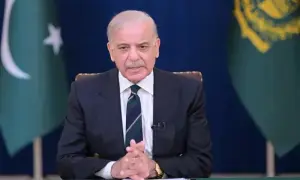
TWO decades after the 2005 earthquake that killed more than 80,000 people, Pakistan’s leaders have offered solemn tributes and urgent calls for resilience. President Asif Zardari spoke of a “whole-of-society” effort, while Prime Minister Shehbaz Sharif stressed the need for data-driven, community-led preparedness. Their words carry weight: Pakistan is battered repeatedly by the consequences of a warming planet it did little to heat. This year’s events paint a bleak picture. Monsoon floods displaced millions and destroyed crops and homes. Glacial-lake outbursts have surged in the north. Karachi has choked under urban flooding. Heatwaves and droughts have scorched farmland. Each passing year the country becomes more climate vulnerable. Scientific projections warn that extreme weather will intensify further, stretching institutions and communities to breaking point. It is a cruel paradox: the country shoulders the consequences of others’ recklessness, with little fiscal room to insulate itself. Yet the greater tragedy is political. Instead of uniting to strengthen disaster management, Pakistan’s ruling coalition has turned relief into a partisan weapon. The PPP and PML-N have recently exchanged accusations over this year’s flood operations. The PML-N questions the transparency of the Benazir Income Support Programme; the PPP claims its partner seeks to sideline an established federal safety net. What should be a joint endeavour to deliver food, shelter and cash to desperate households has become yet another theatre of mutual suspicion.
This bodes ill. The 2005 quake showed that collective mobilisation saves lives; neighbours then pulled survivors from rubble and volunteers rebuilt schools and clinics. But in 2025, with disasters multiplying, Pakistan’s institutions can no longer rely solely on goodwill and improvisation. Disaster risk reduction demands credible data, early warning systems, resilient infrastructure and, above all, coherent governance. To achieve this, politicians must recognise that natural hazards do not respect party boundaries. A flooded village in Sindh or KP has little interest in whether aid is branded PPP or PML-N. It matters only that relief arrives swiftly and transparently. National resilience cannot be subcontracted to political point-scoring. Mr Zardari and Mr Sharif are right to call for unity. But unless their coalition translates rhetoric into joint action, Pakistan will keep reliving the same cycle: calamity, response, recrimination and neglect. Climate change ensures that the next shock is never far away. Preparing for it requires a collective national resolve that transcends political lines.
Published in Dawn, October 9th, 2025