0
0

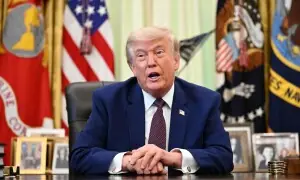
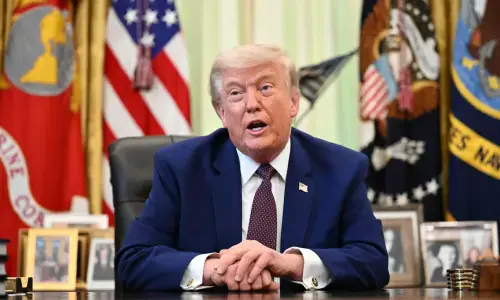
THIS is with reference to the report “White House creates ‘war directorate’” (Sept 14), according to which, days after United States President Donald Trump had signed an executive order renaming the Department of Defence as the Department of War, his administration had made a similar name change at the White House, renaming the Directorate of Defence, a key component of the White House National Security Council, to be called the Directorate of War. These changes are far more than cosmetic.
The last time Pentagon was called the Department of War was in 1947, under-scoring Trump’s conviction that America was ‘great’ right after World War II. In Trump’s view, the pre-1947 era embodied strength, clarity and national purpose, qualities he seeks to revive. But what exactly did that era represent? America between the late 19th and early 20th centuries was defined by three central policies — protectionism, isolationism and immigration restrictions.
Higher tariffs shielded US industries from European competition, and allowed American manufacturers to flourish. Foreign policy was guided by reluctance to engage in European conflicts or alliances, as seen in the Senate’s rejection of the League of Nations. Immigration laws, especially the 1924 Act, virtually closed America’s doors to Asians and imposed quotas favouring north Europeans, shaping the country’s demographic future.
Alongside these policies, segregation was a defining reality. The Jim Crow system in the American south institutionalised racial discrimination, disenfranchised African-Americans, and created a social order based on exclusion and inequality. To look back fondly on this period is to ignore the injustices that scarred American society. Trump’s nostalgia, therefore, is selective; it highlights economic growth and national independence while overlooking the rep-ression and exclusion that sustained them.
Renaming the Department of Defence as the Department of War also carries a particular symbolic weight. ‘Defence’ implies restraint, legitimacy and protection, while ‘war’ signals aggression, asser-tiveness and raw power. Trump’s supporters may welcome this blunt nationalism, seeing in it a rejection of what they perceive as weakness, global entanglements, and political correctness.
Critics, however, fear it represents a dangerous shift towards militarism and an inward-looking America less committed to alliances and diplomacy. For the wider world, including Pakistan, the implications are serious. A Trump-led America may revive tariffs, cut foreign aid, and demand tougher deals.
Its foreign policy may be guided less by cooperative leadership and more by transactional, unilateral actions. By getting nostalgic about an earlier America, Trump really risks reviving not only past strengths, but also past injustices, with consequences both at home and abroad.
Naimat Ullah Khan
Lahore
Published in Dawn, September 30th, 2025