0
0

PAKISTAN’S banking sector seems to be grappling with a growing challenge as borrowers accused of fraud and wilful default are using the courts to stall investigations by the Federal Investigation Agency (FIA). While these borrowers secure stay orders or even outright quashment of FIRs from high courts, a string of Supreme Court judgments clearly states that civil disputes should not halt criminal investigations, especially when allegations of fraud and misuse of funds are involved.
The conflict between these legal actions is not just a procedural matter; it is a critical threat to financial stability, accountability and the rule of law.
The core legal issue is whether a bank’s recourse to civil recovery, such as filing a suit in a banking court, should prevent the FIA from investigating a parallel criminal offence. The Lahore High Court, in a notable full-bench decision (CLD 375), made a critical distinction. It held that simple ‘civil default’ (failing to repay a loan) requires prior civil adjudication, meaning a court must first declare the borrower a defaulter.
However, the court also recognised that allegations of ‘fraud’, ‘misuse of funds’, or ‘forgery’ are independently cognisable criminal offences that the FIA can and should investigate. Despite this clear differentiation, banks often face blanket restraining orders from high courts that effectively stall investigative action, regardless of the nature of the alleged offence. This creates a loophole that allows borrowers to use legal manoeuvring to avoid accountability.
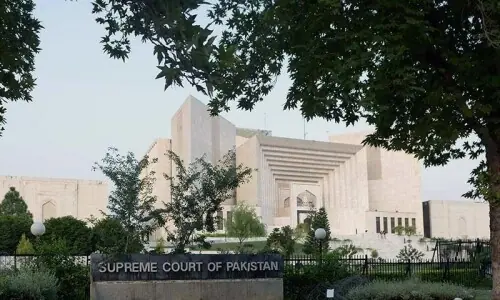
The Supreme Court has consistently and unequivocally sided with the need to allow criminal investigations to proceed. In a series of landmark judgments,
the court has provided a clear roadmap that banks and the FIA must follow. The most recent and arguably the most significant precedent related to a case (PLD 2023 SC 265) in which the Supreme Court reversed a high court decision that had quashed an FIA FIR, stating that quashing an FIR at the very beginning of an investigation is an extraordinary remedy to be used only in the rarest of cases.
The apex court emphasised that an accused person’s proper remedy is to seek discharge or acquittal during the trial, not to prematurely block the investigation.
The principle that civil and criminal proceedings are not mutually exclusive has been reaffirmed repeatedly (2017 SCMR 390; 2011 SCMR 1813), and the court has held that the existence of a civil dispute or pending recovery suit does not immunise a person from criminal liability. The two types of proceedings can, and often must, run concurrently.
This is quite a vital point for banks to emphasise: pursuing a civil remedy for a loan default does not preclude the FIA from investigating the fraudulent actions that led to it. In other cases (PLD 1971 SC 677), the Supreme Court has clarified that a high court’s inherent powers do not extend to restraining an executive action like an FIA investigation unless there is clear evidence of malfeasance or a complete lack of jurisdiction.
The narrative must be forceful and clear: civil and criminal remedies are parallel, not mutually exclusive. Allowing the FIA to at least complete its inquiry and collect evidence is crucial for preventing the destruction of records and the con-cealment of assets. The integrity of our financial system depends on our ability to hold individuals accountable for their acts.
Muhammad Afnan Malik
Lahore
Published in Dawn, September 17th, 2025